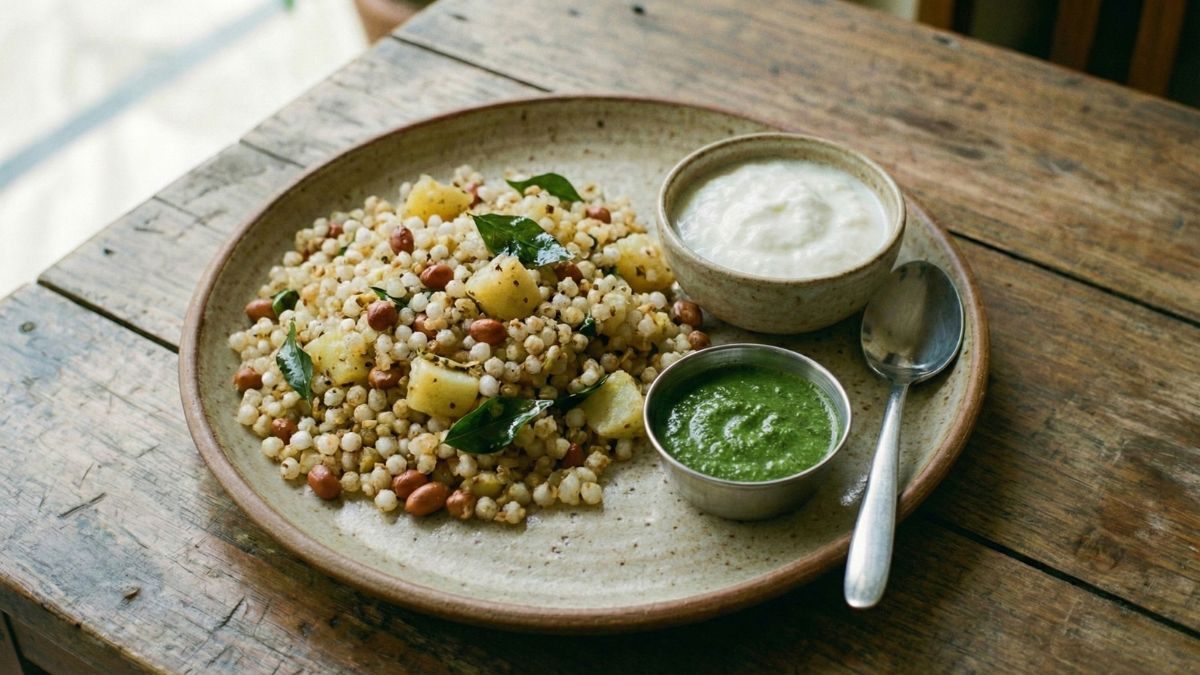
Sabudana Khichdi Recipe

Authentic sabudana khichdi recipe with perfectly fluffy pearls, roasted peanuts, and potatoes. Quick fasting food for Navratri. Gluten-free and easy.
Ingredients
- 1 cup sabudana tapioca pearls
- 1 medium potato boiled and diced
- ¼-⅓ cup roasted peanuts coarsely crushed
- 2 tbsp ghee or oil
- 1 tsp cumin seeds
- 8 to 10 curry leaves
- 2 green chillies finely chopped
- ½ tsp sendha namak rock salt or regular salt
- 1 tbsp lemon juice
- 2 tbsp fresh coriander leaves chopped
Instructions
- Rinse sabudana under running water 2 to 3 times until the water runs clear. Drain completely and soak in just enough water to cover the pearls. Let it sit for 4 to 5 hours or overnight. The pearls should be soft and doubled in size with no hard center.
- Boil the potato until tender, peel, and dice into small cubes. Roast the peanuts in a dry pan on medium heat until golden and aromatic, then crush them coarsely using a rolling pin or mortar.
- Heat ghee or oil in a kadhai or wide pan on medium heat. Add cumin seeds and let them crackle. Add curry leaves and chopped green chillies. Saute for 10 seconds.
- Add the diced boiled potatoes and saute for 1 to 2 minutes until lightly golden on the edges.
- Lower the heat and add the soaked sabudana. Mix gently with a light hand to coat everything evenly. Do not stir too much.
- Cover the pan and cook on low heat for 5 to 7 minutes. Open the lid once or twice and fold gently. The sabudana will turn translucent and glossy.
- Add crushed peanuts, sendha namak, and lemon juice. Mix gently and cook uncovered for another 2 minutes.
- Turn off the heat. Garnish with fresh coriander leaves. Serve hot with curd or a cup of tea.
Notes
- Soaking time matters - If sabudana is undersoaked, it will remain hard and chewy. If oversoaked or soaked in too much water, it becomes mushy. The goal is soft pearls that hold their shape.
- Pan choice - Use a non-stick or heavy-bottomed kadhai to prevent sticking.
- Make-ahead tip - Soak sabudana the night before. Cook fresh in the morning for best texture.
- Peanut allergy - Replace peanuts with roasted cashews or skip nuts entirely.
- Leftover storage - Sabudana khichdi is best eaten fresh. Leftovers can be refrigerated for a day but may lose texture. Reheat gently in a pan with a few drops of water.
- Equipment needed - Kadhai or non-stick pan, spatula, mixing bowl for soaking.