
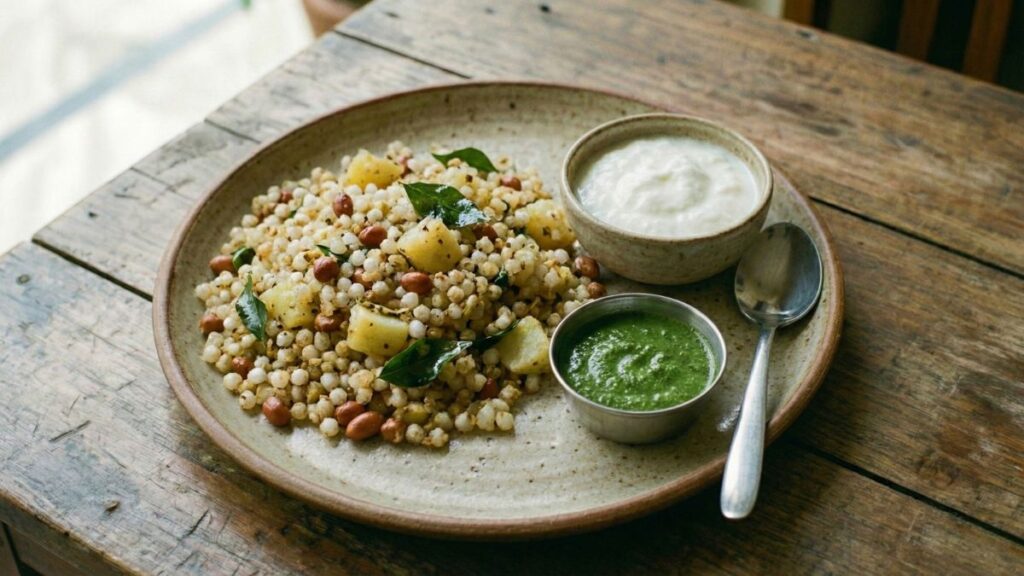
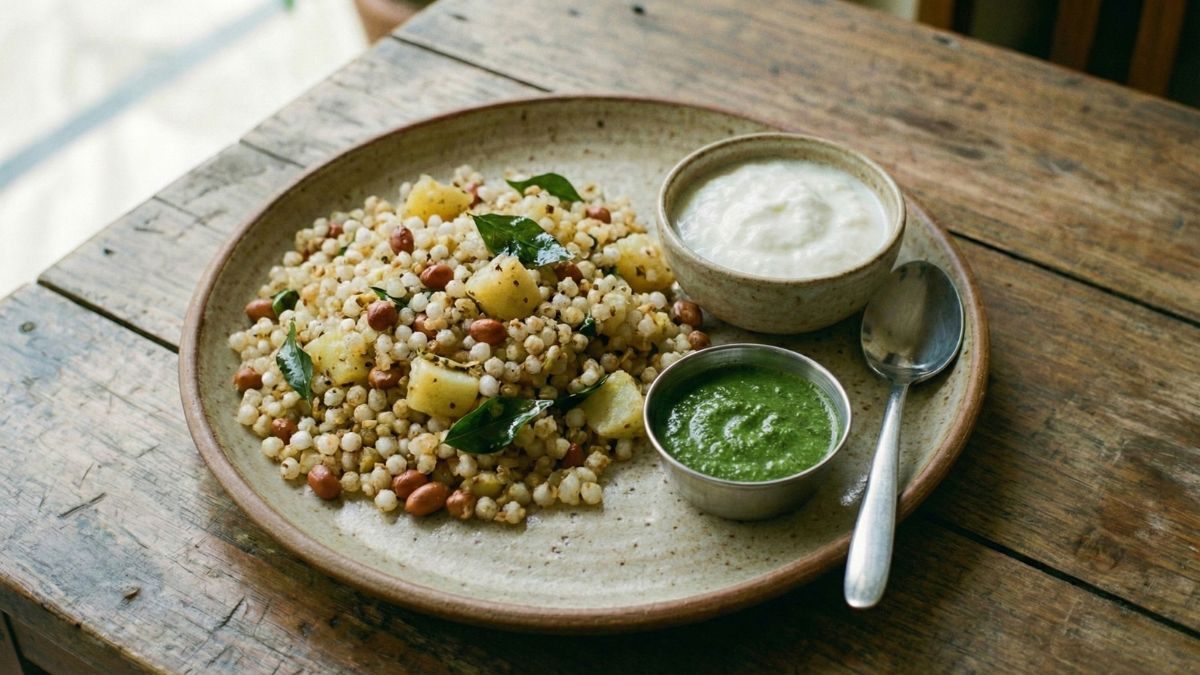
Sabudana khichdi is a soft, fluffy dish made from soaked tapioca pearls, roasted peanuts, and potatoes. It tastes mildly spiced, light on the stomach, and perfectly satisfying during fasting days. I grew up eating this on Navratri mornings, and the texture of well-cooked sabudana with crunchy peanuts still feels like home. This recipe is foolproof, beginner-friendly, and ready in under 30 minutes once your sabudana is soaked.
What is Sabudana Khichdi?
Sabudana khichdi is a popular Indian fasting food made with tapioca pearls, boiled potatoes, roasted peanuts, and a simple tempering of cumin and green chillies. It is eaten mainly during Hindu fasting days like Navratri, Mahashivratri, and Ekadashi. The dish is naturally gluten-free, vegetarian, and vegan when ghee is replaced with oil.
The key to perfect sabudana khichdi is getting the texture right. Oversoaked sabudana turns mushy, undersoaked pearls stay hard and chewy. When done correctly, each pearl should be separate, soft, and slightly chewy with no stickiness.
About my Authentic Recipe
This is the method my mother taught me, and it has never failed. The secret is in soaking the sabudana just right and cooking it on low heat without stirring too much. Many recipes add too much water or cook on high flame, which makes the khichdi gummy and clumpy.
I roast the peanuts separately and add them at the end to keep the crunch intact. The potatoes are diced small so they cook evenly with the sabudana. This version stays fluffy, light, and never sticky.
Why You’ll Love This Recipe
This sabudana khichdi is simple, quick, and tastes better than any restaurant version. The pearls stay separate and fluffy, the peanuts add crunch, and the potatoes make it filling. It works perfectly for fasting, breakfast, or a light evening snack. You only need a handful of ingredients, and the cooking time is less than 15 minutes.
Ingredients & Substitutes
Sabudana – Use medium-sized tapioca pearls. Small pearls become too soft and large ones take longer to cook.
Peanuts – Roasted and coarsely crushed. You can use store-bought roasted peanuts or raw peanuts that you roast at home in a pan. Cashews can replace peanuts for a richer taste.
Potatoes – Boiled and diced into small cubes. Sweet potato works as a substitute but changes the flavour slightly.
Ghee or oil – Ghee adds flavour, but for vegan fasting, use peanut oil or any neutral oil.
Sendha namak – Rock salt is traditional for fasting. Regular salt works fine otherwise.
Curry leaves and green chillies – Fresh is best. Skip chillies if you want it mild.
Variations
Vegan Version – Replace ghee with peanut oil or coconut oil.
Crunchy Style – Add roasted cashews or chopped dry coconut along with peanuts.
Protein Boost – Mix in boiled paneer cubes or roasted makhana for extra nutrition.
Spicy Sabudana Khichdi – Add finely chopped ginger, more green chillies, and a pinch of black pepper.
Sweet and Savoury – Add a small pinch of sugar to balance the flavours if you like a mild sweetness.
Expert Tips for Sabudana Khichdi
Soaking is everything – Rinse sabudana 2 to 3 times under running water, drain well, and soak for 4 to 5 hours or overnight. The pearls should be soft when pressed between fingers but not mushy.
Do not add water while cooking – The moisture from soaked sabudana and boiled potatoes is enough. Adding water makes it sticky.
Cook on low heat – High flame causes the bottom to stick and burn. Keep it on low and stir gently only 2 to 3 times.
Roast peanuts separately – This keeps them crunchy. Add them towards the end so they do not lose texture.
Check soaking before cooking – Press a pearl between your fingers. It should mash easily without any hard center. If still hard, sprinkle a few drops of water, cover, and wait 30 more minutes.
Avoid over-stirring – Stirring too much breaks the pearls and makes the khichdi gluey. Fold gently with a light hand.
Add lemon juice at the end – This prevents the sabudana from clumping and adds a fresh tangy flavour.
Sabudana Khichdi Recipe

Ingredients
- 1 cup sabudana tapioca pearls
- 1 medium potato boiled and diced
- ¼-⅓ cup roasted peanuts coarsely crushed
- 2 tbsp ghee or oil
- 1 tsp cumin seeds
- 8 to 10 curry leaves
- 2 green chillies finely chopped
- ½ tsp sendha namak rock salt or regular salt
- 1 tbsp lemon juice
- 2 tbsp fresh coriander leaves chopped
Instructions
- Rinse sabudana under running water 2 to 3 times until the water runs clear. Drain completely and soak in just enough water to cover the pearls. Let it sit for 4 to 5 hours or overnight. The pearls should be soft and doubled in size with no hard center.
- Boil the potato until tender, peel, and dice into small cubes. Roast the peanuts in a dry pan on medium heat until golden and aromatic, then crush them coarsely using a rolling pin or mortar.
- Heat ghee or oil in a kadhai or wide pan on medium heat. Add cumin seeds and let them crackle. Add curry leaves and chopped green chillies. Saute for 10 seconds.
- Add the diced boiled potatoes and saute for 1 to 2 minutes until lightly golden on the edges.
- Lower the heat and add the soaked sabudana. Mix gently with a light hand to coat everything evenly. Do not stir too much.
- Cover the pan and cook on low heat for 5 to 7 minutes. Open the lid once or twice and fold gently. The sabudana will turn translucent and glossy.
- Add crushed peanuts, sendha namak, and lemon juice. Mix gently and cook uncovered for another 2 minutes.
- Turn off the heat. Garnish with fresh coriander leaves. Serve hot with curd or a cup of tea.
Notes
- Soaking time matters – If sabudana is undersoaked, it will remain hard and chewy. If oversoaked or soaked in too much water, it becomes mushy. The goal is soft pearls that hold their shape.
- Pan choice – Use a non-stick or heavy-bottomed kadhai to prevent sticking.
- Make-ahead tip – Soak sabudana the night before. Cook fresh in the morning for best texture.
- Peanut allergy – Replace peanuts with roasted cashews or skip nuts entirely.
- Leftover storage – Sabudana khichdi is best eaten fresh. Leftovers can be refrigerated for a day but may lose texture. Reheat gently in a pan with a few drops of water.
- Equipment needed – Kadhai or non-stick pan, spatula, mixing bowl for soaking.
Common Issues & Solutions
Sabudana is sticky and lumpy – This happens when there is excess water during soaking or cooking. Always drain soaked sabudana well and do not add water while cooking. If it turns sticky, add a tablespoon of roasted peanut powder and mix gently on low heat.
Pearls are hard and undercooked – The sabudana was not soaked long enough. Sprinkle 2 to 3 tablespoons of water, cover, and steam on low heat for 5 more minutes. Check and repeat if needed.
Khichdi is too dry – You may have overcooked it or used less ghee. Add a teaspoon of ghee or oil and a splash of lemon juice. Mix gently and warm through.
Sabudana broke and turned mushy – Oversoaking or stirring too much causes this. Next time, soak for a shorter period and fold gently instead of stirring.
Bottom layer is sticking or burning – Heat was too high. Always cook on low flame and use a good non-stick or heavy-bottomed pan. Stir gently only 2 to 3 times during cooking.
No flavour or taste is flat – Likely undersalted or missing lemon juice. Adjust salt, add more lemon juice, and toss in fresh coriander. A pinch of black pepper also helps.
Serving and Storage Suggestions
Serve sabudana khichdi hot with plain curd, a side of green chutney, or a cup of masala chai. It works beautifully as a breakfast dish, evening snack, or fasting meal during Navratri and Mahashivratri. Pair it with fasting-friendly aloo sabzi or simply enjoy it on its own.
For storage, keep leftovers in an airtight container in the fridge for up to one day. Reheat gently in a pan on low heat with a few drops of water. The texture will not be as fluffy as fresh, but it still tastes good.
FAQs
Q: Can I use small sabudana for this recipe?
Ans: Yes, but adjust soaking time to 3 to 4 hours as small pearls absorb water faster. They also cook quicker and can turn mushy if overcooked.
Q: How do I know if sabudana is soaked properly?
Ans: Press a pearl between your fingers. It should mash easily with no hard center. The pearls will look plump and translucent at the edges.
Q: Can I make sabudana khichdi without potatoes?
Ans: Yes, skip potatoes and add more peanuts or roasted makhana for texture. The dish will be lighter but still tasty.
Q: Is sabudana khichdi good for weight loss?
Ans: Sabudana is high in carbohydrates and calories, so it is not ideal for weight loss. Eat in moderation and balance with protein-rich sides like curd or paneer.
Q: Can I prepare this ahead for fasting?
Ans: Soak sabudana the night before and store it covered in the fridge. Cook fresh in the morning for the best texture and taste.