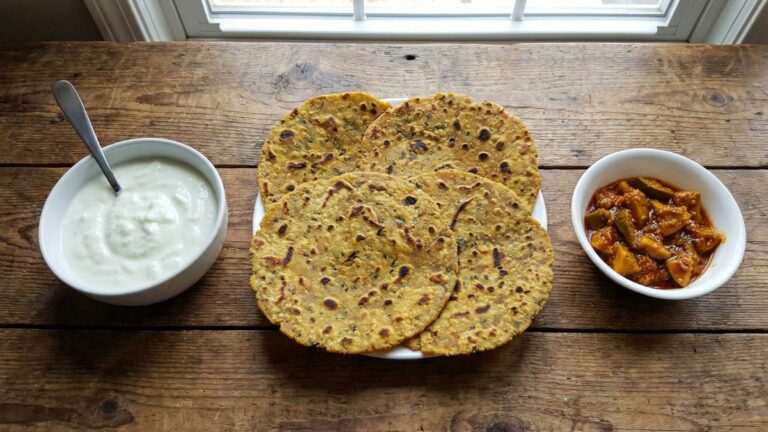

Sev Tamatar is one of those quick sabzis that comes together when the fridge looks empty but you need something warm and comforting on the table. The tangy tomatoes simmered with spices, topped with crunchy sev, create magic in under 20 minutes. I first tasted this at my friend’s home during a surprise lunch visit, and I have been making it ever since for those lazy evenings when I want flavor without the fuss.
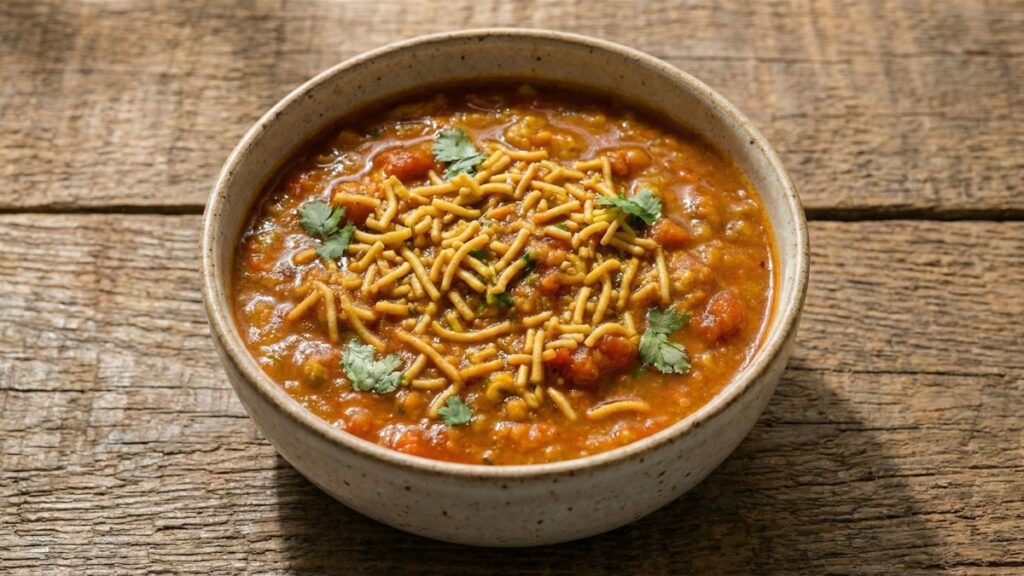
What is Sev Tamatar?
Sev Tamatar is a popular Gujarati sabzi where ripe tomatoes are cooked down into a spiced, slightly tangy gravy and finished with crispy sev (fried gram flour noodles) on top. The sev softens just enough to absorb the curry while keeping some crunch, making every bite interesting. This dish is vegetarian, naturally vegan if you skip the ghee, and comes together in one kadhai.
You will find this sabzi on Gujarati thalis across India, often paired with rotis or steamed rice. It strikes a beautiful balance between tangy, spicy, and subtly sweet, with that signature hint of jaggery that Gujarati cooking loves.
About my Authentic Recipe
This version stays true to the traditional Gujarati style, where the tomatoes are cooked until they break down completely and the oil starts to separate from the masala. I add a pinch of jaggery to balance the tartness, which is a small trick my neighbour taught me years ago. The key is to not rush the bhuna (sautéing) process because that is where the depth of flavor develops.
What makes this recipe authentic is the tempering, or tadka, at the beginning. Mustard seeds, cumin, and a hint of hing (asafoetida) create that unmistakable Gujarati base. I also add sev in two stages, some while cooking to thicken the gravy and the rest as a topping, so you get both soft and crunchy textures in one dish.
Why You’ll Love This Recipe
- Ready in under 20 minutes with pantry staples
- Bold tangy flavor without any complicated ingredients
- The crispy sev adds texture and makes it fun to eat
- Works beautifully as a side or a light main with rotis
- Perfect for those days when you want homestyle comfort fast
Ingredients & Substitutes
You need ripe, juicy tomatoes for the best results. Firm or underripe tomatoes will take longer to cook down and may taste bland. If using canned tomatoes, go for crushed or pureed ones and reduce the cook time slightly.
Sev is sold in most Indian grocery stores. Use the thin variety (nylon sev or ratlami sev) for this recipe. Thick sev will not soften properly in the gravy. If you cannot find sev, crushed papdi or even roasted peanuts can add crunch, though the taste will differ.
Jaggery balances the acidity of tomatoes. You can substitute with a tiny pinch of sugar, but jaggery gives a richer, earthier sweetness. Skip it entirely if you prefer a sharper, tangier curry.
Use ghee for authentic flavor, but any neutral oil works fine for a vegan version.
Variations
Protein rich version – Add boiled chickpeas or cubed paneer in the last 5 minutes of cooking for a more filling meal.
Spicier kick – Increase green chilies or add a teaspoon of red chili powder along with the turmeric.
Sweeter Gujarati style – Double the jaggery and add a pinch of garam masala at the end for a richer finish.
Dry sabzi – Cook the tomatoes longer until most moisture evaporates, then fold in the sev. This works well as a filling for parathas.
With peas – Toss in half a cup of green peas after the tomatoes soften. They add sweetness and make the dish more colorful.
Expert Tips for Sev Tamatar
- Use fully ripe tomatoes – They break down faster and give natural sweetness. Avoid hard, pale tomatoes.
- Do not skip the bhuna step – Cook the tomato spice mix until oil separates. This removes the raw taste and deepens the flavor.
- Add sev just before serving – If you add it too early, it turns mushy and loses all crunch. Keep some aside for topping.
- Balance sweet and sour – Taste the gravy after the tomatoes cook down. Adjust jaggery or salt to get that perfect tangy sweet balance.
- Control the consistency – If the gravy is too thick, splash in a few tablespoons of water. If too thin, simmer uncovered for 3 to 4 minutes.
- Freshly crush the kasuri methi – Rub dried fenugreek leaves between your palms before adding. This releases the aroma and flavor.
- Let it rest for 5 minutes – Once done, turn off the heat and let the sabzi sit. The flavors settle and the sev softens slightly.
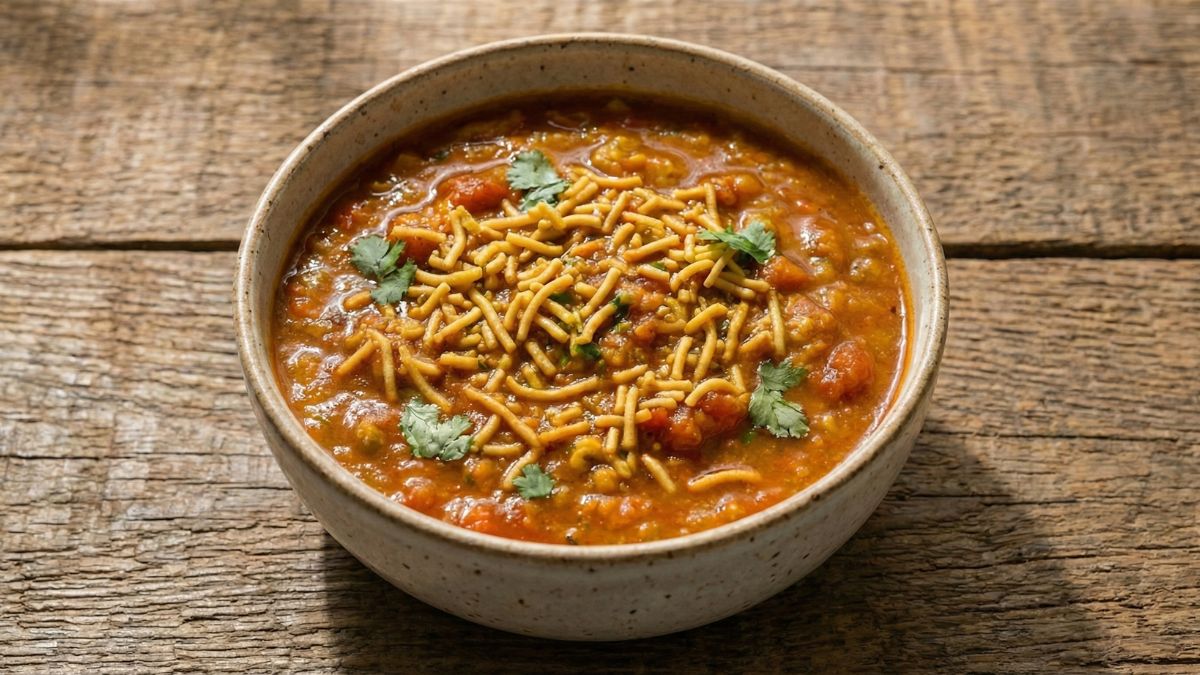
Sev Tamatar Recipe – Easy Gujarati Sabzi

Ingredients
- 4 large ripe tomatoes finely chopped
- 1 cup sev thin variety
- 2 tbsp ghee or oil
- 1 tsp mustard seeds
- 1 tsp cumin seeds
- 1 pinch asafoetida hing
- 1 tsp ginger paste
- 2 green chilies slit lengthwise
- ½ tsp turmeric powder
- 1 tsp coriander powder
- ½ tsp red chili powder
- 1 tsp jaggery grated
- ½ tsp kasuri methi dried fenugreek leaves, crushed
- Salt to taste
- ¼ cup water adjust as needed
- Fresh coriander leaves for garnish
Instructions
- Heat ghee or oil in a kadhai or wide pan over medium flame. Add mustard seeds and let them crackle for 10 seconds.
- Add cumin seeds and asafoetida. Stir for 5 seconds until fragrant.
- Add ginger paste and slit green chilies. Saute for 30 seconds until the raw smell disappears.
- Add chopped tomatoes, turmeric powder, coriander powder, red chili powder, and salt. Mix well to coat the tomatoes with spices.
- Cook on medium flame for 8 to 10 minutes, stirring occasionally, until the tomatoes soften completely and the oil starts separating from the masala. Mash the tomatoes lightly with the back of your spoon if needed.
- Add grated jaggery and crushed kasuri methi. Stir and cook for another minute to let the jaggery dissolve.
- Add half the sev (about half a cup) into the gravy and mix gently. Pour in 1/4 cup water if the consistency is too thick. Simmer for 2 minutes.
- Turn off the heat. Top the sabzi with the remaining sev and fresh coriander leaves. Serve hot immediately.
Notes
- Tomatoes – Choose soft, juicy tomatoes. Firm ones take longer to cook and may lack flavor. You can substitute with 1 cup canned crushed tomatoes.
- Sev storage – Keep extra sev in an airtight container. It stays crispy for weeks and works well in chaats or as a snack.
- Make ahead – You can prepare the tomato base up to step 6 and refrigerate for a day. Reheat, add sev, and serve fresh.
- Spice level – Adjust green chilies and red chili powder based on your tolerance. Start with less and add more if needed.
- Equipment – A wide kadhai helps the tomatoes cook faster by allowing moisture to evaporate quickly.
- Vegan option – Use oil instead of ghee. The dish remains flavorful and completely plant based.
- Serving fresh – This sabzi tastes best when served immediately after adding sev. Reheated sev loses its crunch.
Common Issues & Solutions
Sabzi tastes too sour – Add another pinch of jaggery or a tiny bit of sugar. Balance the acidity gradually, tasting as you go.
Sev turned completely mushy – You added it too early or the gravy had too much liquid. Next time, add sev at the very end and reduce the gravy more before mixing it in.
Oil not separating from masala – Cook the tomatoes longer on medium flame, stirring occasionally. This step cannot be rushed. It may take 10 to 12 minutes depending on tomato ripeness.
Gravy too thick and pasty – Add 2 to 3 tablespoons of warm water and simmer for a minute. The consistency should be like a semi-thick curry, not a paste.
Bland flavor – You may have skipped the bhuna step or used underripe tomatoes. Always cook the masala until the oil separates, and taste for salt and jaggery balance before finishing.
Sev clumped together – The gravy was too wet when you added the sev. Reduce excess moisture first, then gently fold in the sev without stirring too vigorously.
Serving and Storage Suggestions
Sev Tamatar pairs beautifully with soft rotis, phulkas, or steamed rice. For a complete Gujarati meal, serve it alongside dal, kadhi, or a simple raita. The tangy, slightly sweet flavor also works well with parathas or as a side to khichdi. This dish shines as a weeknight dinner option or a light lunch when you want something flavorful without spending too much time in the kitchen.
Leftovers can be stored in an airtight container in the refrigerator for up to 2 days, but the sev will lose its crunch. Reheat gently on the stovetop, adding a splash of water if needed. For best results, store the sev separately and add it fresh when reheating.
Your Question My Answer
Q1. Can I make Sev Tamatar without jaggery?
Ans: Yes, you can skip jaggery entirely if you prefer a purely tangy curry. Some people use a pinch of sugar instead, but jaggery adds a richer, deeper sweetness that balances tomatoes beautifully.
Q2. What if I do not have kasuri methi?
Ans: You can skip it, though it adds a subtle earthy aroma. Alternatively, use a pinch of garam masala at the end for added warmth and depth.
Q3. Can I use thick sev instead of thin sev?
Ans: Thin sev works best because it softens slightly in the gravy while keeping some crunch. Thick sev stays too hard and does not blend well with the curry texture.
Q4. How do I make this sabzi spicier?
Ans: Increase the green chilies to 3 or 4, or add an extra half teaspoon of red chili powder. You can also finish with a pinch of freshly crushed black pepper for heat.
Q5. Is Sev Tamatar gluten-free?
Ans: Traditional sev is made from gram flour (besan), which is naturally gluten free. Always check the package label if buying store bought sev to ensure no wheat flour was added.