
Puran Poli is one of those dishes that brings back memories of every Maharashtrian festival at home. My neighbour aunty would make stacks of these golden, ghee drizzled flatbreads, and the smell of cardamom and jaggery would fill the entire house. This sweet flatbread is surprisingly easy once you understand the technique, and the soft, melt in mouth texture makes every bit of effort worth it. Whether you are making it for Ganesh Chaturthi, Holi, or just because you are craving something sweet and comforting, this Puran Poli recipe will guide you through every step.
What is Puran Poli?
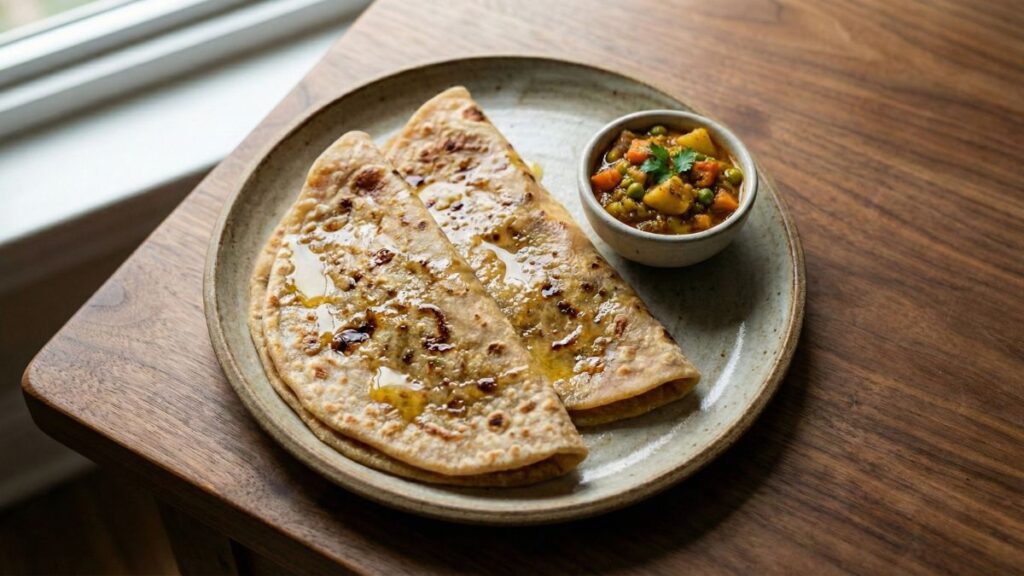
Puran Poli is a traditional Maharashtrian sweet flatbread made with a filling of cooked chana dal and jaggery, rolled inside a soft wheat dough and cooked on a tava. The word puran means sweet lentil filling, and poli means flatbread. This dish has a soft, slightly sweet taste with warm notes of cardamom and nutmeg.
It is served during festivals, celebrations, and special occasions across Maharashtra, Karnataka, and Gujarat, though each region has its own version. This is a vegetarian dish that works as a dessert or a sweet meal on its own, usually served warm with a drizzle of ghee or alongside katachi amti and raw onion slices.
About my Authentic Recipe
This recipe comes from a Maharastrian neighbour auntie, who makes Puran Poli for every major festival. What makes this version authentic is the ratio of dal to jaggery, which creates a filling that is sweet but not cloying, and the use of plain wheat flour for the dough, which stays soft even after cooling.
The key technique here is cooking the dal until it is completely tender, then mashing it well so the filling is smooth and not grainy. The dough needs to be soft and pliable, which means adding enough oil or ghee during kneading. Many people struggle with rolling the poli thin without tearing, but once your filling is the right consistency and your dough is well rested, it becomes easy.
What sets this recipe apart is the slow cooking of the filling with constant stirring to get that perfect glossy, non sticky texture. This step takes patience but ensures your puran does not ooze out during rolling.
Why You’ll Love This Recipe
This Puran Poli recipe gives you a soft, melt in mouth flatbread every single time. The filling is perfectly sweet with a hint of spice, and the dough stays pliable for easy rolling. It is a traditional recipe that works well for beginners because the steps are straightforward. You can make the filling a day ahead, which breaks the work into manageable parts. Plus, it freezes beautifully, so you can enjoy homemade Puran Poli anytime you want.
Ingredients & Substitutes
For the Puran (Filling)
- Chana dal is the base of the filling. Use split Bengal gram that is yellow and fresh. You can substitute with toor dal, though the taste will be slightly different and less authentic.
- Jaggery gives the natural sweetness and color. Use good quality grated jaggery for easier mixing. You can replace it with sugar, but you will lose the earthy, caramel like flavor that jaggery brings.
- Cardamom powder and nutmeg powder add warmth. If you do not have nutmeg, skip it, but do not skip cardamom.
For the Dough
- Whole wheat flour or atta is traditional. Use the same flour you use for rotis. Avoid maida as it changes the texture completely.
- Oil or ghee in the dough keeps it soft. Ghee gives a richer flavor.
- Turmeric and salt are optional but add color and balance.
Variations
Coconut Puran Poli – Add 2to3 tablespoons of fresh grated coconut to the filling along with the jaggery for extra flavor and texture.
Toor Dal Version – Replace chana dal with toor dal for a lighter, softer filling. This is common in some parts of Karnataka.
Vegan Puran Poli – Use oil instead of ghee in both the dough and for cooking. Ensure your jaggery is vegan.
Saffron Puran Poli – Add a pinch of saffron strands soaked in warm milk to the filling for a festive touch.
Sugar Free Option – Replace jaggery with date paste or mashed bananas for natural sweetness, though the texture will differ slightly.
Expert Tips for Puran Poli
- Cook the chana dal until it is very soft and mushy. Undercooked dal will make the filling grainy and difficult to roll.
- Mash the dal thoroughly. Use a potato masher or your hands. A smooth filling is easier to stuff and roll.
- Cook the puran filling until it leaves the sides of the pan and becomes non sticky. This is the most important step. If your filling is too wet, it will ooze out during rolling.
- Rest the dough for at least 20 to 30 minutes after kneading. This makes rolling much easier and prevents tearing.
- Use a light hand while rolling. Apply even pressure and use dry flour for dusting, but not too much, or the poli will become hard.
- Cook on medium heat. Too high and the poli will brown too quickly without cooking through. You want golden spots, not burnt patches.
- Apply ghee while cooking and after cooking. This keeps the poli soft and adds flavor.
- Store leftover polis stacked with parchment paper in between to prevent sticking.
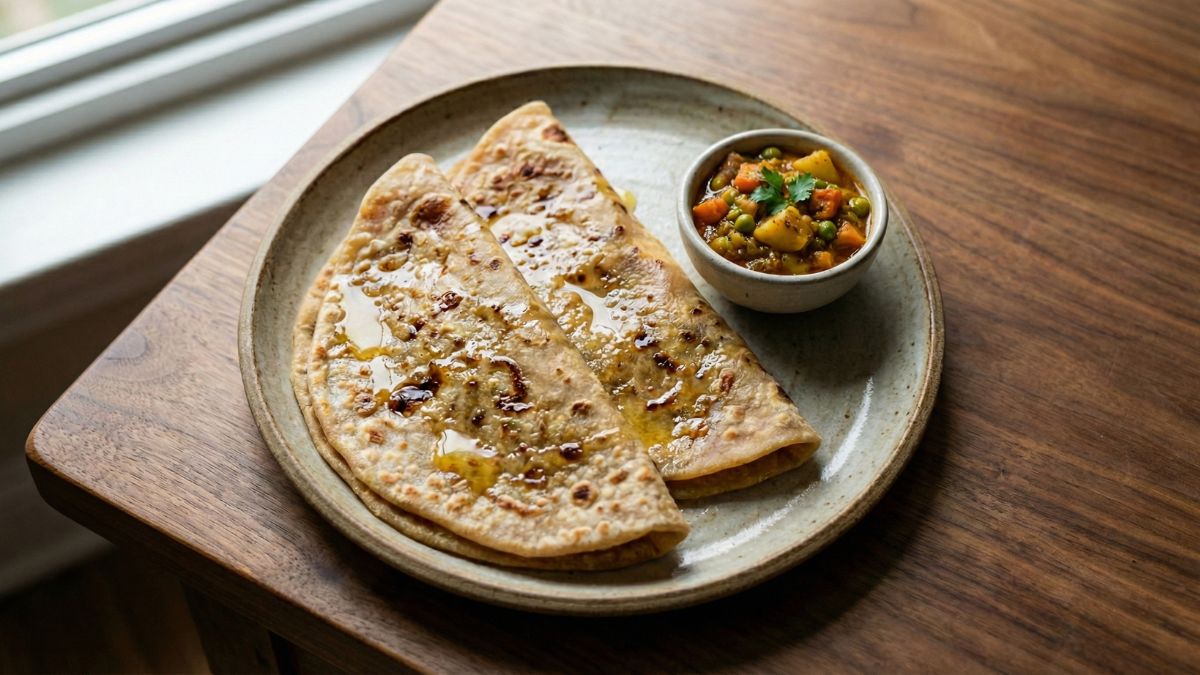
Authentic Maharashtrian Puran Poli Recipe

Ingredients
For the Puran (Filling)
- 1 cup chana dal Bengal gram
- 2½ cups water
- 1 cup jaggery grated
- 1 tsp cardamom powder
- ¼ tsp nutmeg powder
- 2 tbsp ghee
For the Dough
- 2 cups whole wheat flour atta
- ¼ tsp turmeric powder optional
- ¼ tsp salt
- 2 tbsp oil or ghee
- Water as needed about 3/4 cup
- Ghee or oil for roasting
Instructions
Preparing the Puran (Filling)
- Rinse the chana dal thoroughly under running water 2to3 times. Soak it in water for 15 to 20 minutes, then drain.
- Add the dal and 2.5 cups water to a pressure cooker. Cook for 4to5 whistles on medium heat until the dal is completely soft and mushy. Let the pressure release naturally.
- Drain the cooked dal using a strainer, but save the cooking water (katachi amti can be made from this). Mash the dal very well using a potato masher or your hands until it is smooth with no lumps.
- Heat a heavy bottomed kadhai or pan on medium heat. Add the mashed dal and jaggery. Mix well and cook, stirring constantly.
- Keep stirring and cooking the mixture for 15 to 20 minutes. The jaggery will melt and mix with the dal. Continue cooking until the mixture thickens and starts leaving the sides of the pan. It should form a soft ball and not stick to your hands.
- Add cardamom powder, nutmeg powder, and 2 tablespoons ghee. Mix well and cook for another 2 minutes. Turn off the heat and let the puran cool completely.
- Once cooled, divide the filling into 8 equal portions and roll them into smooth balls. Keep aside.
Preparing the Dough
- In a large bowl, add wheat flour, turmeric powder, and salt. Mix well.
- Add 2 tablespoons oil or ghee and rub it into the flour with your fingers until the mixture resembles breadcrumbs.
- Gradually add water, a little at a time, and knead into a soft, pliable dough. The dough should be softer than regular roti dough but not sticky.
- Add a few drops of oil on top, cover with a damp cloth, and let it rest for 20-30 minutes.
Assembling and Cooking
- After resting, divide the dough into 8 equal portions and roll them into smooth balls.
- Take one dough ball and flatten it slightly. Roll it out into a small circle, about 3-4 inches in diameter.
- Place one puran ball in the center. Bring the edges of the dough together and seal it at the top, completely enclosing the filling. Pinch off any excess dough.
- Dust the stuffed ball lightly with flour and gently flatten it with your palm. Using a rolling pin, carefully roll it out into a 6-7 inch circle. Apply even, gentle pressure and keep dusting with flour as needed to prevent sticking. Do not press too hard or the filling will break through.
- Heat a tava or griddle on medium heat. Place the rolled poli on the hot tava.
- Cook for 30to40 seconds until you see small bubbles forming. Flip it over and apply a little ghee on the cooked side.
- Cook the other side for 30to40 seconds until light golden spots appear. Flip again and apply ghee on this side as well. Press gently with a spatula so it cooks evenly.
- Cook until both sides have golden brown spots. Remove from the tava and apply a little more ghee on top.
- Keep the cooked polis covered in a casserole or container to keep them soft and warm. Repeat with the remaining dough and filling.
Notes
Common Issues & Solutions
Filling is too sticky and oozes out – Your puran was not cooked long enough. Cook the dal jaggery mixture until it leaves the sides of the pan and forms a non sticky mass. If already made, refrigerate the filling for 30 minutes before stuffing.
Poli tears while rolling – Either the dough is too dry or the filling is too wet. Add a little more oil to the dough and knead again. Rest for 10 more minutes before rolling.
Poli turns hard after cooling – Not enough ghee was used, or the poli was overcooked. Apply ghee generously while cooking and keep the cooked polis covered immediately.
Filling is too dry and crumbly – You may have overcooked the mixture or used less jaggery. Add 1-2 tablespoons of warm milk or ghee to the filling and mix well to bring it together.
Poli is not cooking evenly – The tava is either too hot or the poli is rolled unevenly. Roll with even pressure and cook on medium heat, flipping multiple times.
Dal is grainy in the filling – The dal was not cooked long enough or not mashed well. Always pressure cook until very soft and mash thoroughly before adding jaggery.
Serving and Storage Suggestions
Puran Poli is traditionally served warm with a generous drizzle of ghee on top. The classic accompaniment is katachi amti, a thin and tangy dal made from the water drained after cooking chana dal, along with sliced raw onions on the side. You can also serve it with plain milk, which balances the sweetness beautifully.
It works as a festive dessert or a sweet meal on its own during lunch. Pair it with a cup of masala chai for an indulgent snack. Puran Poli is especially popular during Ganesh Chaturthi, Holi, and Gudi Padwa.
Storage – Keep leftover polis in an airtight container at room temperature for 1 to 2 days. Refrigerate for up to 4 to 5 days. Reheat on a tava with a little ghee before serving to restore softness. For longer storage, freeze with parchment paper between each poli for up to 1 month.
Your Question My Answer
Q1. Can I make Puran Poli without a pressure cooker?
Ans: Yes, you can cook chana dal in a regular pot. Soak the dal for 2to3 hours, then cook in plenty of water for 45 to 60 minutes on low heat until completely soft and mushy. Drain and proceed with the recipe.
Q2. What can I do with leftover puran filling?
Ans: Use it as a filling for modak, karanji, or sweet parathas. You can also spread it on toast or mix it into oatmeal for a sweet breakfast. It stores well in the fridge for up to a week.
Q3. Can I use sugar instead of jaggery?
Ans: Yes, but the flavor will be different. Jaggery adds a deep, caramel like sweetness that sugar cannot replicate. If using sugar, reduce the quantity to 3/4 cup as it is sweeter than jaggery.
Q4. Why is my Puran Poli not puffing up like roti?
Ans: Puran Poli is not meant to puff up like a regular roti because of the filling inside. It should have golden spots and cook evenly on both sides. The focus is on soft texture, not puffing.
Q5. How do I prevent the dough from sticking while rolling?
Ans: Dust your rolling surface and the poli lightly with dry flour as you roll. Use a gentle hand and roll evenly. If it is still sticking, your dough might be too wet. Add a little more flour and knead again.