
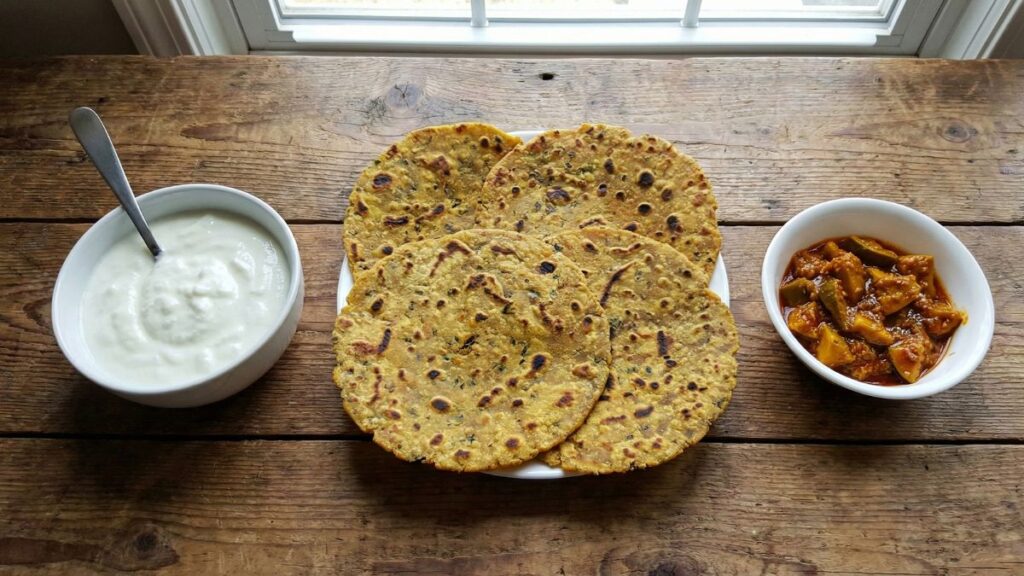
Thepla is a lightly spiced Gujarati flatbread made with whole wheat flour, fresh fenugreek leaves, and everyday spices. Soft, aromatic, and incredibly versatile, these golden flatbreads stay fresh for days and taste amazing with yogurt, pickle, or a hot cup of chai. I grew up watching my mother pack theplas for long train journeys, and they never failed to comfort us. Whether you need a quick breakfast, travel food, or a light dinner, thepla is your answer.
What is Thepla?
Thepla is a traditional Gujarati flatbread made by kneading whole wheat flour with chopped fenugreek leaves (methi), spices, and a bit of yogurt or oil. The dough is rolled thin and cooked on a hot tava until golden spots appear on both sides. Unlike regular rotis, theplas are slightly thicker, softer, and packed with flavor from the spices and greens mixed right into the dough.
This flatbread is a staple in Gujarati households and is especially popular as travel food because it stays soft for 2 to 3 days without refrigeration. You will find thepla served at breakfast with tea, packed in lunch boxes, or enjoyed as a light dinner with pickles and yogurt. It is vegetarian, wholesome, and loved by kids and adults alike.
About My Authentic Recipe
This is the same thepla recipe my mother has been making for over 30 years, and it never disappoints. The secret is in balancing the moisture from yogurt and oil so the dough stays pliable but not sticky. I add a small pinch of sugar to balance the slight bitterness of fenugreek, which most restaurant versions skip.
What makes this recipe stand out is the technique of kneading the dough thoroughly and letting it rest for at least 15 minutes. This rest period allows the flour to absorb the moisture fully and makes rolling easier. The result is soft, tender theplas that do not turn hard even after cooling. I also cook them on medium heat, which ensures they puff slightly and cook evenly without becoming crispy or dry.
Why You’ll Love This Recipe
You will love this thepla recipe because it comes together in under 30 minutes with everyday pantry ingredients. The dough is forgiving and easy to work with, even for beginners. Theplas taste delicious fresh off the tava and stay soft for days, making them perfect for meal prep or travel. Plus, the combination of fenugreek and spices adds a lovely flavor and aroma that makes even a simple meal feel special.
Ingredients and Substitutes
You will need whole wheat flour (atta), fresh fenugreek leaves (methi), yogurt, and basic spices. Whole wheat flour gives thepla its characteristic texture and flavor. If you cannot find fresh fenugreek, use 2 tablespoons of dried fenugreek leaves (kasuri methi) soaked in a bit of water for 10 minutes. Yogurt adds tang and helps keep the theplas soft, but you can replace it with buttermilk or even water with a squeeze of lemon. I use a neutral oil like sunflower or canola, but ghee works beautifully if you want a richer flavor. Turmeric, red chili powder, and coriander powder are the main spices. Ajwain (carom seeds) is optional but adds a lovely aroma and aids digestion.
Variations
Multigrain thepla – Replace half the wheat flour with millet flour, jowar, or oat flour for added nutrition and fiber.
Methi-palak thepla – Add a handful of finely chopped spinach along with fenugreek for extra greens and a milder flavor.
Spicy thepla – Increase the red chili powder or add finely chopped green chilies and grated ginger for a spicier kick.
Sweet thepla – Reduce spices and add a tablespoon of jaggery or sugar for a mildly sweet version kids enjoy.
Vegan thepla – Skip the yogurt and use water with a bit of lemon juice or plant-based yogurt instead.
Expert Tips for Thepla
Do not skip the resting time. Letting the dough rest for 15-20 minutes makes rolling much easier and results in softer theplas.
Keep the dough slightly soft. If the dough feels too stiff, add a teaspoon of water at a time until it becomes smooth and pliable.
Roll evenly. Aim for theplas that are slightly thicker than regular rotis but not too thick, or they will not cook through properly.
Cook on medium heat. High heat will burn the theplas before they cook inside, while low heat makes them hard and dry.
Press gently while cooking. Use a clean cloth or spatula to press the edges gently, which helps them puff and cook evenly.
Store properly. Stack cooked theplas with a light brush of ghee or oil between them, then wrap in foil or store in an airtight container to keep them soft.
Adjust spices to taste. If you find fenugreek too bitter, reduce the amount or balance it with a pinch of sugar in the dough.
Gujarati Thepla Recipe – Soft, Flavorful Flatbread for Any Meal

Ingredients
For the Dough
- 2 cups whole wheat flour atta
- 1 cup fresh fenugreek leaves methi, finely chopped
- 2 tbsp yogurt dahi
- 1 tbsp oil plus more for cooking
- 1 tsp turmeric powder haldi
- 1 tsp red chili powder
- 1 tsp coriander powder dhania powder
- ½ tsp cumin seeds jeera
- ½ tsp ajwain carom seeds, optional
- 1 tsp sesame seeds til, optional
- ½ tsp sugar
- Salt to taste
- ½ cup Water approximately Add more as needed
For Cooking
- Ghee or oil for roasting
Instructions
- Wash and finely chop the fresh fenugreek leaves. Squeeze out any excess water and set aside.
- In a large mixing bowl, combine the whole wheat flour, turmeric powder, red chili powder, coriander powder, cumin seeds, ajwain, sesame seeds, sugar, and salt. Mix well.
- Add the chopped fenugreek leaves, yogurt, and 1 tablespoon of oil to the flour mixture. Mix everything together with your fingers.
- Gradually add water, a little at a time, and knead into a smooth, soft dough. The dough should be pliable but not sticky. Knead for 3-4 minutes until it becomes smooth.
- Cover the dough with a damp cloth and let it rest for 15-20 minutes. This makes rolling easier and results in softer theplas.
- After resting, divide the dough into 10 equal portions and roll them into smooth balls.
- Heat a tava or flat griddle on medium heat.
- Take one dough ball, dust it lightly with flour, and roll it into a thin circle about 6 inches in diameter. The thepla should be slightly thicker than a regular roti.
- Place the rolled thepla on the hot tava. Cook for 30-40 seconds until small bubbles start to appear on the surface.
- Flip the thepla and cook the other side for another 30-40 seconds.
- Apply a little ghee or oil on both sides and press gently with a spatula or cloth. Cook until golden brown spots appear on both sides.
- Remove the thepla from the tava and place it in a covered container or wrap it in a clean kitchen towel to keep it soft.
- Repeat the process with the remaining dough balls.
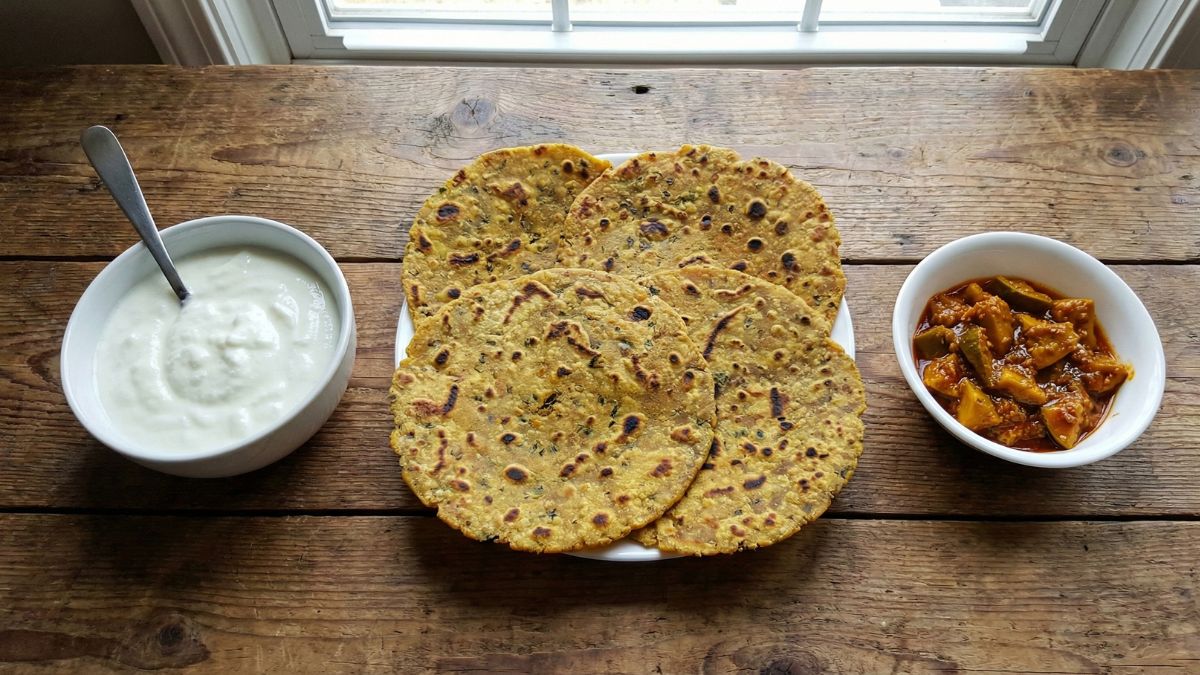
- Serve hot theplas with yogurt, pickle, or chutney. They also taste great with a cup of hot chai.
Notes
Common Issues and Solutions
Theplas turning hard after cooling – This usually happens if the dough is too dry or you cook them on high heat. Knead a softer dough and cook on medium heat. Brush with ghee while stacking to retain moisture.
Dough too sticky – You added too much water or yogurt. Dust your hands with flour and knead in a tablespoon or two of extra flour until the dough becomes manageable.
Theplas not puffing – The dough needs better kneading, or your tava is not hot enough. Knead the dough well and ensure the tava is properly heated before placing the thepla.
Bitter taste from fenugreek – Fresh fenugreek can be slightly bitter. Add a pinch more sugar to the dough or reduce the quantity of fenugreek leaves by one-fourth.
Theplas breaking while rolling – The dough is too dry. Add a teaspoon of water or oil and knead again until smooth.
Uneven cooking or raw spots – You are rolling the theplas unevenly or cooking on very high heat. Roll evenly and adjust the flame to medium.
Serving and Storage Suggestions
Serve theplas hot with plain yogurt, mango pickle, or green chutney for a simple, satisfying meal. They pair beautifully with potato sabzi, batata nu shaak, or even a bowl of dal. Theplas are perfect for breakfast with a hot cup of masala chai or as a light dinner option. They also make excellent travel food or lunch box additions because they stay soft and fresh for 2-3 days at room temperature.
Store cooked theplas in an airtight container or wrapped in aluminum foil. They stay fresh at room temperature for 2 to 3 days, in the refrigerator for up to a week, and can be frozen for a month. Reheat on a tava or in the microwave for a few seconds before serving.
Your Question My Answer
Q1: Can I make thepla without fenugreek leaves?
Ans: Yes, you can skip fenugreek and make plain masala thepla using just the spices and flour. You can also substitute with other greens like spinach, dill, or coriander leaves.
Q2: How do I keep theplas soft for travel?
Ans: Apply a thin layer of ghee or oil on each thepla while stacking them. Wrap the stack tightly in foil or store in an airtight container. This keeps them soft for up to 3 days.
Q3: Can I use dried fenugreek instead of fresh?
Ans: Yes, use 2 tablespoons of dried fenugreek leaves (kasuri methi) soaked in water for 10 minutes. Squeeze out excess water before adding to the dough.
Q4: Can I make thepla dough in advance?
Ans: Yes, prepare the dough and store it covered in the refrigerator for up to 24 hours. Bring it to room temperature and knead lightly before rolling.
Q5: Is thepla healthy?
Ans: Thepla made with whole wheat flour and fresh greens is a nutritious option. It provides fiber, vitamins from fenugreek, and is relatively low in calories when cooked with minimal oil.