
Carrot halwa is one of those desserts that fills your kitchen with the warmth of cardamom and ghee, making everyone peek in to see what’s cooking. I grew up watching my grandmother make this during winter weddings, and the trick was always slow patience and good carrots. This recipe gives you a rich, melt-in-your-mouth halwa that tastes like you spent hours on it, but the active time is quite manageable.
What is Carrot Halwa?
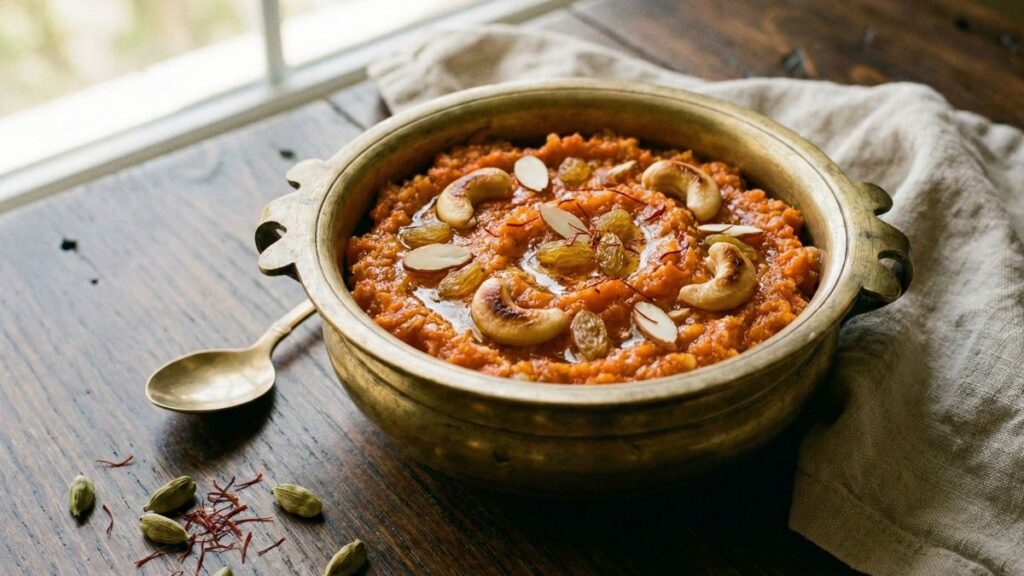
Carrot halwa, also known as Gajar ka halwa, is a traditional North Indian sweet made by slow-cooking grated carrots in milk, sugar, and ghee until the mixture caramelises into a soft, fudgy pudding. The texture is dense but tender, with little bursts of cardamom and crunch from nuts. It tastes like caramelised sweetness with earthy carrot notes underneath.
This dessert is a winter favourite across India, especially popular during festivals like Diwali and weddings. It is vegetarian, naturally gluten-free, and can be made vegan with simple swaps.
About my Authentic Recipe
This carrot halwa recipe follows the traditional slow-cooked method my grandmother used in Punjab. The key difference here is grating the carrots by hand or using the thickest grater setting so they hold texture instead of turning mushy. Many modern recipes rush the milk reduction, but I let the carrots absorb the milk slowly over medium heat, which gives that deep caramel colour and concentrated flavour.
The other technique that matters is adding ghee in two stages. The first addition helps the carrots cook evenly, and the final tempering with extra ghee and nuts gives the halwa its signature glossy finish. This approach builds layers of flavour instead of dumping everything in at once.
Why You’ll Love This Recipe
This carrot halwa recipe delivers authentic dhaba-style taste without needing any special equipment or hard-to-find ingredients. The texture is neither too dry nor soupy, just soft and fudgy. You can make it ahead for gatherings or festivals, and it actually tastes better the next day when the flavours meld together. Plus, it uses real ingredients like fresh carrots and milk, no khoya shortcuts or condensed milk hacks that change the character of the dish.
Ingredients & Substitutes
Carrots – Use red or orange carrots with natural sweetness. Avoid very watery varieties. If carrots are bland, you may need extra sugar.
Milk – Full-fat milk works best for richness. You can use almond milk or coconut milk for a vegan version, but reduce the quantity slightly as they do not evaporate the same way.
Ghee – Gives authentic flavour and aroma. Substitute with unsalted butter or coconut oil if needed, though the taste will shift.
Sugar – White or brown sugar both work. Adjust to taste based on carrot sweetness.
Cardamom – Freshly ground green cardamom is best. Avoid cardamom essence, it tastes artificial.
Nuts – Cashews and almonds are traditional. You can skip or replace with pistachios or walnuts.
Variations
Vegan carrot halwa – Replace milk with full-fat coconut milk or almond milk, and use coconut oil instead of ghee. Reduce milk quantity by one-fourth since plant milk behaves differently.
Khoya version – Add 100 grams crumbled khoya (mawa) in the final 5 minutes of cooking for extra richness and faster setting.
Low-sugar version – Cut sugar by half and add a few chopped dates while cooking. The dates add natural sweetness and fibre.
Instant Pot version – Pressure cook grated carrots with milk on high for 10 minutes, then sauté on sauté mode with ghee and sugar until thickened.
Carrot halwa barfi – Cook the halwa until very thick, spread in a greased tray, cool, and cut into squares.
Expert Tips for Carrot Halwa
Grate carrots thicker – Use the large holes on your grater so the carrot pieces hold texture and do not turn into mush during long cooking.
Do not rush the milk reduction – Keep the heat on medium and let the milk evaporate slowly. High heat can scorch the bottom and make the halwa taste burnt.
Add sugar only after milk reduces – Sugar releases water, so if you add it too early, the cooking time increases and the texture suffers.
Toast nuts separately – Fry the cashews and almonds in a little ghee until golden before adding them. Raw nuts taste bland and do not add much.
Adjust consistency before serving – Carrot halwa thickens as it cools. If it looks too dry while hot, add a splash of warm milk and stir.
Store properly – Keep in an airtight container in the fridge for up to 5 days. Reheat gently with a spoon of milk to restore softness.
Use fresh cardamom – Grind whole green cardamom just before adding. Pre-ground cardamom loses its punch quickly.
Colour matters – If your halwa looks pale, cook it longer on low heat until it turns a rich amber-brown. The caramelisation adds depth.
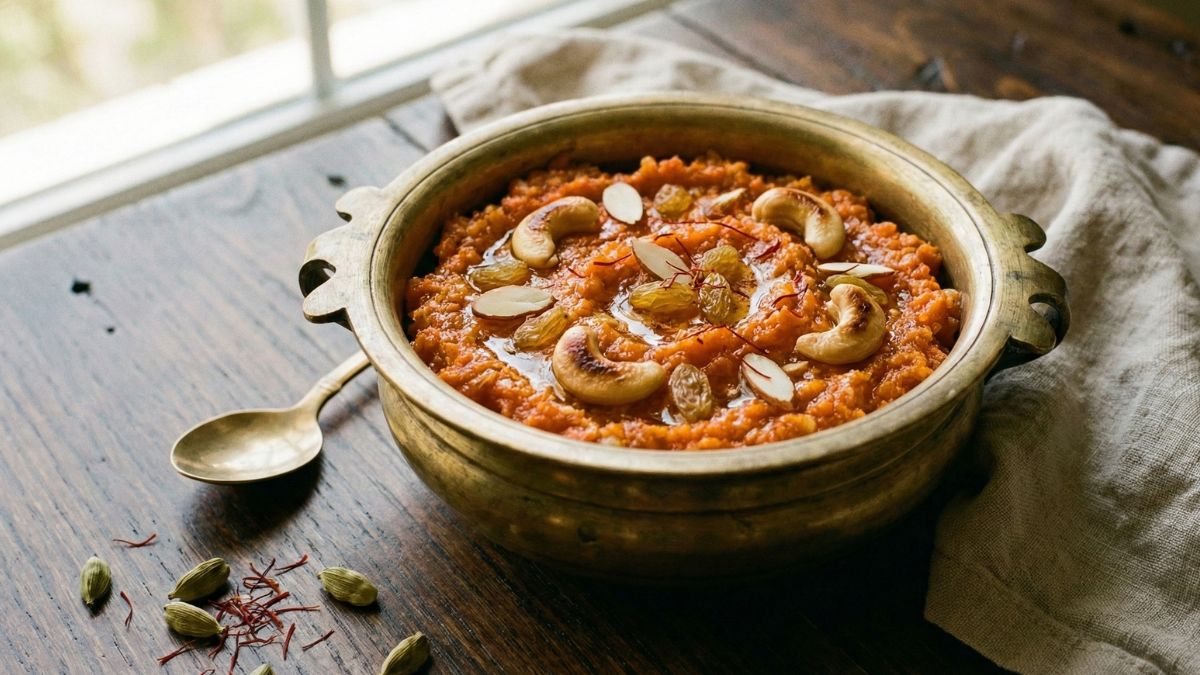
Carrot Halwa Recipe (Gajar ka halwa)

Ingredients
- 500 g carrots peeled and grated
- 1 liter full-fat milk
- 4 tbsp ghee, divided
- 100 g sugar (adjust to taste)
- 4 green cardamom pods, seeds crushed
- 10 cashews, chopped
- 10 almonds, sliced
- 1 tbsp raisins (optional)
- A pinch of saffron strands (optional)
Instructions
- Heat 2 tablespoons of ghee in a heavy-bottomed pan or kadhai over medium heat. Add the grated carrots and sauté for 5 minutes until they soften slightly and release moisture.
- Pour in the milk and stir well. Bring to a gentle boil, then reduce the heat to medium-low. Let the carrots cook in the milk, stirring occasionally to prevent sticking at the bottom.
- Continue cooking for 30 to 35 minutes until the milk reduces by three-fourths and the carrots absorb most of the liquid. The mixture should look thick and moist, not soupy.
- Add the sugar and crushed cardamom. Stir well and cook for another 5 to 7 minutes until the sugar dissolves completely and the halwa thickens further. The mixture will start leaving the sides of the pan.
- In a small pan, heat the remaining 2 tablespoons of ghee. Fry the cashews, almonds, and raisins until the cashews turn light golden. Pour this tempering over the halwa and mix well.
- If using saffron, soak the strands in 1 tablespoon of warm milk for 2 minutes, then add to the halwa. Stir and cook for another minute.
- Turn off the heat. Let the carrot halwa rest for 5 minutes before serving. It will thicken slightly as it cools.
Notes
- Pan choice – Use a heavy-bottomed pan or non-stick kadhai to prevent scorching. A wide pan helps milk evaporate faster.
- Make-ahead – You can make this halwa 2 days in advance. Store covered in the fridge and reheat gently on the stove with a splash of milk.
- Freezing – Carrot halwa freezes well for up to 1 month. Thaw in the fridge overnight and reheat before serving.
- Carrot quality – Choose firm, naturally sweet carrots. Avoid old or woody carrots as they take longer to soften and taste bland.
- Consistency control – If the halwa looks too dry, add 2 to 3 tablespoons of warm milk and stir. If too runny, cook on low heat for a few more minutes.
- Serving temperature – Carrot halwa tastes great warm, at room temperature, or chilled. Try all three and pick your favourite.
- Garnish ideas – Top with extra nuts, a drizzle of warm ghee, or edible silver leaf for special occasions.
Serving Suggestions
Serve carrot halwa warm in small bowls or katoris, topped with extra toasted nuts and a drizzle of ghee. It pairs beautifully with a scoop of vanilla ice cream for temperature contrast, or serve it alongside hot masala chai for a cosy winter evening. This dessert works well for Diwali, dinner parties, or Sunday family meals. You can also pack it in small containers as a festive gift for neighbours and friends.
Common Issues & Solutions
Halwa turned out too watery – Cook it longer on low heat until excess moisture evaporates. Stir frequently to prevent burning at the bottom.
Carrots are still crunchy – This happens when the heat is too high or the cooking time is too short. Lower the flame and cook until carrots soften completely in the milk.
Halwa tastes burnt – The bottom likely scorched due to high heat or insufficient stirring. Use a heavy pan next time and keep the flame on medium. Stir every few minutes.
Too sweet or not sweet enough – Taste after adding sugar and adjust before finishing. Remember that halwa tastes slightly less sweet when cold.
Halwa became too dry – Add 3 to 4 tablespoons of warm milk and reheat gently while stirring. This brings back the soft, fudgy texture.
Milk curdled during cooking – This can happen if the milk was not fresh or the heat was too high. Use fresh full-fat milk and maintain a steady medium flame.
FAQs
Q1: Can I make carrot halwa without milk?
Ans: Yes, you can use full-fat coconut milk or almond milk for a dairy-free version. Reduce the quantity to 750 ml, as plant milk evaporates differently and may curdle at high heat.
Q2: How long does carrot halwa last in the fridge?
Ans: Stored in an airtight container, carrot halwa stays fresh for 5 days in the fridge. Reheat with a splash of milk before serving to restore softness.
Q3: Can I use a pressure cooker to make carrot halwa?
Ans: Yes, pressure cook grated carrots with milk for 2 whistles on medium heat. Release pressure naturally, then cook on open flame with ghee and sugar until thickened.
Q4: What can I do with leftover carrot halwa?
Ans: Use it as a filling for parathas, spread it on toast, layer it in a trifle with cream, or roll it into small balls and coat with desiccated coconut for quick sweets.
Q5: Is carrot halwa healthy?
Ans: Carrot halwa provides vitamin A, fiber, and calcium from milk. It is calorie-dense due to ghee and sugar, so enjoy it in moderation as an occasional treat rather than a daily dessert.