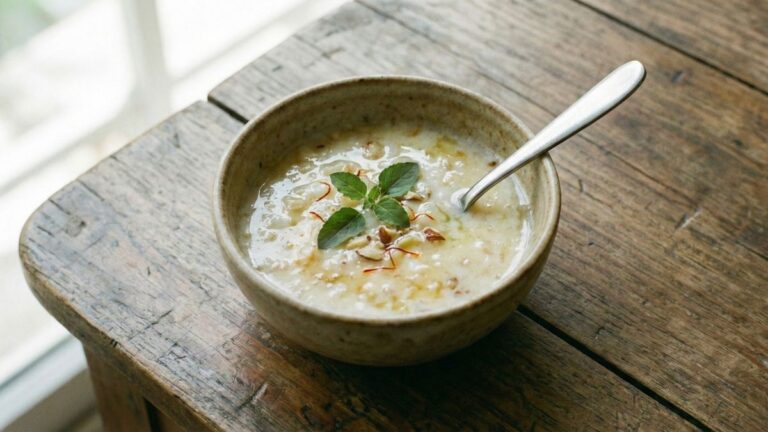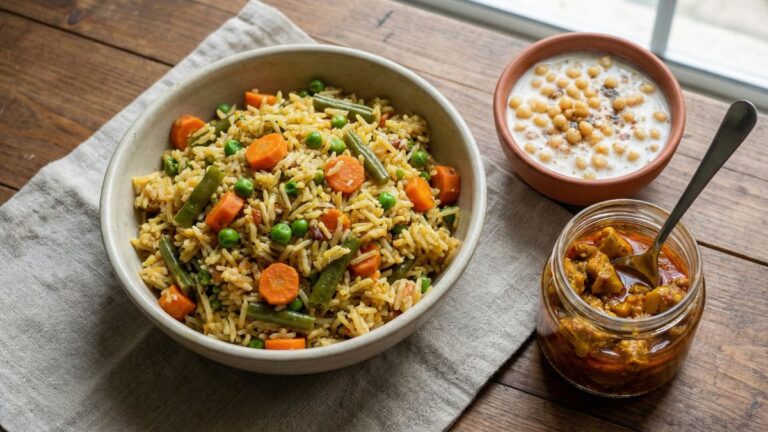

Dalia is one of those wholesome Indian breakfast dishes that feels like a warm hug on busy mornings. I grew up eating sweet dalia on cold winter days, and the savoury version became my go-to when I wanted something filling yet light. This recipe is incredibly forgiving, takes about 25 minutes, and works beautifully whether you want it sweet or savoury.
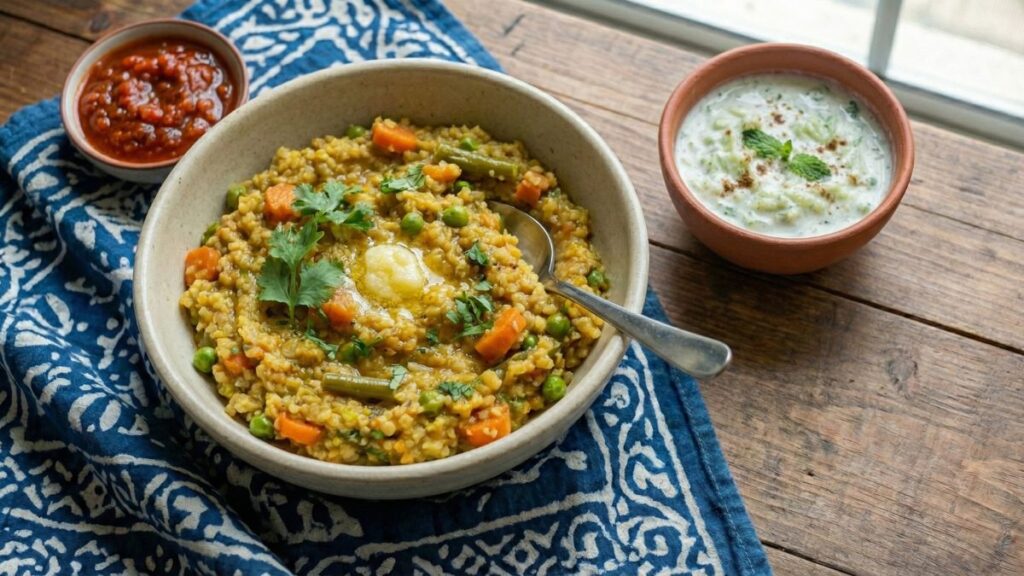
What is Dalia?
Dalia is broken wheat or cracked wheat, known as bulgur in Western kitchens. In Indian homes, it transforms into a comforting porridge that can be sweet or savoury, often served for breakfast or as a light dinner. The grains cook down to a soft, slightly chewy texture that absorbs flavours beautifully.
This dish is naturally high in fibre, vegetarian, and incredibly versatile. You will find sweet dalia in North Indian homes during winters, while the savoury version (often called dalia khichdi) is popular across India as a nutritious meal for everyone from toddlers to older adults.
About my Authentic Recipe
This recipe gives you both versions because honestly, they are equally loved in my kitchen. The savoury dalia uses a simple tadka of cumin and vegetables, which is how my mother made it every Sunday. The sweet version relies on milk and jaggery for natural sweetness without being overly rich.
The key technique here is toasting the dalia lightly before cooking. This step adds a nutty depth and prevents the porridge from turning gummy. Many recipes skip this, but it makes a real difference in texture and flavour. I also keep the vegetable-to-grain ratio balanced so the dish stays light, not heavy.
Why You’ll Love This Recipe
Quick and nourishing. Ready in 20 minutes with minimal prep and simple pantry ingredients.
Flexible for any taste. Make it savoury with vegetables and spices, or sweet with milk and jaggery.
Beginner-friendly. Hard to mess up, and the steps are straightforward even if you have never cooked with broken wheat before.
Naturally healthy. High in fibre, easy to digest, and keeps you full without feeling weighed down.
Ingredients & Substitutes
Dalia (broken wheat): Use the coarse or medium variety, not the fine powder. You can substitute with steel-cut oats or cracked bulgur wheat, though cooking time may vary slightly.
Ghee or oil: Ghee adds richness to both versions. Use any neutral oil for a lighter option, or coconut oil for the sweet version.
Vegetables (for savoury): Carrots, peas, beans, and tomatoes work well. Use whatever you have on hand. Frozen mixed vegetables are fine too.
Milk (for sweet): Full-fat milk makes it creamier, but you can use any plant-based milk like almond or oat milk for a vegan version.
Jaggery or sugar: Jaggery gives a caramel-like depth. Replace with brown sugar, coconut sugar, or regular sugar if needed.
Variations
Vegan Dalia: Use oil instead of ghee and plant-based milk for the sweet version. Skip dairy entirely and add nuts for richness.
Protein-Packed: Stir in a handful of roasted peanuts, cashews, or a spoonful of peanut butter into the savoury version. Add chopped almonds and raisins to the sweet one.
Masala Dalia: Add a pinch of garam masala and red chilli powder to the savoury version for a spicier, more flavourful dish.
Fruit Dalia: Top the sweet version with sliced bananas, apples, or berries for added freshness and nutrition.
Dalia Khichdi Style: Add moong dal (split yellow lentils) along with the dalia for extra protein and a softer texture.
Expert Tips for Dalia Recipe
Toast the dalia first. Dry roast it in the pan for 2-3 minutes until it smells nutty. This prevents stickiness and adds flavour.
Control the water ratio. Use 2.5 cups of water for 1 cup dalia if you want it thick, or 3 cups for a thinner porridge. Adjust as it cooks.
Temper with cumin seeds. For savoury dalia, start with cumin seeds in hot ghee. Let them crackle fully before adding anything else. This builds the flavour base.
Add vegetables at the right time. Harder vegetables like carrots go in early. Peas and tomatoes can be added halfway through cooking so they do not turn mushy.
Sweeten gradually. For sweet dalia, add jaggery or sugar after the grains are fully cooked. Adding it too early can make the dalia take longer to soften.
Let it rest. After cooking, cover the pan and let the dalia sit for 3-4 minutes. It absorbs any remaining liquid and the texture improves.
Use a pressure cooker for speed. Cook dalia with water and a pinch of salt for 2 whistles on medium flame. Release pressure naturally and then proceed with tadka or milk as needed.
Season at the end. Taste and adjust salt, sweetness, or spices just before serving. Dalia absorbs seasoning as it sits, so go a little lighter than you think.
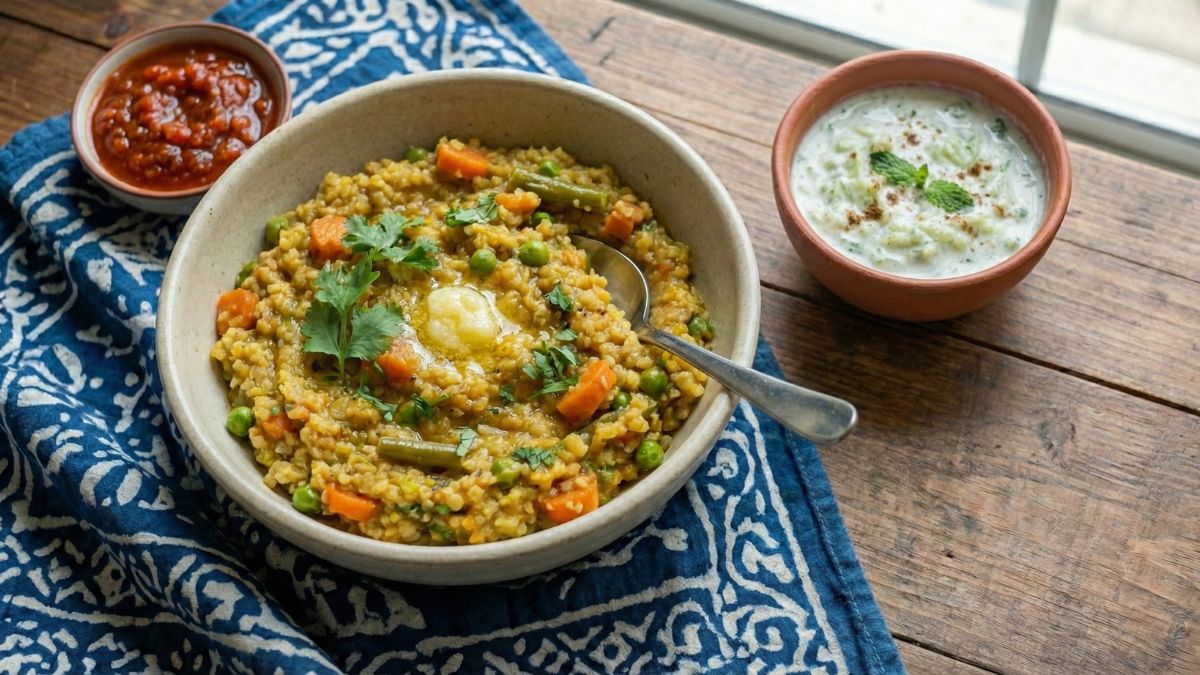
Sweet & Savoury Dalia Recipe

Ingredients
For Savoury Dalia
- 1 cup dalia broken wheat
- 2 tbsp ghee or oil
- 1 tsp cumin seeds
- 1 green chilli slit
- 1 small onion chopped
- 1 small carrot diced
- ¼ cup green peas
- 1 small tomato chopped
- 1/4 tsp turmeric powder
- Salt to taste
- 2½ to 3 cups water
- Fresh coriander leaves for garnish
- Lemon juice optional
For Sweet Dalia
- 1 cup dalia broken wheat
- 2 tbsp ghee
- 2 cups milk
- 1 cup water
- 3 tbsp jaggery or sugar
- ¼ tsp cardamom powder
- 10 cashews and raisins optional
- A pinch of saffron optional
Instructions
For Savoury Dalia
- Heat a pan on medium flame and dry roast the dalia for 2-3 minutes, stirring continuously, until it smells nutty. Remove and set aside.
- In the same pan, heat ghee or oil. Add cumin seeds and let them crackle.
- Add the slit green chilli and chopped onion. Saute for 2 minutes until the onion turns translucent.
- Add diced carrot and peas. Stir for a minute, then add chopped tomato and turmeric powder. Cook for 2 minutes until the tomato softens.
- Add the roasted dalia and salt. Stir everything together for a minute so the dalia absorbs the flavours.
- Pour in 2.5 to 3 cups of water depending on how thick you want the porridge. Stir well.
- Bring to a boil, then reduce the flame to low. Cover and cook for 12-15 minutes, stirring occasionally, until the dalia is soft and the water is absorbed.
- Turn off the flame. Let it rest covered for 3-4 minutes. Garnish with fresh coriander and a squeeze of lemon juice if you like. Serve hot.
For Sweet Dalia
- Dry roast the dalia in a pan on medium flame for 2-3 minutes until aromatic. Set aside.
- In the same pan, heat ghee. Add cashews and raisins (if using) and fry for a minute until golden. Remove and set aside.
- Add the roasted dalia to the ghee. Stir for a minute.
- Pour in the milk and water. Stir well and bring to a gentle boil.
- Reduce the flame to low. Cover and cook for 12-15 minutes, stirring occasionally, until the dalia is soft and creamy.
- Add jaggery or sugar and cardamom powder. Stir well and cook for another 2 minutes until the sweetener dissolves completely.
- Turn off the flame. Add the fried cashews and raisins. Mix gently. Add a pinch of saffron if using. Serve warm.
Notes
Common Issues & Solutions
Dalia is too sticky or gummy: You likely used too little water or did not roast the dalia before cooking. Next time, dry roast it well and use at least 2.5 cups of water per cup of dalia. If it is already cooked, stir in warm water gradually to loosen it.
Dalia is undercooked and hard: It needs more time and liquid. Add half a cup of warm water, cover, and simmer on low flame for another 5-7 minutes. Check and adjust.
Savoury dalia tastes bland: Season it properly with salt and finish with a squeeze of lemon juice. The tadka of cumin and green chilli should be strong. If it is already cooked, heat a teaspoon of ghee in a small pan, add cumin seeds and pour over the dalia.
Sweet dalia is too thin: Simmer it uncovered for a few more minutes, stirring occasionally. The liquid will reduce and the dalia will thicken. You can also mash a few grains with the back of a spoon to help it thicken naturally.
Vegetables are mushy in savoury dalia: Add harder vegetables like carrots early, but add softer ones like tomatoes and peas only halfway through cooking. This keeps them from breaking down too much.
Dalia takes too long to cook: Make sure you are using broken wheat, not whole wheat grains. Roasting also speeds up cooking. If using a pressure cooker, 2 whistles should be enough.
Serving and Storage Suggestions
How to serve: Savoury dalia is best served hot with a dollop of ghee on top, alongside pickle or papad for crunch. The sweet version is lovely on its own or topped with fresh fruits, nuts, or a drizzle of honey.
Best pairings: Serve savoury dalia with yoghurt, a simple cucumber raita, or a tangy tomato chutney. It also goes well with a hot cup of chai. Sweet dalia pairs beautifully with a glass of warm milk or as a dessert after a light meal.
When to serve: Savoury dalia works as a wholesome breakfast, a light lunch, or even a comforting dinner when you want something easy on the stomach. Sweet dalia is perfect for breakfast, as an evening snack, or during festivals like Navratri when you want something filling yet light.
Storage: Store leftover dalia in an airtight container in the fridge for up to 2 days. Reheat gently on the stove with a splash of water or milk, stirring well. The texture may thicken as it sits, so adjust the consistency as needed.
FAQs
Q1: Can I make dalia in advance?
Ans: Yes. Cook the dalia with water and store it plain in the fridge for up to 2 days. When ready to eat, reheat and add your tadka for savoury or milk and sweetener for the sweet version.
Q2: Is Dalia the same as oats?
Ans: No. Dalia is made from broken wheat, while oats come from oat grains. They have different textures and flavours, though both are nutritious. You can substitute steel-cut oats for dalia, but the taste will be different.
Q3: Can I make sweet dalia without milk?
Ans: Yes. Use water or any plant-based milk like almond, coconut, or oat milk. The texture will be lighter, but it will still taste good. Add a little extra ghee or coconut oil for richness.
Q4: How do I make dalia for weight loss?
Ans: Use minimal ghee or oil, skip sugar or jaggery, and load the savoury version with vegetables. Keep the portion size moderate. Dalia is naturally high in fibre, which helps with satiety.
Q5: Can I use fine dalia instead of coarse?
Ans: Fine dalia cooks faster and can turn mushy easily. If using it, reduce the water slightly and cook for less time. Coarse or medium dalia gives the best texture for porridge.