

Curd rice is one of those dishes that feels like a hug in a bowl. Creamy, cooling, and impossibly soothing, it has been my go-to meal on hot summer afternoons or when I need something gentle on the stomach. This simple South Indian staple takes just minutes to make and pairs beautifully with spicy pickles or papads. If you have never made curd rice at home, this is the easiest recipe to start with.
What is Curd Rice?
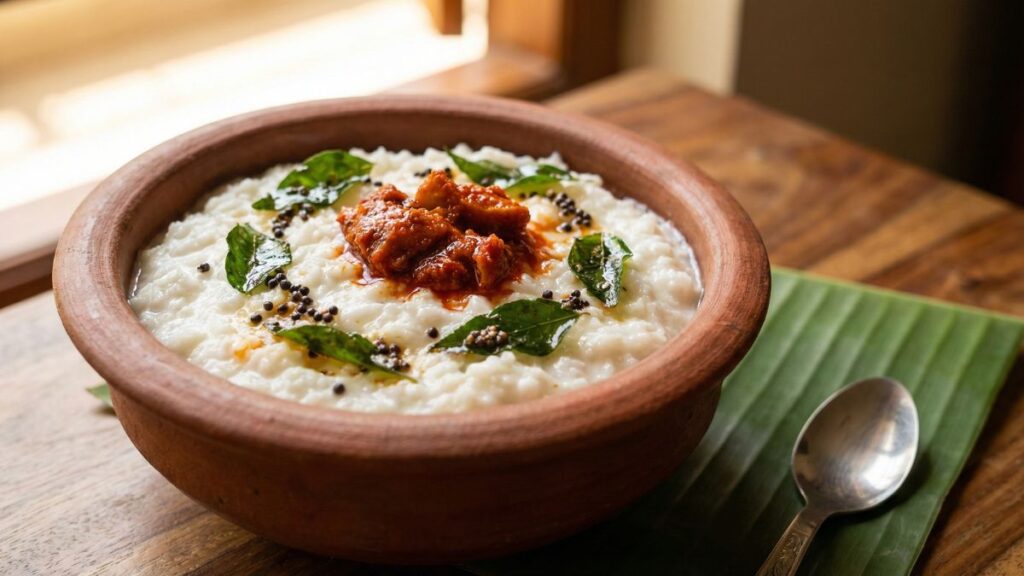
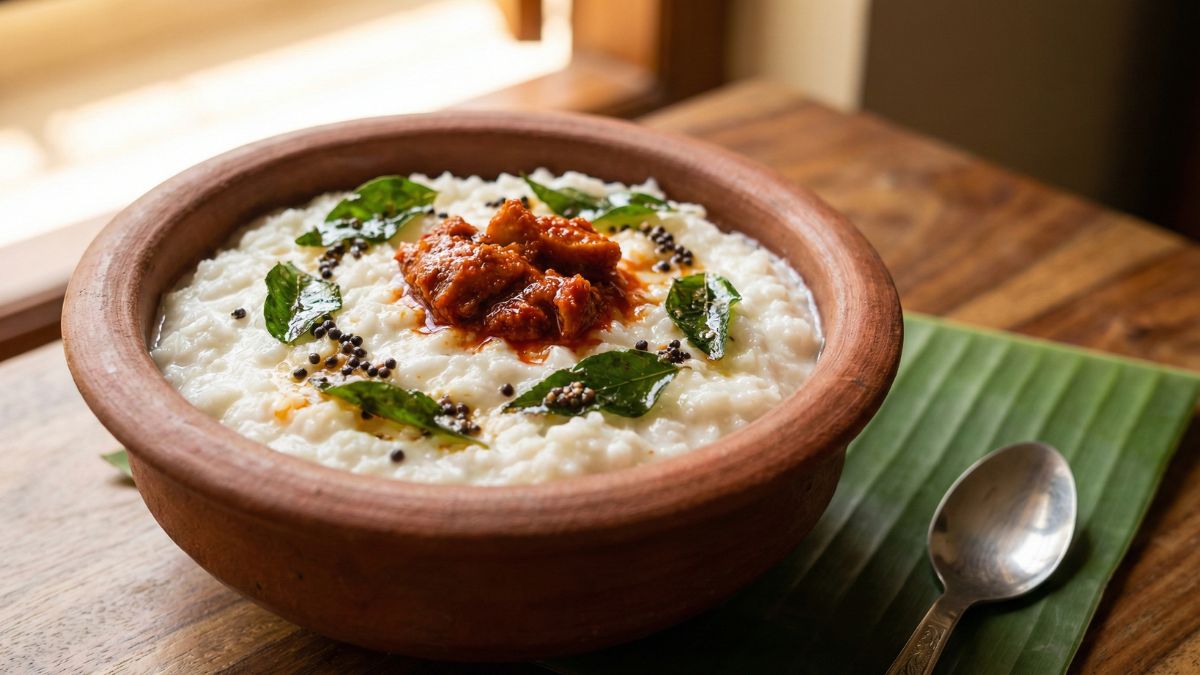
Curd rice, or thayir sadam as it is called in Tamil, is a traditional South Indian dish made by mixing cooked rice with fresh yogurt and tempering it with mustard seeds, curry leaves, and green chilies. The result is a cool, creamy, mildly tangy bowl that balances heat and spice perfectly.
It is typically served at the end of a meal in South Indian homes and restaurants to aid digestion and cool the palate. Completely vegetarian and naturally gluten-free, this dish is beloved for its simplicity and comfort factor.
About my Authentic Recipe
I learned to make curd rice from a neighbor aunt who grew up in Chennai, where this dish is part of everyday life. Her version skips any fuss and focuses on getting the consistency and tempering just right, which is what makes all the difference.
The key to excellent curd rice is using slightly warm rice so the yogurt mixes in smoothly without curdling, and a quick tadka that releases the flavors of mustard seeds and curry leaves into hot oil. Some families add grated carrots or pomegranate for crunch, but the base remains beautifully simple.
This recipe is authentic to Tamil-style curd rice, with a focus on balancing creaminess and tang. The tempering adds a layer of warmth and aroma that transforms plain yogurt rice into something truly satisfying.
Why You’ll Love This Recipe
This curd rice comes together in under 15 minutes and requires no complicated techniques. It is cooling, gut-friendly, and perfect for hot days or when you need a break from rich curries. The tempering adds a subtle kick without overwhelming the dish, making it suitable for all ages. Plus, it travels well and tastes even better after a few hours in the fridge.
Ingredients & Substitutes
Rice – Use any short-grain or medium-grain white rice. Sona masoori works wonderfully. Day-old cooked rice also works perfectly and actually makes the process faster.
Yogurt – Fresh, thick curd is essential. If your yogurt is too thin, hang it in a muslin cloth for 20 minutes to drain excess water. Avoid flavored or sweetened yogurt.
Mustard seeds and curry leaves – These are the heart of the tempering. Curry leaves can be frozen if fresh ones are hard to find, but avoid skipping them.
Green chilies – Use one or two depending on your heat preference. You can also use finely chopped ginger for a milder version.
Oil or ghee – Both work, but ghee adds richness and authentic flavor.
Variations
Veggie-loaded curd rice – Add finely chopped cucumber, grated carrot, or pomegranate arils for crunch and freshness.
Vegan version – Swap yogurt with thick coconut yogurt or cashew yogurt. Use coconut oil for tempering.
Protein boost – Stir in boiled moong dal or roasted chana dal for added texture and nutrition.
Kid-friendly – Skip the green chilies entirely and reduce the tempering spices. Add a pinch of salt and mix in finely chopped grapes for a hint of sweetness.
Rava curd rice – Replace half the rice with roasted rava (semolina) for a different texture.
Expert Tips for Curd Rice
Use slightly warm or room temperature rice when mixing with yogurt. Hot rice will curdle the yogurt, while cold rice will not blend smoothly.
Adjust the yogurt quantity based on how creamy you want the dish. Start with less and add more as needed.
Do not overheat the yogurt. Once you add it to the rice, keep the mixture at room temperature or chilled. Reheating curd rice can make it sour.
Temper the spices in very hot oil to release maximum flavor. The mustard seeds should splutter and the curry leaves should crisp up slightly.
Add a tablespoon of milk to the yogurt rice if it feels too thick. This keeps the texture smooth and creamy.
Let the curd rice sit for 10 to 15 minutes before serving. This resting time allows the flavors to meld beautifully.
Taste and adjust salt after mixing, as yogurt can vary in tanginess and the rice absorbs seasoning over time.
For travel or tiffin boxes, pack the tempering separately and pour it over the rice just before eating to keep the tadka fresh and crispy.
Curd Rice Recipe

Ingredients
For the curd rice
- 1 cup cooked rice slightly warm or room temperature
- 3/4 cup thick fresh yogurt curd
- 1/4 cup milk optional, for creaminess
- Salt to taste
For the tempering
- 1 tbsp oil or ghee
- 1 tsp mustard seeds
- 1 tsp urad dal split black gram
- 1 to 2 green chilies slit lengthwise
- 8 to 10 curry leaves
- 1 small piece ginger finely chopped, optional
- 1 pinch asafoetida hing
Optional add-ins
- 2 tbsp grated carrot
- 2 tbsp finely chopped cucumber
- 1 tbsp pomegranate arils
- 1 tbsp coriander leaves chopped
Instructions
- Take the cooked rice in a wide bowl. If it is too hot, let it cool to warm or room temperature. Mash it lightly with the back of a spoon so the grains break slightly and mix easily with yogurt.
- Add the yogurt and milk to the rice. Mix well until everything is smooth and creamy. Adjust the consistency by adding more yogurt or milk if needed. Add salt to taste and mix again.
- Heat oil or ghee in a small tadka pan or small kadhai over medium heat. Once hot, add mustard seeds and let them splutter for a few seconds.
- Add urad dal and fry until it turns golden brown. This should take about 30 seconds. Watch closely so it does not burn.
- Add the slit green chilies, curry leaves, chopped ginger if using, and a pinch of asafoetida. Fry for 10 to 15 seconds until the curry leaves turn crisp and aromatic.
- Pour this hot tempering over the prepared curd rice. Mix gently to distribute the tempering evenly.
- If using any optional add-ins like grated carrot, cucumber, or pomegranate, fold them into the rice now.
- Let the curd rice rest for 10 minutes at room temperature or chill it in the fridge for 20 to 30 minutes before serving. This helps the flavors come together beautifully.
Notes
Common Issues & Solutions
Curd rice is too thick – Stir in a little milk or water to loosen the consistency. Add a tablespoon at a time until it reaches your preferred texture.
Yogurt curdled or looks grainy – This happens if you add yogurt to hot rice. Always let the rice cool to warm or room temperature before mixing. You can still eat it, but the texture will not be as smooth.
Tempering burnt or bitter – Lower the heat and watch the urad dal closely. It should turn golden, not dark brown. If burnt, discard and make a fresh batch, as burnt tempering will ruin the flavor.
Curd rice tastes too sour – Use fresher yogurt next time. If already made, balance the sourness by adding a pinch of sugar or a bit more salt.
Too watery – Use thick yogurt or drain excess whey before mixing. You can also reduce the milk or skip it entirely.
No flavor or tastes bland – Increase the salt slightly and make sure your tempering is done in very hot oil. Mustard seeds and curry leaves need high heat to release their flavors properly.
Serving and Storage Suggestions
Serve curd rice chilled or at room temperature as a light meal or side dish. It pairs beautifully with spicy mango pickle, lemon pickle, or appalam (papad). In South Indian meals, it is traditionally served at the end to cool the palate after spicy curries and sambar.
Curd rice also makes an excellent packed lunch or tiffin option as it stays fresh for hours without refrigeration. For best results, store it in an airtight container in the fridge for up to one day. Add fresh tempering before serving if you want to revive the flavors. Avoid freezing as yogurt-based dishes do not freeze well.
Pair it with crispy potato fry, beetroot poriyal, or plain papads for a complete light meal. A cold glass of buttermilk or filter coffee makes a perfect beverage pairing.
FAQs
Q1. Can I use brown rice for curd rice?
Ans: Yes, cooked brown rice works well. It will give a nuttier flavor and slightly firmer texture. Mash it a bit more to help it blend with the yogurt.
Q2. How long can curd rice be stored?
Ans: Curd rice stays fresh in the refrigerator for up to 24 hours. Beyond that, the yogurt may turn too sour. Always store in an airtight container.
Q3. Can I make curd rice without tempering?
Ans: You can, but the tempering is what gives curd rice its signature flavor. Without it, the dish will taste plain. If short on time, just add a quick mustard seed and curry leaf tadka.
Q4. Is curd rice good for digestion?
Ans: Yes, the probiotics in fresh yogurt and the cooling nature of the dish make it gentle on the stomach and helpful for digestion, especially after spicy meals.
Q5. Can I make this vegan?
Ans: Absolutely. Use thick coconut yogurt or cashew yogurt instead of dairy yogurt, and replace ghee with coconut oil for the tempering. The flavor will be slightly different but still delicious.