
I still remember the first time I bit into a perfectly spongy rasgulla at a sweet shop in Kolkata. The way it bounced back under my fingers and released that sweet, fragrant syrup was magic. This homemade rasgulla recipe gives you those same soft, melt-in-mouth results right in your kitchen, and once you master the chenna-making technique, you will never go back to store-bought ones. Whether you are celebrating a festival or just craving something sweet, fresh rasgullas are always a hit.
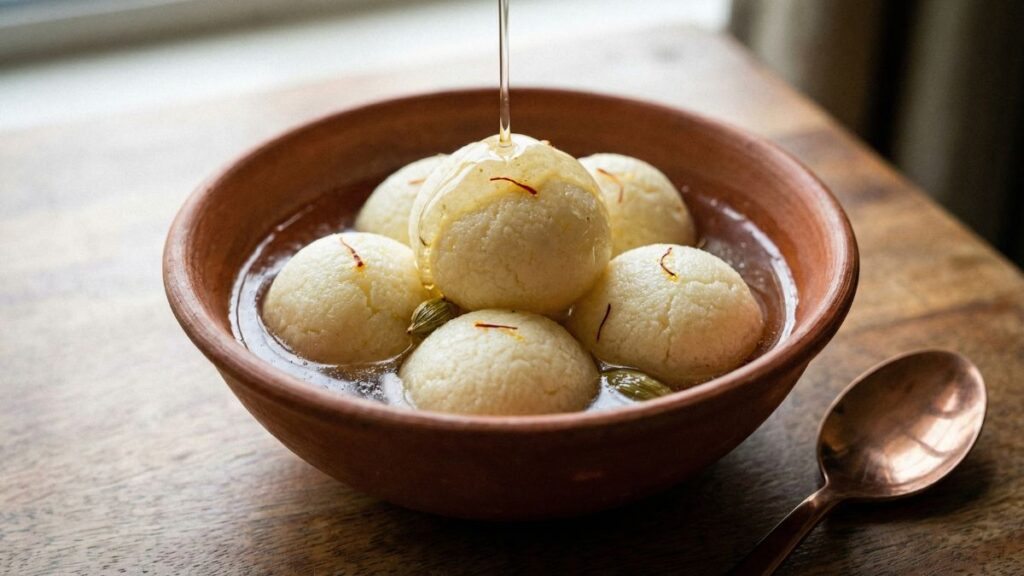
What is Rasgulla?
Rasgulla is a classic Bengali sweet made from soft chenna (Indian cottage cheese) balls cooked in light sugar syrup. The result is a spongy, juicy dessert that soaks up the fragrant syrup beautifully. It is completely vegetarian and has a delicate, mildly sweet taste that is not overwhelming.
This dessert is hugely popular across India, especially during festivals and celebrations. The texture should be soft and springy, never dense or hard. Getting the right chenna consistency is the secret to perfect rasgullas.
About my Authentic Recipe
This recipe follows the traditional Bengali method that my aunt taught me during a summer visit to Kolkata. The key difference here is the kneading technique and cooking time, both of which directly affect how spongy your rasgullas turn out.
I use full-fat milk and lemon juice for curdling because it gives cleaner, softer chenna compared to vinegar. The gentle kneading (not overworking the chenna) keeps the texture light. Then comes the critical step of cooking the balls in boiling sugar syrup with enough space for them to double in size.
This method ensures your rasgullas are never dense or rubbery. The slow simmer in covered syrup helps them puff up beautifully and absorb just the right amount of sweetness.
Why You’ll Love This Recipe
You will love how surprisingly simple this recipe is once you understand the chenna-making process. The ingredients are minimal, just milk, lemon juice, sugar and water. These rasgullas taste incredibly fresh compared to packaged versions and have that authentic melt-in-mouth texture. They are perfect for any celebration or when you want to impress guests with a traditional Indian sweet made from scratch.
Ingredients & Substitutes
Milk – Use full-fat whole milk for the softest chenna. Low-fat milk will give drier, harder results. Avoid milk that is ultra-pasteurised as it does not curdle well.
Lemon juice – Freshly squeezed works best. You can substitute with white vinegar (2 to 3 tablespoons), but lemon gives a cleaner taste.
Sugar – Regular white granulated sugar for the syrup. Avoid brown sugar as it changes the color and flavor.
Cardamom or rose water – Optional for flavoring the syrup. Just a few drops of rose water or 2 to 3 crushed cardamom pods add a lovely fragrance.
Cornflour or maida – A tiny pinch (less than quarter teaspoon) can be added to the chenna if it feels too soft or grainy, but use sparingly.
Variations
Kesar Rasgulla – Add a few strands of saffron to the sugar syrup for a golden hue and subtle flavor.
Rose Rasgulla – Flavor the syrup with rose water and add a drop of pink food color for festive occasions.
Stuffed Rasgulla – Flatten each chenna ball slightly, add a tiny piece of pistachio or dried fruit in the center, and seal before cooking.
Smaller Mini Rasgullas – Make bite-sized pieces that cook faster, perfect for parties or serving a crowd.
Sugar-Free Version – Replace sugar with a keto-friendly sweetener in equal amounts, though texture may vary slightly.
Expert Tips for Rasgulla
Use the freshest milk possible. Older milk produces grainy chenna that will not give you smooth rasgullas.
Do not over-knead the chenna. Just 4 to 5 minutes of gentle kneading until it becomes smooth and slightly greasy is enough. Over-kneading releases too much moisture and makes the balls dense.
Make sure your sugar syrup is at a rolling boil before adding the chenna balls. This helps them puff up immediately.
Keep the lid on while cooking but check every 5 minutes. The rasgullas need steam to expand properly.
If the balls break while cooking, your chenna was too dry. Next time, leave a bit more moisture in the chenna or add a tiny pinch of cornflour while kneading.
Let the rasgullas cool completely in the syrup before serving. They continue to absorb sweetness as they cool.
Always make the sugar syrup in a wide, heavy-bottomed pan so the rasgullas have space to expand without crowding.
Test one rasgulla first. If it holds shape and doubles in size, your chenna is perfect. If it disintegrates, knead the remaining chenna a bit more.
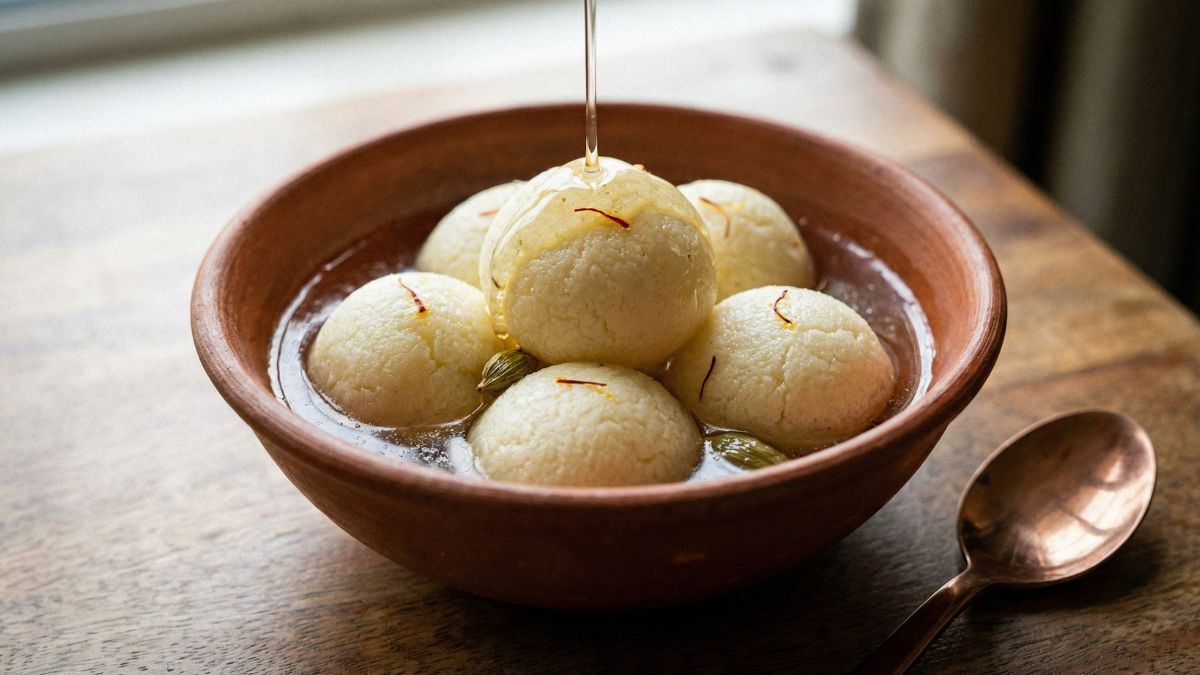
Authentic Rasgulla Recipe

Ingredients
For Chenna
- 1 liter full-fat whole milk
- 3 tbsp lemon juice freshly squeezed
- 2 cups water for curdling
For Sugar Syrup
- 2 cups sugar
- 5 cups water
- 3 to 4 cardamom pods lightly crushed, optional
- Few drops rose water optional
Instructions
Making the Chenna
- Boil the milk in a heavy-bottomed pan on medium-high heat. Stir occasionally to prevent burning at the bottom.
- Once the milk comes to a full boil, reduce heat to low. Add lemon juice mixed with 2 tablespoons of water, one tablespoon at a time, stirring gently until the milk curdles completely and the whey separates. The whey will be yellowish-green and clear.
- Turn off the heat immediately. Do not over-boil after curdling or the chenna will become hard.
- Line a strainer with a clean muslin cloth or thin cotton cloth. Pour the curdled milk through it to separate the chenna from the whey.
- Rinse the chenna under cold running water for 30 seconds to remove the lemony smell and cool it down.
- Gather the cloth and squeeze out excess water gently. Do not squeeze too hard. Hang the cloth for 15 to 20 minutes to let the remaining whey drip out. The chenna should be moist but not dripping wet.
Kneading and Shaping
- Transfer the chenna to a clean plate or flat surface. Knead it gently with your palm for 4 to 5 minutes until it becomes smooth, slightly greasy, and holds together without cracks. If you see cracks, knead a bit more.
- Divide the chenna into 12 equal portions. Roll each portion between your palms into a smooth, crack-free ball. Make sure there are no cracks on the surface as they will break during cooking
Making Sugar Syrup and Cooking
- In a wide, heavy-bottomed pan or kadhai, combine 2 cups sugar and 5 cups water. Bring to a boil over high heat, stirring until the sugar dissolves completely.
- Add the crushed cardamom pods if using. Keep the syrup at a rolling boil.
- Gently slide the chenna balls into the boiling syrup, one at a time. They should have enough space to move around as they will double in size.
- Cover the pan with a lid and cook on high heat for 15 minutes. The rasgullas will puff up and float to the surface. Do not open the lid frequently, just check once or twice.
- After 15 minutes, reduce heat to medium and cook for another 5 minutes with the lid on.
- Turn off the heat and let the rasgullas cool down completely in the syrup. They will firm up as they cool and absorb more syrup.
- Once cooled, add a few drops of rose water to the syrup if desired. Refrigerate for at least 2 hours before serving for best taste and texture.
Notes
Common Issues & Solutions
Rasgullas breaking in syrup – Your chenna was too dry or had cracks. Make sure to knead until smooth and keep a bit more moisture next time. Also check that the syrup is boiling vigorously before adding the balls.
Hard and dense texture – Over-kneading the chenna or over-boiling the milk after curdling causes this. Knead gently for just 4 to 5 minutes and turn off heat immediately after curdling.
Rasgullas not puffing up – The sugar syrup was not at a rolling boil when you added them, or the pan was too small and crowded. Use a wide pan and ensure vigorous boiling.
Too sweet – Reduce sugar to 1.5 cups in the syrup or soak the cooked rasgullas in fresh water for 30 minutes, then transfer to lighter syrup.
Grainy chenna – The milk was old or you used low-fat milk. Always use fresh full-fat milk and do not overheat after curdling.
Flat rasgullas – You did not cover the pan while cooking or opened the lid too many times. Steam is essential for them to puff up, so keep the lid on for the first 15 minutes.
Serving and Storage Suggestions
Serve rasgullas chilled in individual bowls with some of the sugar syrup. They taste best when cold. These pair beautifully with other Bengali sweets like sandesh or mishti doi for a traditional dessert spread. Rasgullas are perfect for festivals like Durga Puja, Diwali, Raksha Bandhan, or any celebration.
You can also serve them with a scoop of vanilla ice cream for a fusion dessert. They go well with masala chai or after a rich meal as a light, refreshing sweet. Store in an airtight container in the refrigerator for up to 4 days.
FAQs
Q1. Can I use store-bought paneer instead of making chenna?
Ans: No, store-bought paneer is too firm and pressed. Rasgullas need fresh, soft, moist chenna made from curdling milk. The texture will not work with paneer.
Q2. Why did my rasgullas turn hard after cooling?
Ans: This happens when the chenna is over-kneaded or too dry. Make sure to knead gently and keep some moisture in the chenna. Also, let them cool completely in the syrup, not outside.
Q3. Can I make rasgullas without cardamom or rose water?
Ans: Yes, absolutely. Plain sugar syrup works perfectly. The flavorings are optional and just add a subtle fragrance.
Q4. How do I know when the chenna is kneaded enough?
Ans: The chenna should become smooth, slightly greasy, and hold together without any cracks. It should feel like soft playdough. If you press it between your fingers, it should not crumble.
Q5. Can I make rasgullas in advance?
Ans: Yes, rasgullas taste even better the next day after they have soaked in the syrup overnight. Make them up to 3 days in advance and store in the refrigerator.