
You know that moment when you add hot tadka over dal and the whole kitchen smells amazing? That sizzle, that aroma, it completely changes the dish. But getting tadka right can feel tricky when you are just starting out. Too hot and the spices burn. Not hot enough and there is no flavour.
Tadka is one of those simple techniques that makes everyday Indian cooking taste like home. Once you understand the basics, you will use it confidently in dals, kadhi, sabji, even rice dishes.
In this guide, I will walk you through what tadka actually is, when to use it, how to get the timing and temperature right, and the common mistakes that most of us make in the beginning.
What is Tadka and Why It Matters
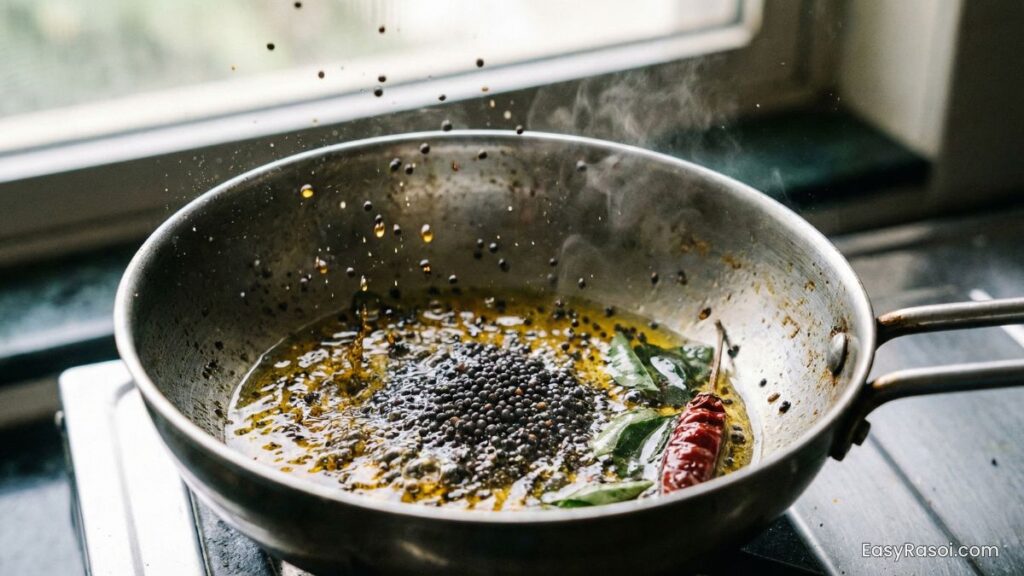
Tadka, also called tempering or chaunk, is the process of heating oil or ghee and adding whole spices to release their flavour and aroma. This flavoured oil is then poured over cooked dishes or added at the start of cooking.
It is not just for taste. Tadka helps spices bloom, makes dishes more aromatic, and adds that finishing touch that turns a simple dal into something you actually want to eat with roti.
The Two Types of Tadka
There are two main ways tadka is used in Indian kitchens.
1. Tadka at the beginning (vaghar or phodan)
You start by heating oil in a kadhai, add spices like jeera (Cumin seeds) or mustard seeds, let them crackle, then add onions, tomatoes, or vegetables. This is common in sabji, pulao, and everyday curries. The spices cook along with the dish and become part of the base flavour.
2. Tadka at the end (baghar)
This is when you prepare tadka separately in a small pan and pour it over a cooked dish like dal, kadhi, or raita. The hot oil carries the spice flavour directly into the dish without further cooking. It gives a fresh, strong aroma right before serving.
Both methods are useful. Which one you use depends on the dish and what flavour you want.
How to Make Tadka Step by Step
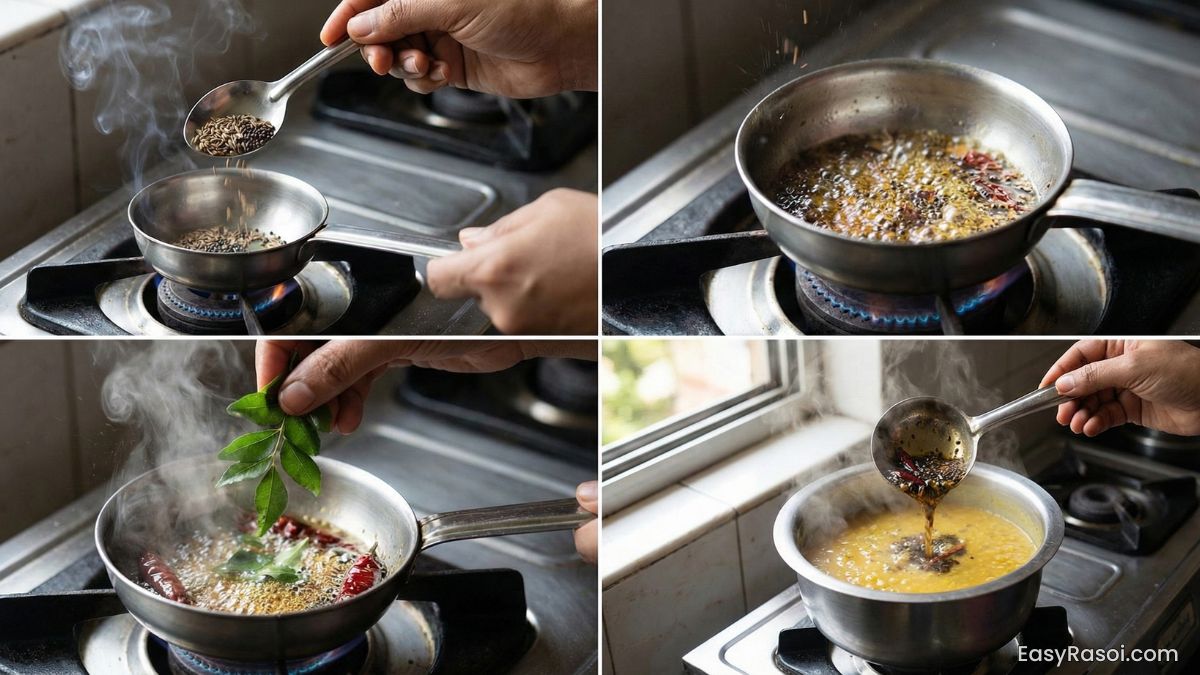
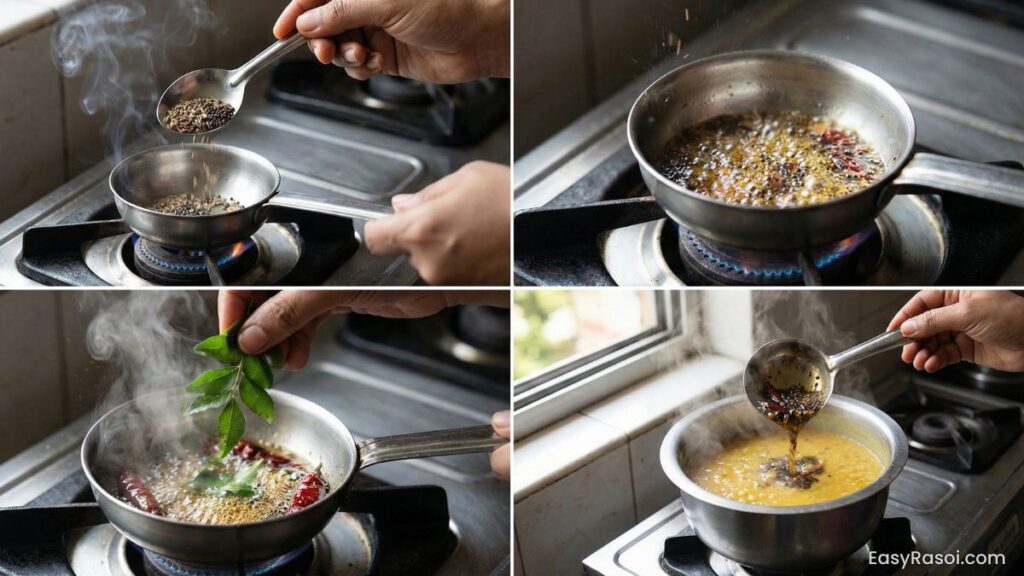
Making tadka is simple once you know the order and timing. Here is how I do it every day.
Step 1. Choose Your Fat
Use oil or ghee depending on the dish. Ghee gives a richer flavour and works well for dal and kadhi. Oil is lighter and good for everyday sabji or sambar. In Gujarati cooking, we often use a mix of both.
For one tadka, 1 to 2 tablespoons is usually enough.
Step 2. Heat the Oil or Ghee
Put your tadka pan or small kadhai on medium heat. Add the oil or ghee and let it heat for about 30 seconds. You want it hot, but not smoking.
The right temperature is when a single mustard seed or jeera dropped in the oil sizzles immediately. If it just sits there, the oil is not ready. If it burns instantly, the heat is too high.
Step 3. Add Whole Spices in the Right Order
This is where timing matters. Spices burn at different speeds, so you add them in stages.
Start with mustard seeds or jeera – These take a few seconds to crackle. Wait until they pop and release aroma.
Add hing (asafoetida) – Just a small pinch. It dissolves quickly and adds depth.
Add curry leaves and dry red chillies – Curry leaves will crackle and turn slightly crisp. Red chillies will darken a bit but should not turn black.
Add garlic or ginger (optional) – If using, add them last. They cook faster and can burn easily.
The whole process takes 20 to 40 seconds. Keep the pan moving slightly if needed.
Step 4. Pour Over the Dish or Continue Cooking
If you are making baghar, pour the hot tadka directly over your cooked dal or kadhi. You will hear a sizzle and smell the spices instantly. Mix gently and cover for a minute to let the flavours settle.
If you are making vaghar, add your onions, tomatoes, or vegetables right after the spices crackle, then continue with the recipe.
Common Spices Used in Tadka
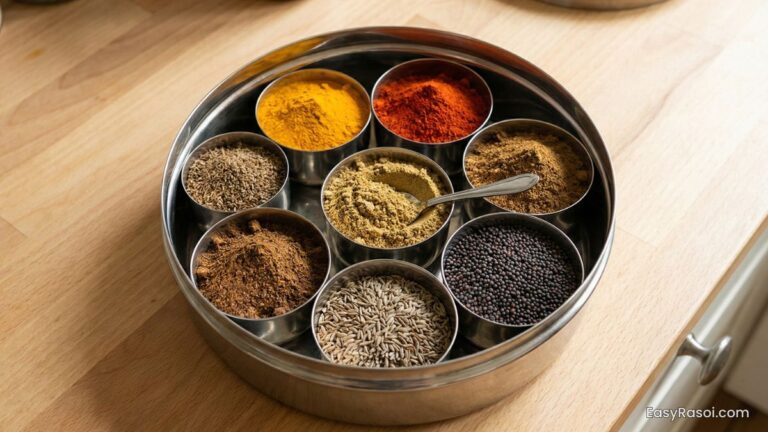
Different dishes need different spice combinations. Here are the most common ones used in Indian home cooking.
Mustard seeds (rai) – Used in South Indian and Gujarati dishes. They pop and add a slightly nutty, pungent flavour. Common in sambar, dal, and kadhi.
Cumin seeds (jeera) – Very common in North Indian cooking. Adds warmth and earthiness. Used in rajma, chole, sabji, and pulao.
Curry leaves – Mostly in South Indian and some Gujarati dishes. They add freshness and a unique aroma. Always use fresh, not dried.
Dry red chillies – Adds mild heat and colour. Break them in half for more flavour. Do not let them turn black.
Hing (asafoetida) – Just a pinch is enough. It enhances other spices and is common in dal and kadhi.
Garlic and ginger – Optional, but they add strong flavour. Slice or chop them thinly so they cook evenly in hot oil.
You do not need all of these in every tadka. Choose 2 to 4 spices based on your dish and region.
Read also: 15 Cooking Techniques Every Home Cook Should Learn
When to Use Tadka in Your Cooking
Tadka is not just for dal. You can use it in many everyday dishes to boost flavour.
Dal and kadhi
This is the most common use. Pour hot tadka over cooked dal or kadhi just before serving. It freshens up the flavour and makes the dish aromatic.
Sabji and curries
Start with vaghar by heating oil, adding jeera or mustard seeds, then cooking onions and tomatoes. This builds the flavour base.
Rice dishes
Pulao, khichdi, and lemon rice all begin with tadka. The spices get toasted in oil before you add rice and water.
Raita and yogurt dishes
A light tadka with jeera and curry leaves poured over plain raita or dahi makes it more interesting.
Soups and khichdi
Even simple moong dal khichdi tastes better with a quick tadka of jeera and hing at the end.
Once you get comfortable, you will start adding tadka almost instinctively to improve any dish that feels a bit flat.
Common Mistakes and How to Avoid Them
Most tadka problems come from heat and timing. Here are mistakes I made when I was learning and how to fix them.
Burning the spices – This happens when the oil is too hot or you wait too long after adding spices. If jeera or mustard seeds turn dark brown or black, they will taste bitter. Solution is to lower the heat slightly and work faster.
Not heating the oil enough – If the oil is not hot, spices will not crackle or release flavour. They will just sit in the oil and the tadka will taste raw. Always test with one seed first.
Adding all spices together – Different spices need different cooking times. If you dump everything at once, some will burn while others stay raw. Add them in the right order as I mentioned earlier.
Using too much oil – Tadka should flavour the dish, not make it greasy. 1 to 2 tablespoons is enough for most dishes. More than that and the dish feels oily.
Not covering the pan – Mustard seeds can pop out of the pan and land everywhere. Keep a lid nearby or use a splatter screen, especially with rai.
Reheating tadka – Tadka is best when freshly made. If you make it ahead and reheat, the spices lose their punch. Always prepare it just before serving or adding to the dish.
Tips for Better Tadka Every Time
Here are a few practical things that help me get consistent results.
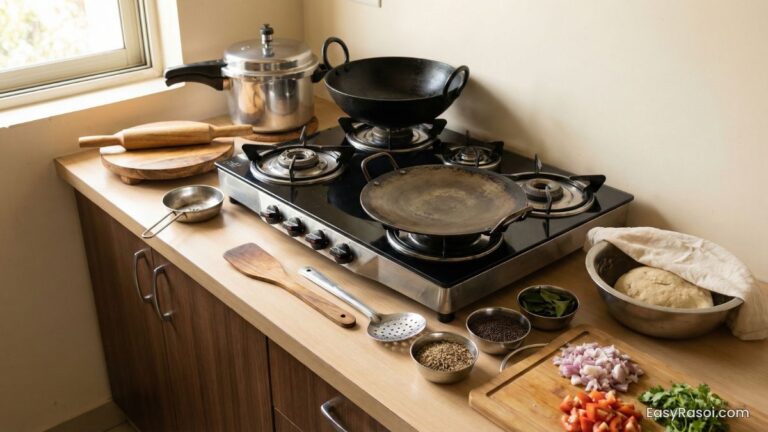
Use a small pan or tadka ladle – A small vessel heats faster and uses less oil. A dedicated tadka pan or small steel ladle works perfectly.
Keep spices ready – Measure and keep your spices next to the stove before you start. Tadka happens fast and you do not want to search for hing while your jeera is burning.
Control the heat – Medium heat is your friend. High heat burns spices quickly. Low heat does not release flavour. Find the middle point on your stove.
Listen to the spices – Tadka is about sound as much as smell. When mustard seeds pop loudly or jeera sizzles, that is your signal to move to the next step.
Use fresh curry leaves – Dried curry leaves do not give the same flavour. Fresh ones crackle beautifully and add real aroma. Keep a small batch in the fridge if you can.
Read also: A Simple Guide for 6 Essential Indian Spices
Common Confusions and Questions
Q. Can I use butter instead of oil or ghee for tadka?
Ans: Butter has a lower smoke point and can burn quickly during tadka. Ghee is a better option because it can handle higher heat. If you only have butter, use low heat and watch it carefully.
Q. Do I need to add all the spices mentioned in every tadka?
Ans: No. Tadka can be as simple as just jeera in ghee or as complex as 5 to 6 spices. Start with the basics like jeera or mustard seeds and hing, then add more as you get comfortable.
Q. What if my mustard seeds do not pop?
Ans: The oil is probably not hot enough. Wait a bit longer, or increase the heat slightly. You can also add a few extra seeds to test the temperature before adding the full amount.
Q. Can I make tadka in advance?
Ans: Tadka is best when fresh because the aroma fades quickly. If you must make it ahead, store it in a small airtight container and reheat gently before using. But honestly, it only takes a minute to make fresh.
Q. Is tadka necessary or can I skip it?
Ans: You can skip it, but the dish will taste plain. Tadka adds depth, aroma, and that finishing touch that makes home cooked food feel complete. Once you start using it regularly, you will not want to skip it.
Final Words
Tadka is one of those small techniques that makes a big difference in everyday cooking. It does not take much time or effort, but it completely transforms how your food tastes and smells.
Start simple with just jeera and hing in ghee. Once you get the feel for the right heat and timing, you can experiment with different spice combinations for different dishes.
The more you practice, the more natural it becomes. Soon you will be making tadka without even thinking about it, just like adjusting salt or adding a pinch of garam masala. That is when you know it has become part of your cooking.