
Making bajra roti at home brings the rustic, earthy taste of Rajasthani villages straight to your table. This gluten free flatbread has a slightly nutty flavor and pairs beautifully with spicy curries and tangy chutneys. I grew up watching my nani expertly pat these rotis by hand, and while it takes practice, the warm, wholesome taste makes every attempt worthwhile.
What is Bajra Roti?
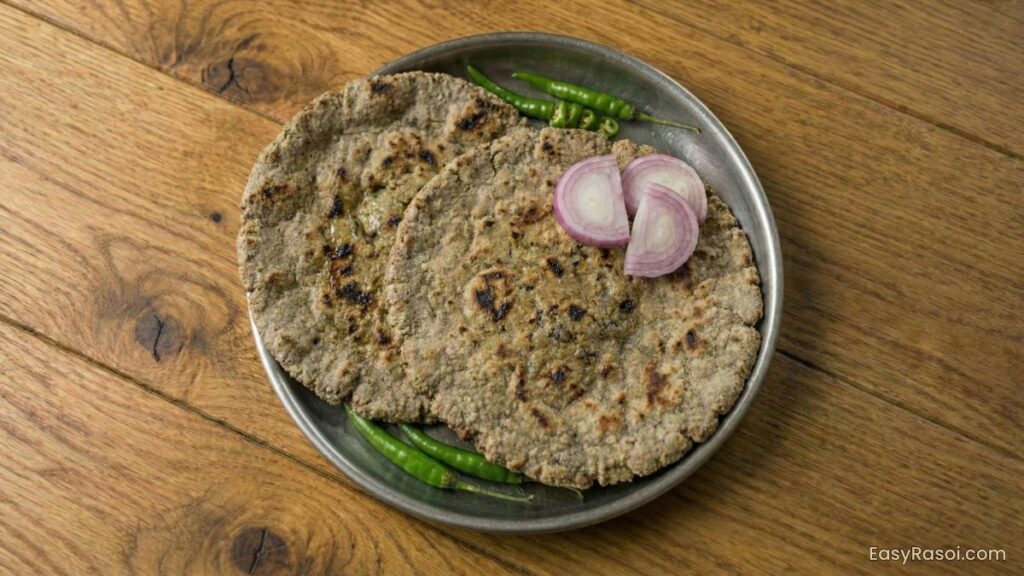
Bajra roti is a traditional Indian flatbread made from pearl millet flour, popular across Rajasthan, Gujarat, and Haryana. Unlike wheat rotis, bajra rotis are thicker, denser, and have a distinct earthy flavor that complements rich, spicy sabjis and dals perfectly.
This millet flatbread is naturally gluten free and packed with iron, protein, and fiber. It is especially popular during winter months when bajra is believed to provide warmth and energy. The roti is typically enjoyed hot off the tawa with a generous dollop of ghee, white butter, or jaggery.
About my Authentic Recipe
This recipe follows the traditional hand patting method my Nani (grandmother) used in her village kitchen. While many modern cooks use a rolling pin or plastic sheets, hand patting creates the most authentic texture and prevents cracking. The key is using warm water to bind the dough and working quickly before it dries out.
The technique of patting the dough between your palms takes practice but gives you better control over thickness and shape. I also add a small amount of wheat flour to make the dough slightly easier to handle for beginners, though purists use only bajra flour. Cooking on medium to high heat ensures the roti puffs slightly and develops those beautiful brown spots without becoming too hard.
Why You’ll Love This Recipe
This bajra roti recipe is perfect for anyone looking to add nutritious, traditional flatbreads to their meal rotation. The recipe is naturally gluten free, high in protein and fiber, and keeps you fuller for longer. It takes just 30 minutes from start to finish and uses minimal ingredients you likely have in your pantry. The warm, nutty flavor pairs wonderfully with nearly any Indian curry or dal, and adding ghee on top makes it irresistibly delicious.
Ingredients and Substitutes
This recipe uses simple pantry staples that come together quickly.
Bajra flour is the star ingredient and available at Indian grocery stores or online. Make sure it is fresh, as old bajra flour can taste bitter. You cannot substitute with regular wheat flour and maintain the same flavor, but you can add 2-3 tablespoons of wheat flour to make the dough easier to work with.
Warm water is essential for binding the flour properly. Hot water helps the dough come together better than cold water, making it more pliable and easier to shape.
Salt enhances the natural flavor of the millet. Ajwain or carom seeds can be added for extra flavor and digestive benefits, though this is optional.
Ghee for cooking and serving adds richness and prevents sticking. You can use oil instead, but ghee gives the best traditional flavor.
Variations
Spiced Bajra Roti – Add half a teaspoon of crushed ajwain, jeera, or red chili flakes to the dough for extra flavor.
Mixed Millet Roti – Combine bajra with jowar or ragi flour in equal parts for a multi grain version.
Methi Bajra Roti – Mix in 2 tablespoons of chopped fresh fenugreek leaves and a pinch of turmeric for a flavorful twist.
Stuffed Bajra Roti – Fill with spiced mashed potatoes or grated radish for a heartier meal option.
Sweeter Version – Serve warm bajra roti with jaggery and ghee for a traditional Rajasthani breakfast or snack.
Expert Tips for Bajra Roti
Use warm water to knead the dough. This helps bind the flour better since bajra lacks gluten and needs moisture and warmth to hold together.
Work quickly once the dough is ready. Bajra dough dries out faster than wheat dough, so keep it covered with a damp cloth and shape rotis immediately.
Pat with wet hands to prevent sticking. Dip your palms in water frequently while shaping the roti to maintain moisture and smooth edges.
Cook on medium to high heat for the best texture. Too low and the roti becomes hard, too high and it burns before cooking through. Look for light brown spots on both sides.
Serve immediately for the best taste and texture. Bajra roti hardens as it cools, so eat it fresh off the tawa with ghee or butter.
Add wheat flour for beginners – mixing 20-25% wheat flour makes the dough easier to handle without compromising too much on authenticity.
Store flour properly – keep bajra flour in an airtight container in a cool place. Fresh flour makes softer, better tasting rotis.
Apply ghee generously while the roti is hot. This keeps it soft and adds flavor, making even slightly thick rotis more enjoyable.
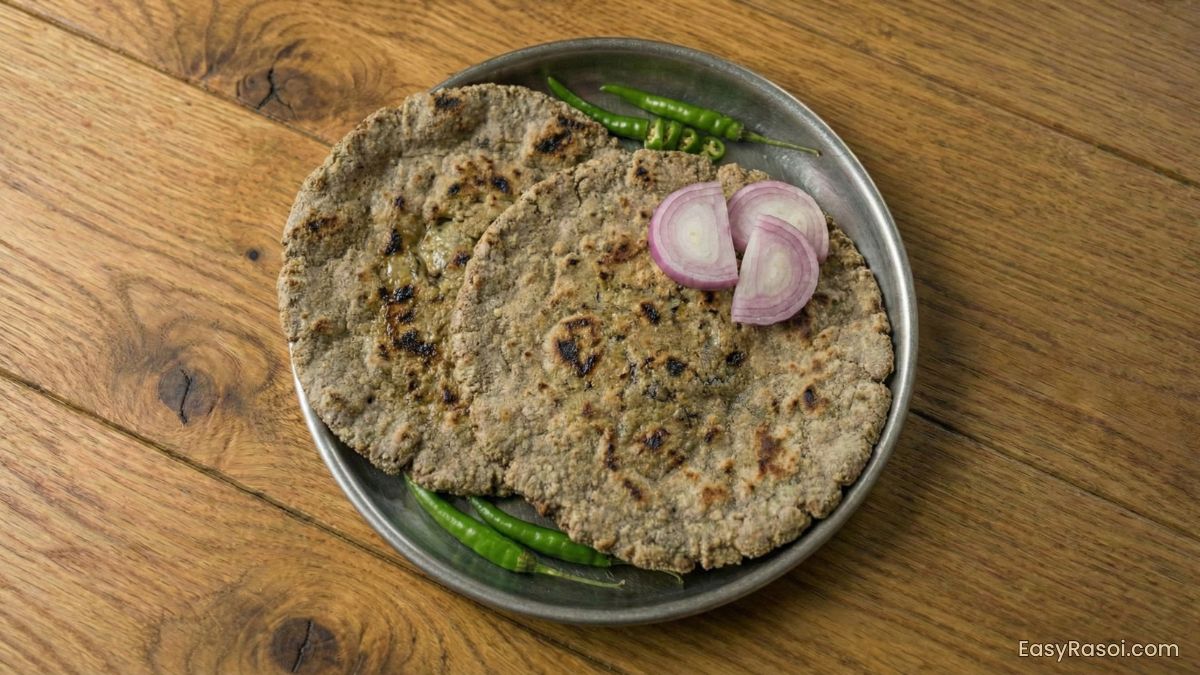
Bajra Roti Recipe – Authentic Indian Millet Flatbread

Ingredients
- 2 cups bajra flour pearl millet flour
- ¾ cup warm water adjust as needed
- ½ tsp salt
- 2 tbsp ghee for cooking and serving
- 2 tbsp wheat flour optional, for easier handling
Instructions
- In a large bowl, mix bajra flour, wheat flour (if using), and salt. Gradually add warm water and start bringing the mixture together with your fingers.
- Knead the dough for 3-4 minutes until it comes together into a smooth, pliable ball. The dough should be soft but not sticky. Add more water or flour as needed. Cover with a damp cloth.
- Divide the dough into 6 equal portions and roll them into smooth balls. Keep them covered to prevent drying.
- Take one ball and dip your palms in water. Pat the ball between your palms, rotating and flattening it gradually into a 5-6 inch circle. Keep dipping your hands in water to prevent sticking. Alternatively, place the ball between two plastic sheets and roll gently with a rolling pin.
- Heat a cast iron tawa or griddle on medium to high flame. Once hot, carefully transfer the shaped roti onto the tawa.
- Let it cook for 45-60 seconds until you see brown spots appearing on the bottom. The edges will start to look slightly dry.
- Flip the roti and cook the other side for another 45-60 seconds. Press gently with a cloth or spatula to help it puff slightly and cook evenly.
- Remove from the tawa and immediately apply ghee on top. Keep warm in a covered container or roti basket.
- Continue shaping and cooking the remaining rotis, keeping finished ones covered to retain heat and softness.
Notes
Common Issues and Solutions
Roti cracking while shaping – The dough is too dry. Add a teaspoon of warm water at a time and knead again until pliable. Keep hands wet while patting.
Roti turning too hard – Either cooked too long or on too high heat. Cook on medium-high flame for just 45-60 seconds per side. Apply ghee immediately after cooking.
Dough not holding together – Bajra flour needs warm water and thorough kneading. Make sure water is warm and knead for at least 3-4 minutes. Adding a little wheat flour also helps.
Roti sticking to hands – Keep your palms wet throughout the shaping process. Dip hands in water after every few pats or use the plastic sheet method instead.
Uneven cooking or raw spots – The tawa is not hot enough or the roti is too thick in places. Preheat the tawa properly and try to maintain even thickness while shaping.
Roti not puffing – Bajra rotis do not puff like wheat rotis due to lack of gluten. Slight puffing is normal. Press gently while cooking to encourage some rise.
Serving and Storage Suggestions
Serve bajra roti hot off the tawa with a generous smear of white butter or ghee. It pairs beautifully with robust curries like ker sangri, gatte ki sabji, lahsun ki chutney, sarson ka saag, or any dal. The earthy flavor of bajra complements spicy, tangy, and rich gravies perfectly.
This roti is ideal for winter lunches or dinners when you want something hearty and warming. Traditional Rajasthani meals often serve it with raw onions, green chilies, and buttermilk or chaas on the side.
Store leftover rotis in an airtight container for up to 1 day. Reheat on a tawa with a few drops of water to soften before serving.
Your Question My Answer
Q1. Can I make bajra roti without wheat flour?
Ans: Yes, traditional bajra roti uses only pearl millet flour. Adding wheat flour makes it easier for beginners, but purists and those needing gluten free options can skip it entirely.
Q2. Why does my bajra roti break while cooking?
Ans: The dough might be too dry or not kneaded enough. Use warm water, knead well for 3-4 minutes, and work quickly. Keep the dough covered with a damp cloth.
Q3. Can I roll bajra roti with a rolling pin?
Ans: Yes, but use two plastic sheets or parchment paper to prevent sticking since bajra dough is more delicate than wheat dough. Rolling pins work better with the wheat flour added version.
Q4. Is bajra roti good for weight loss?
Ans: Bajra is high in fiber and protein, which helps keep you full longer and supports healthy digestion. It is a nutritious choice when eaten as part of a balanced diet.
Q5. How do I keep bajra roti soft?
Ans: Apply ghee immediately after cooking and store in a covered container. Bajra roti naturally becomes firm as it cools, so serve fresh and reheat with moisture when needed.