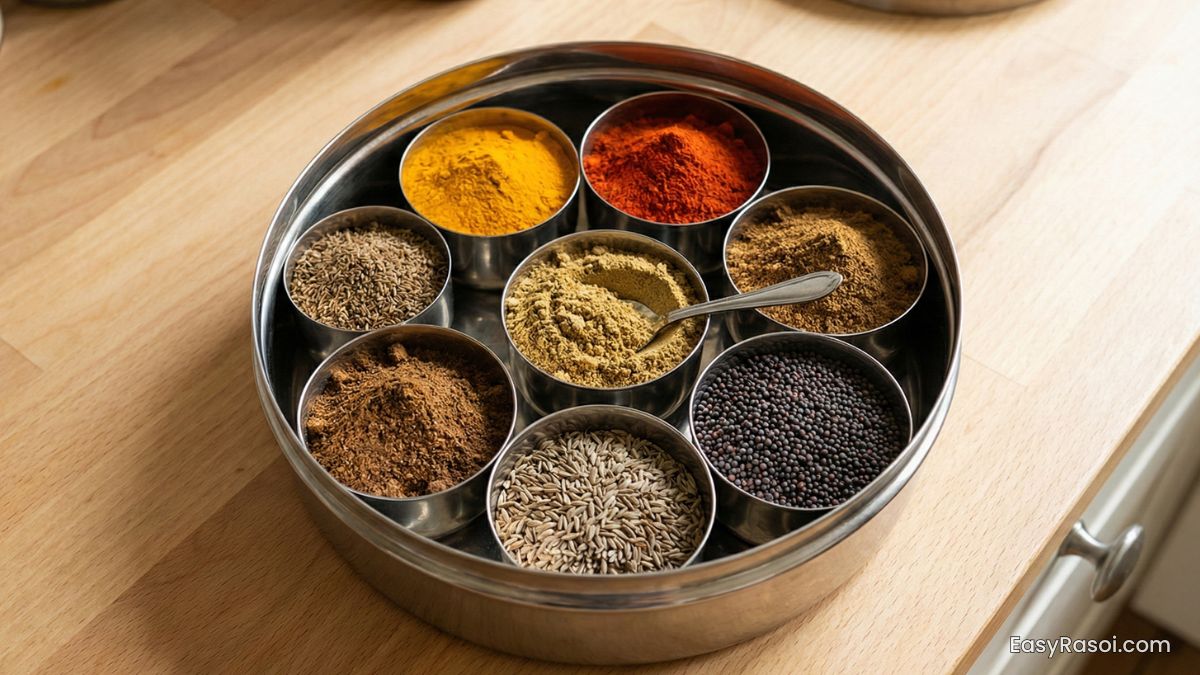

You open your masala dabba and stare at those small compartments filled with different spices. Which one goes first? Does jeera really need to splutter? Can you add haldi after tomatoes?
These questions come up in every Indian kitchen, especially when you are learning to cook or trying a new dish. Indian spices are not complicated, but they do follow some basic patterns that make cooking easier once you understand them.
This guide will help you know the common Indian spices, when to use them, and how they actually work in your daily cooking.
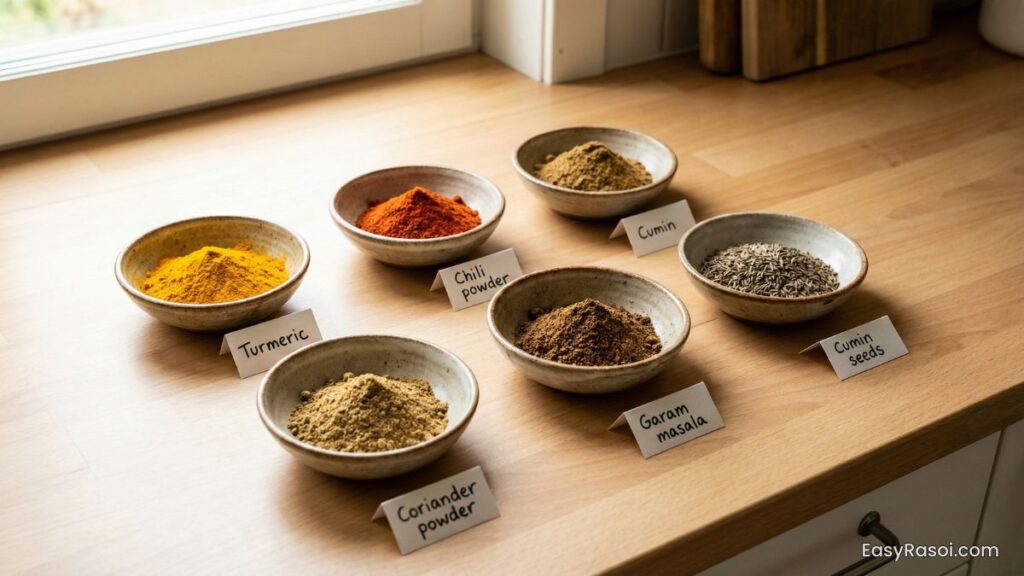
Understanding Indian Spices
Indian cooking uses spices differently than many other cuisines. We don’t just sprinkle them on top. We cook them, toast them, temper them, and layer them at different stages.
Each spice has a role. Some add heat, some add color, some bring out the flavor of vegetables or dal. Knowing this makes your cooking more confident and less about following recipes blindly.
Whole Spices vs Ground Spices
Whole spices are used for tadka, flavoring oil, or adding to rice and curries while they cook. They release flavor slowly and give depth to the dish.
Ground spices or masala powder are added later, usually after onions or tomatoes. They cook quickly and can turn bitter if you add them too early or burn them.
In most Indian kitchens, you will find both forms. Jeera seeds for tempering, jeera powder for mixing into curries. Same spice, different purpose.
Essential Indian Spices Every Kitchen Needs
These are the spices you will use almost every day if you cook Indian food regularly.
1. Haldi (Turmeric)
Haldi is the base of most Indian sabji and dal. It adds a warm yellow color and a mild earthy flavor.
You add it early, usually with onions or right after the tadka. It needs to cook properly or it leaves a raw, bitter taste. Just half a teaspoon is enough for most dishes.
2. Lal Mirch (Red Chili Powder)
This brings heat to your food. The amount depends on your taste and the type of chili powder you use. Kashmiri mirch gives color with less heat. Regular lal mirch is spicier.
Add it after onions are soft and tomatoes are cooked. If you add it to hot oil directly, it burns fast and turns the dish bitter.
3. Jeera (Cumin Seeds)
Jeera is used in two ways. Whole seeds for tadka at the start of cooking, and jeera powder added later in dals or dry sabji.
When you heat jeera in oil or ghee, wait for it to change color slightly and release a strong smell. That means it is ready. If it turns dark brown or black, it is burnt and will taste bad.
4. Dhania (Coriander)
Dhania powder is mild and slightly sweet. It balances the heat from chili and adds body to gravies. You can use more of it without worrying about the dish becoming too strong.
Whole dhania seeds are less common in daily cooking but are used in some spice mixes and pickles.
5. Garam Masala
This is a blend of warm spices like cardamom, cloves, cinnamon, and black pepper. Every family has a slightly different version.
Garam masala goes in at the end of cooking, just before you turn off the heat. Adding it too early makes it lose its fragrance. A pinch or half teaspoon is usually enough.
6. Hing (Asafoetida)
Hing is strong and pungent when raw but turns mild and onion-like when cooked in hot oil. A tiny pinch is all you need.
It is mostly used in dals, kadhi, and dishes where onion and garlic are not used. It also helps with digestion, which is why it goes into foods like rajma and chole.
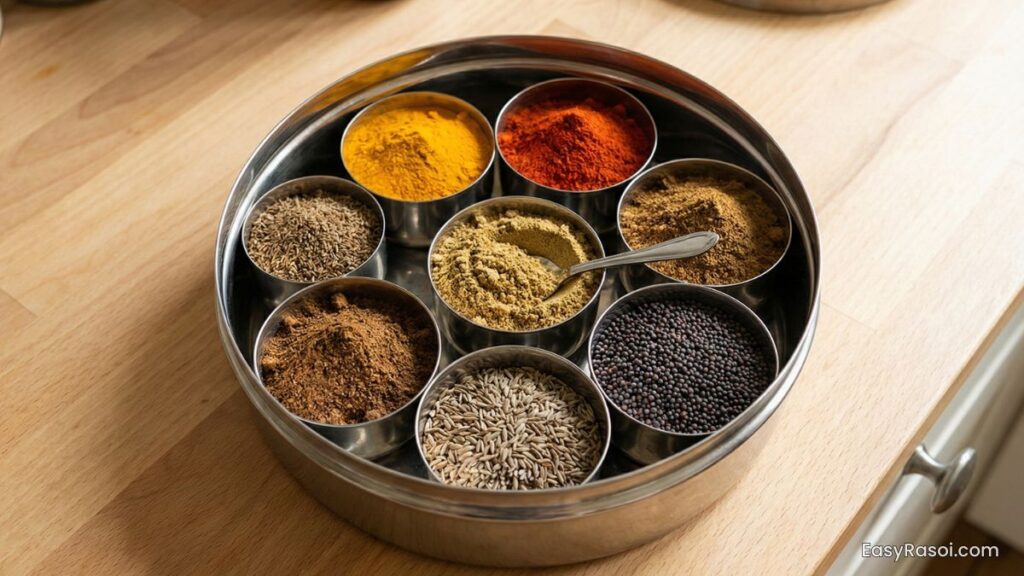
How to Use Spices in Everyday Cooking
Indian cooking follows a layering method. Spices are added at different times depending on what they do.
Tadka or Tempering
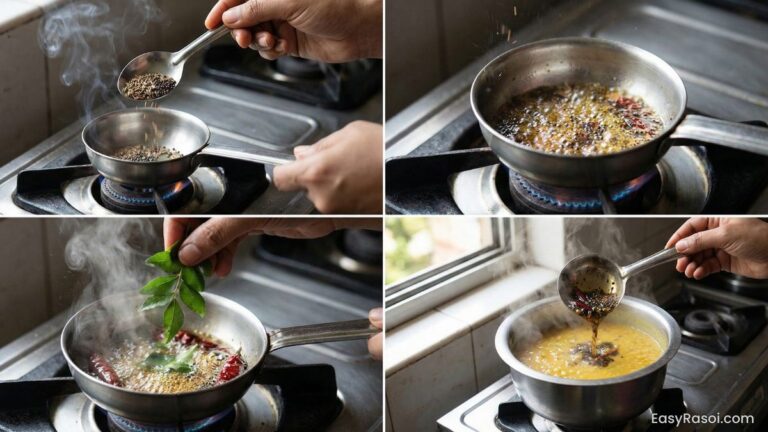
This is the first step in most Indian dishes. You heat oil or ghee, add whole spices like jeera, mustard seeds, hing, or curry leaves, and let them crackle and release flavor.
The tadka flavors the entire dish. If your tadka burns, the whole dish will taste off. Keep the flame medium and watch the spices closely.
Adding Ground Spices
Once your onions are soft and tomatoes are cooked down, you add ground spices like haldi, lal mirch, dhania powder. Stir them in quickly and cook for a minute or two.
If the masala sticks to the pan, add a splash of water. This prevents burning and helps the spices cook evenly.
Finishing with Garam Masala
Garam masala is added at the end, when the dish is almost done. Turn off the heat, sprinkle it on top, mix once, and cover the pan for a minute. This keeps the aroma fresh.
Some people also add fresh dhania leaves or kasuri methi at this stage for extra flavor.
Storing Indian Spices Properly
Spices lose their strength over time, especially ground ones. Whole spices last longer than powders.
Keep them in airtight containers away from direct sunlight and heat. Do not store your masala dabba right next to the stove. The steam and heat make spices lose flavor faster.
If your spice smells weak or has no aroma when you open the container, it is probably old. Ground spices should be replaced every 6 to 8 months for best flavor.
Whole spices can last a year or more if stored well.
Read Also: 15 Cooking Techniques Every Home Cook Should Learn
Common Mistakes with Indian Spices
Adding Spices to Very Hot Oil
When oil is smoking hot, spices burn in seconds. Always heat oil on medium flame and test with one jeera seed. If it sizzles gently, the oil is ready.
Using Too Much Garam Masala
More is not better. Garam masala is strong. Even half a teaspoon can overpower a dish if the blend is fresh and well made.
Not Cooking Haldi Properly
Raw haldi has a sharp, bitter taste. It needs at least a minute or two of cooking with onions or in the masala to mellow out. If your sabji tastes bitter, this might be why.
Mixing All Spices Together
Each spice has a different cooking time. Whole spices go first in hot oil. Ground spices go after onions and tomatoes. Garam masala goes last. Following this order makes a big difference.
Common Confusions and Questions
Q. Can I skip haldi in a recipe?
Ans: Yes, but the color and flavor will be different. Haldi is not just for taste, it also gives that familiar yellow color to dals and curries. If you are out of it, the dish will still be fine, just paler.
Q. Why does my jeera taste bitter sometimes?
Ans: It burnt. Jeera turns bitter very quickly if the oil is too hot or if you leave it in the pan too long before adding other ingredients. Keep the flame low and move fast after the jeera crackles.
Q. Do I really need hing if I am using onions and garlic?
Ans: Not always. Hing adds a unique flavor, but it is not essential if you are already using onion and garlic. It is more important in dishes like sambhar or Gujarati dal where there is no onion.
Q. Can I use any red chili powder?
Ans: Yes, but the heat level will vary. Kashmiri chili powder is mild and gives deep red color. Regular lal mirch is hotter. Adjust the amount based on what you have and how much heat you want.
Q. How do I know if my garam masala is still good?
Ans: Open the container and smell it. Fresh garam masala has a strong, warm, slightly sweet aroma. If it smells faint or like cardboard, it has lost its strength and you should replace it.
Final Words
Indian spices are not difficult once you understand when and how to use them. Start with the basics like haldi, jeera, lal mirch, and garam masala. Learn the order, watch the heat, and let the spices cook properly.
You do not need twenty different jars to make good food. A few key spices used correctly will give you better results than a crowded spice rack used randomly.
With a little practice, using spices will feel natural. You will know by smell and sight when the tadka is ready or when the masala needs more time. That confidence comes from cooking, not from reading. So keep your masala dabba close and start experimenting.