
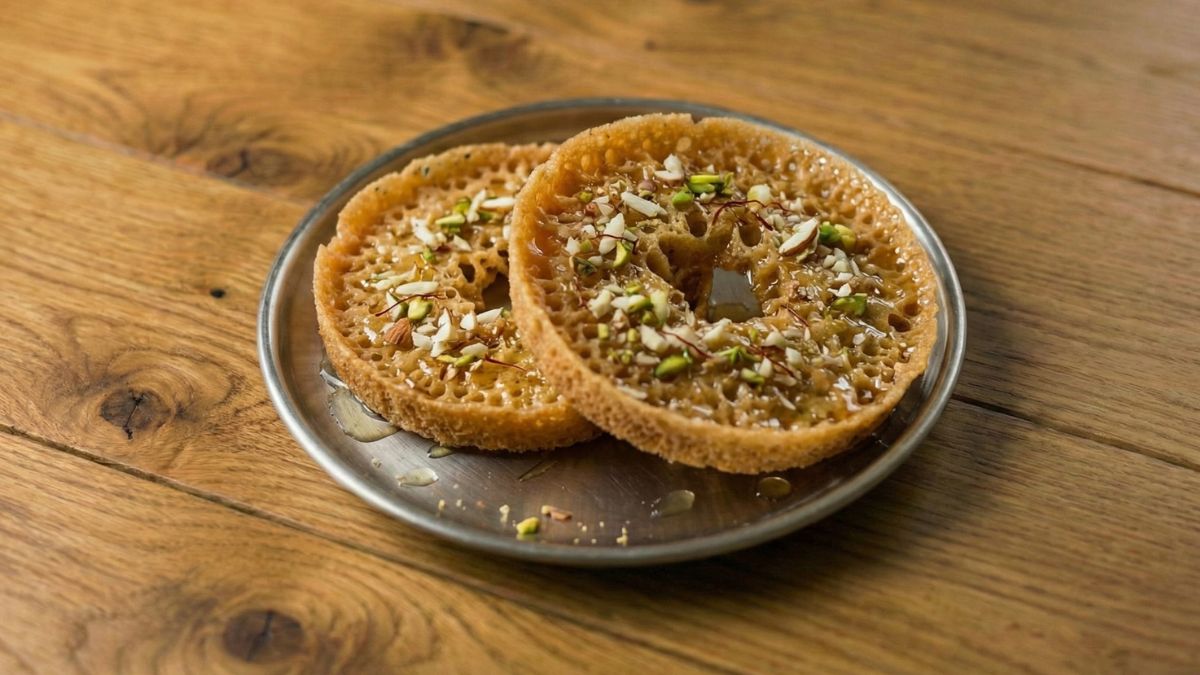
Ghevar is a crispy, honeycomb textured sweet disc that melts in your mouth with every bite. I first tasted it during a summer trip to Jaipur, and the delicate crunch paired with sugar syrup made me fall in love instantly. This recipe brings that authentic bazaar taste to your kitchen with simple techniques and ingredients you likely already have.
What is Ghevar?
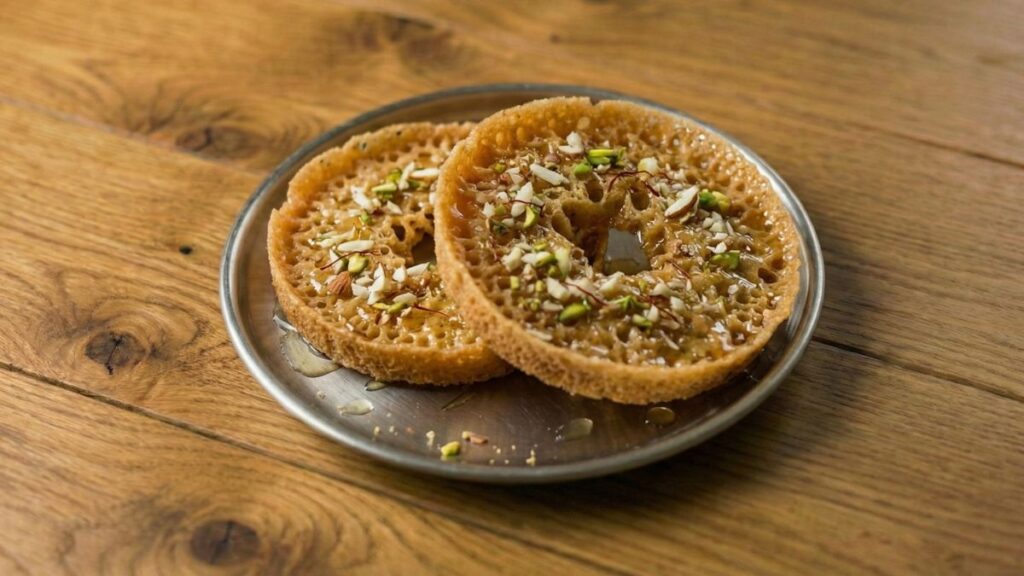
Ghevar is a traditional Rajasthani sweet made during festivals like Teej and Raksha Bandhan. It has a unique honeycomb structure created by pouring batter into hot ghee, which forms lacy, crispy layers. The disc is then soaked in sugar syrup and often topped with rabri, mawa, or dry fruits.
This dessert is vegetarian, celebratory, and surprisingly fun to make once you understand the technique. The texture is light and airy, not dense like typical Indian sweets, making it perfect for warm weather celebrations.
About my Authentic Recipe
This ghevar recipe follows the traditional Rajasthani method neighbour’s aunt taught me during a festival. The key is getting the batter consistency right and maintaining steady ghee temperature. Many home cooks skip the ice cold water step, but that is what creates those signature air pockets.
The technique of pouring batter in a thin stream from a height is what forms the honeycomb texture. You need patience and a steady hand, but the result is worth every minute. I use a cylindrical mould which gives the classic round shape with a hole in the center.
This version uses full fat milk and a touch of lemon juice for slight acidity, which helps the batter react better in hot ghee. The slow, controlled pouring creates layers that crisp up beautifully.
Why You’ll Love This Recipe
The crispy texture and sweet syrup coating make this an unforgettable dessert. It looks impressive and tastes like something from a traditional sweet shop. You can make it ahead for festivals and it stores well. The honeycomb structure is so satisfying to bite into, and guests always ask for the recipe.
Ingredients & Substitutes
Ghee – Use pure cow ghee for authentic flavor. You can substitute with refined oil, but ghee gives the best taste and crispness.
All purpose flour (maida) – This is essential for the light, crispy texture. Whole wheat flour will not give the same delicate result.
Milk – Full fat milk works best. You can use low fat, but the batter may need slight adjustments.
Ice cold water – This is crucial for creating air pockets. The cold temperature makes the batter react dramatically when it hits hot ghee.
Sugar – For the syrup. You can use jaggery syrup for a different flavor profile, but traditional ghevar uses white sugar.
Lemon juice or vinegar – Adds slight acidity to help the batter react. Use just a few drops.
Variations
Malai Ghevar – Top the soaked ghevar with thick rabri or sweetened condensed milk and chopped nuts.
Mawa Ghevar – Spread a layer of mawa (khoya) on top after soaking in syrup.
Plain Ghevar – Skip all toppings and serve with just sugar syrup for a lighter version.
Kesar Ghevar – Add a pinch of saffron to the sugar syrup for a fragrant twist.
Mini Ghevar – Use smaller moulds to make individual portions perfect for gifting.
Expert Tips for Ghevar Recipe
Temperature control is everything. Keep the ghee at a steady medium to high heat. If too hot, the batter will burn before forming layers. If too cool, it will not create the honeycomb structure.
Pour from a height. Hold your container at least 8-10 inches above the ghee. This creates the characteristic lacy texture as the batter falls and spreads.
Do not disturb while cooking. Let each layer form completely before adding more batter. Stirring or moving the mould will break the delicate structure.
Make the syrup ahead. Your sugar syrup should be ready and at room temperature before the ghevar is done. Hot syrup on hot ghevar works best for absorption.
Use a cylindrical mould. A round metal or steel mould (5-6 inches diameter) works perfectly. You can also use a small kadhai or wok if you do not have a traditional mould.
Test your first ghevar as practice. The first one helps you understand the batter consistency and ghee temperature. Adjust before making the rest.
Work in batches. Making 2-3 ghevars at a time is easier than rushing through many. Each one takes 8 to 10 minutes to cook properly.
Rajasthani Ghevar Recipe – Traditional Sweet Disc

Ingredients
For the Batter
- 1 cup all purpose flour maida
- 3 tbsp ghee melted and cooled
- ½ cup full fat milk chilled
- ½ cup ice cold water
- ½ tsp lemon juice or white vinegar
- A pinch of salt
For Frying
- 3-4 cups ghee for deep frying
For Sugar Syrup
- 1 cup sugar
- ½ cup water
- 2-3 cardamom pods crushed
- A few drops of lemon juice
For Garnish (optional)
- Chopped pistachios
- Chopped almonds
- Silver leaf varak
Instructions
Make the Sugar Syrup
- Combine sugar and water in a pan over medium heat. Stir until sugar dissolves completely.
- Add crushed cardamom and lemon juice. Bring to a boil, then simmer for 5 to 6 minutes until you get a one string consistency. The syrup should feel slightly sticky between your fingers. Remove from heat and keep aside.
Prepare the Batter
- In a large bowl, add all purpose flour, melted ghee, and a pinch of salt. Mix well until the flour looks crumbly.
- Add chilled milk gradually and whisk to form a smooth paste. Make sure there are no lumps at this stage.
- Now add ice cold water slowly while whisking continuously. The batter should be thin and pourable, similar to dosa batter consistency. Add lemon juice and mix well.
- Keep the batter in the refrigerator for 10 minutes. The cold batter reacts better with hot ghee.
Fry the Ghevar
- Heat 3-4 cups of ghee in a deep kadhai or frying pan over medium to high heat. Place your cylindrical mould (5-6 inches diameter) in the center of the kadhai. The ghee level should reach about halfway up the mould.
- Once the ghee is hot (test with a tiny drop of batter, it should sizzle and rise immediately), take the chilled batter. Pour a thin stream of batter from a height of 8-10 inches directly into the center of the mould.
- The batter will spread outward and create a lacy, honeycomb pattern. Continue pouring in a thin stream until the mould is filled. This should take 1-2 minutes of continuous pouring.
- Let it cook undisturbed for 8 to 10 minutes on medium heat. The ghevar will turn golden and crisp. Do not flip or move it.
- Carefully remove the mould and lift the ghevar with a slotted spoon. Drain excess ghee by holding it vertically for a few seconds.
Soak and Serve
- While the ghevar is still warm, dip it completely in the sugar syrup for 2-3 minutes. Let it soak well, then remove and place on a wire rack.
- Garnish with chopped nuts and silver leaf if desired. Let it cool completely before serving.
Notes
Common Issues & Solutions
Ghevar is not forming honeycomb texture – Your batter is likely too thick. Add 2-3 tablespoons of ice cold water and try again. Also check that ghee is hot enough.
Ghevar is breaking while removing – It needs more cooking time. Let it turn deeper golden and crisp up fully before lifting. Also ensure you are using a slotted spoon carefully.
Batter is sinking instead of spreading – Ghee temperature is too low. Increase the heat slightly and test with a small amount of batter first.
Ghevar is too oily – Drain it properly by holding vertically for 30-40 seconds after frying. You can also place it on absorbent paper before soaking in syrup.
Sugar syrup is not soaking in – Dip the ghevar while both the ghevar and syrup are warm. Cold syrup on cold ghevar will not absorb well.
Ghevar is too dense – Use ice cold water in the batter and ensure you are pouring from sufficient height. The cold temperature creates steam pockets that form the airy texture.
Serving and Storage Suggestions
Serve ghevar at room temperature as a festival dessert or special occasion sweet. It pairs beautifully with hot masala chai or cold milk. Traditional pairings include rabri on top or a side of sweetened milk. Ghevar is typically served during Teej, Raksha Bandhan, and other celebrations in Rajasthan and nearby regions.
Store in an airtight container at room temperature for up to 3 days. Do not refrigerate as it can make the ghevar soggy. For longer storage, keep unsoaked ghevar (before dipping in syrup) in an airtight container for up to a week, and soak in syrup just before serving.
Your Question My Answer
Q. Can I make ghevar without a mould?
Ans: Yes, you can carefully pour the batter directly into hot ghee in a circular motion to form a free form disc. It will not have the perfect round shape but will taste the same.
Q. Why is my ghevar chewy and not crispy?
Ans: This happens when the batter is too thick or the ghee temperature is too low. Make sure your batter is thin and pourable, and the ghee is hot enough for the batter to sizzle immediately.
Q. Can I make ghevar ahead of time?
Ans: Absolutely. Make the ghevar and store it without syrup for up to a week in an airtight container. Soak in warm sugar syrup 1 to 2 hours before serving for the best texture.
Q. What can I use instead of ghee for frying?
Ans: You can use refined vegetable oil, but ghee gives the authentic flavor and better crispness. Coconut oil is another option but will add a slight coconut taste.
Q. How do I know when the sugar syrup is ready?
Ans: The syrup should form one string when you touch it between your thumb and finger and pull apart gently. This usually takes 5 to 6 minutes of simmering after the sugar dissolves.