
This soft, spongy khaman dhokla is a beloved Gujarati breakfast or snack that melts in your mouth. I grew up watching my grandmother steam perfect batches in her old pressure cooker, and now I make it every weekend for my family. The fluffy texture, the tangy-sweet taste, and that crispy mustard seed tadka on top make this one of the most loved Indian snacks.
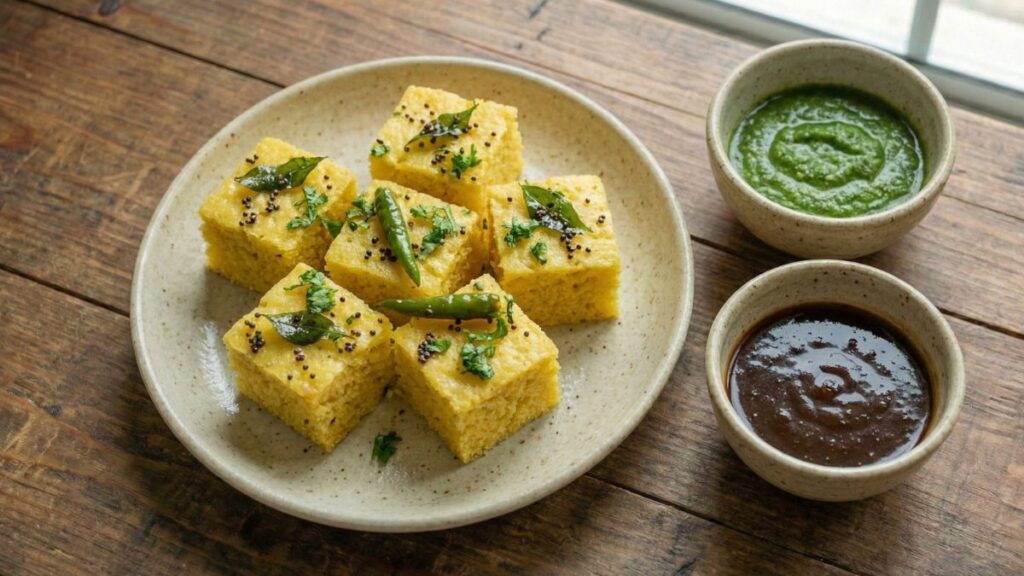
What is Khaman Dhokla?
Khaman dhokla is a steamed, savory cake made from gram flour (besan) that originated in Gujarat. It has a light, spongy texture with a bright yellow color from turmeric and a slightly tangy taste from yogurt or lemon juice. Unlike the fermented dhokla made from rice and lentils, khaman uses besan and gets its fluffiness from Eno fruit salt or baking soda.
This vegetarian dish is typically served as a breakfast item or evening snack across Gujarat and has become popular throughout India. You will find it in every Gujarati household, street food stall, and restaurant menu. The steamed cake is cut into squares or diamonds and topped with a mustard seed and curry leaf tempering, then garnished with fresh coriander and grated coconut.
About my Authentic Recipe
This recipe comes from my neighbor who taught me the secret to getting that perfect sponge texture every time. The key is in the batter consistency and adding the Eno salt at exactly the right moment. Many recipes make dhokla dense or rubbery, but this version uses the right proportion of water to besan and a two step mixing process that keeps it airy.
The technique that makes the biggest difference is how you steam the dhokla. Medium heat and proper ventilation in your steamer prevent water droplets from falling on the batter, which would make it soggy. I also add a pinch of sugar to the batter, which balances the tanginess and enhances the overall flavor without making it sweet.
Why You’ll Love This Recipe
This khaman dhokla is ready in just 30 minutes from start to finish. The soft, fluffy texture is lighter than most snacks, making it perfect for any time of day. You need only basic pantry ingredients, and the steaming method makes it a healthier option than fried snacks. Kids and adults both enjoy the mild, tangy flavor, and it stays fresh for a full day at room temperature.
Ingredients & Substitutes
Besan (gram flour) is the base and cannot be substituted. Make sure your besan is fresh and lump free for the smoothest batter.
Yogurt or lemon juice adds the signature tanginess. Use thick, fresh yogurt for best results, or substitute with 2 tablespoons of lemon juice mixed with water.
Eno fruit salt is the leavening agent that creates the spongy texture. You can use baking soda instead, but Eno gives better, more consistent results.
Turmeric and green chili paste provide color and mild heat. Adjust the chili according to your spice preference.
Mustard seeds, curry leaves, and sesame seeds form the classic tadka. Curry leaves are essential for authentic flavor, so try to find fresh ones at an Indian grocery store.
Variations
Add vegetables – Mix in finely chopped capsicum, carrots, or grated bottle gourd to the batter for added nutrition and color.
Spinach dhokla – Blend a handful of spinach with the water for a green version packed with iron.
Sweet dhokla – Reduce the salt and add 2 tablespoons of sugar to make a sweet version, popular in some regions.
Khatta dhokla – Increase the lemon juice or add a tablespoon of tamarind pulp for an extra tangy version.
Sandwich dhokla – Make two layers with a green chutney spread in between for a fancier presentation.
Expert Tips for Khaman Dhokla
Add Eno fruit salt only after your steamer water is boiling and your steaming plate is ready. Once you add Eno, you have about 60 seconds before the reaction stops, so pour and steam immediately.
The batter should have a flowing consistency, similar to dosa batter but slightly thicker. Too thick and your dhokla will be dense, too thin and it will not set properly.
Grease your steaming plate or thali well with oil. This prevents sticking and makes it easy to remove the dhokla after steaming.
Do not open the steamer lid for the first 12 minutes. Opening it releases steam and heat, which can make your dhokla collapse or cook unevenly.
Test doneness by inserting a toothpick or knife in the center. It should come out clean. If batter sticks, steam for another 2 to 3 minutes.
Let the dhokla cool for 5 minutes before cutting. This helps it set and prevents crumbling when you slice it.
Pour the tadka while the dhokla is still slightly warm. This allows it to absorb the flavors better.
Use a sharp knife dipped in water to cut clean squares without the dhokla sticking to the blade.
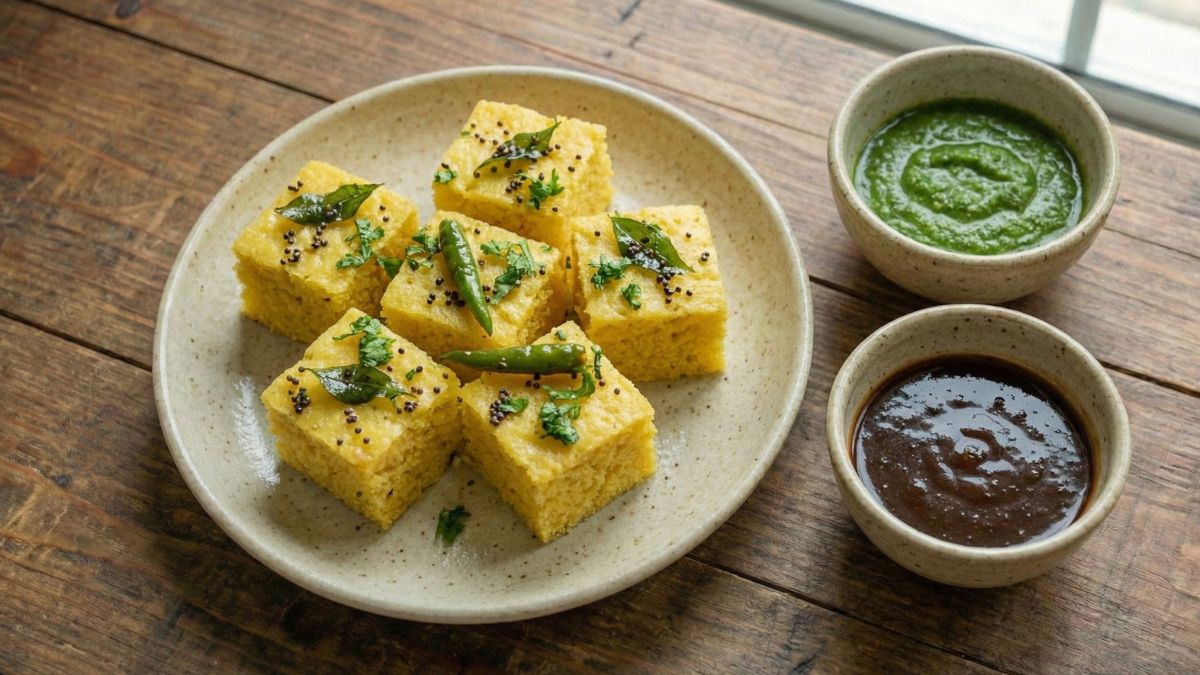
Khaman Dhokla Recipe – Soft, Fluffy Gujarati Snack

Ingredients
For the Batter
- 1 cup besan gram flour
- ½ cup water
- ¼ cup yogurt thick, fresh
- 1 tbsp oil
- 1 tsp ginger and green chili paste
- ½ tsp turmeric powder
- 1 tsp sugar
- ¾ tsp salt
- 1 tsp Eno fruit salt
For the Tadka
- 2 tbsp oil
- 1 tsp mustard seeds
- 1 tsp sesame seeds
- 8 to 10 curry leaves
- 2 green chilies slit
- 2 tbsp water
- 1 tbsp sugar
- 2 tbsp grated coconut
- Fresh coriander leaves chopped
Instructions
- Grease a 7 inch or 8 inch round plate or thali with oil and keep it ready. Fill your steamer or a large pot with water and bring it to a boil.
- In a mixing bowl, add besan, yogurt, water, oil, ginger-green chili paste, turmeric, sugar, and salt. Whisk everything together until you get a smooth, lump-free batter. The consistency should be like a flowing pancake batter.
- Once your steamer water is boiling vigorously, add the Eno fruit salt to the batter. Mix gently in one direction for 10 seconds. You will see the batter become frothy and light.
- Immediately pour the batter into your greased plate. Tap it gently on the counter to remove any air bubbles.
- Place the plate in the steamer, cover with a lid, and steam on medium heat for 15 to 18 minutes. Do not open the lid during this time.
- Check if the dhokla is done by inserting a toothpick in the center. It should come out clean. If not, steam for another 2 minutes.
- Remove the plate from the steamer and let it cool for 5 minutes. Run a knife along the edges and cut the dhokla into square or diamond pieces.
- For the tadka, heat oil in a small pan. Add mustard seeds and let them splutter. Add sesame seeds, curry leaves, and slit green chilies. Saute for 10 seconds.
- Add water and sugar to the tadka. Mix well and let it come to a light boil. Pour this tempering evenly over the cut dhokla pieces.
- Garnish with chopped coriander leaves and grated coconut. Serve warm or at room temperature with green chutney.
Notes
Common Issues & Solutions
Dhokla is dense and not fluffy – Your batter was too thick, or you did not add enough Eno. Make sure the batter has a flowing consistency and add the full teaspoon of Eno fruit salt. Also ensure your Eno is fresh and not expired.
Dhokla is too crumbly – This happens when the batter is too dry or overcooked. Add a bit more water to get the right consistency and reduce steaming time by 2 minutes next time.
Dhokla has a bitter or soapy taste – You added too much Eno or baking soda. Stick to the exact measurement of 1 teaspoon for one cup of besan. Overmixing after adding Eno can also cause this.
Water marks or wet patches on top – Water droplets from the lid fell on the dhokla during steaming. Wrap your steamer lid with a kitchen towel to catch condensation, or use a plate that fits snugly under the lid.
Dhokla sticks to the plate – The plate was not greased well enough. Use a generous amount of oil to grease the entire surface and sides of your plate before pouring the batter.
Dhokla collapses after steaming – You opened the lid too early, or the heat was too high. Steam on medium heat and wait at least 12 minutes before checking. Let it cool for 5 minutes before removing from the steamer.
Serving and Storage Suggestions
Serve khaman dhokla warm or at room temperature with green coriander chutney and sweet tamarind chutney on the side. It pairs beautifully with hot masala chai or coffee for breakfast or as an evening snack. For a complete Gujarati meal, serve it alongside jalebi for the classic sweet and savory combination. You can also serve it as an appetizer at parties, garnished with pomegranate seeds and sev for extra crunch.
Store leftover dhokla in an airtight container at room temperature for up to 8 hours. For longer storage, refrigerate for 2 days. Before serving refrigerated dhokla, steam it for 2 minutes or microwave for 20 seconds to restore the soft texture.
Your Question My Answer
Q1: Can I make dhokla without a steamer?
Ans: Yes, you can use a pressure cooker without the whistle, an idli maker, or even a large pot with a stand inside to hold your plate above boiling water. Any setup that allows steam circulation will work.
Q2: Why is my dhokla not rising?
Ans: This usually happens because your Eno fruit salt is old or expired, or you waited too long after adding Eno before steaming. Always use fresh Eno and pour the batter immediately after mixing.
Q3: Can I make khaman dhokla ahead of time?
Ans: You can steam the dhokla a few hours in advance and add the tadka just before serving. This actually allows the flavors to develop better. Just cover it well so it does not dry out.
Q4: Is khaman dhokla healthy?
Ans: Yes, khaman dhokla is steamed rather than fried, made from protein-rich besan, and contains minimal oil. It is a light, nutritious snack suitable for weight management when eaten in moderation.
Q5: What is the difference between dhokla and khaman?
Ans: Traditional dhokla is made from fermented rice and lentil batter and takes 8 to 10 hours to prepare. Khaman uses besan and Eno for instant leavening, making it much quicker to prepare while still giving a similar fluffy texture.