
Bright, tangy, and aromatic, lemon rice is one of those South Indian comfort foods that comes together in minutes yet tastes like you fussed over it. I grew up watching my mother make big batches on lazy Sunday afternoons, and it always disappeared fast. This is your go-to recipe when you need something quick, flavorful, and completely satisfying with minimal effort.
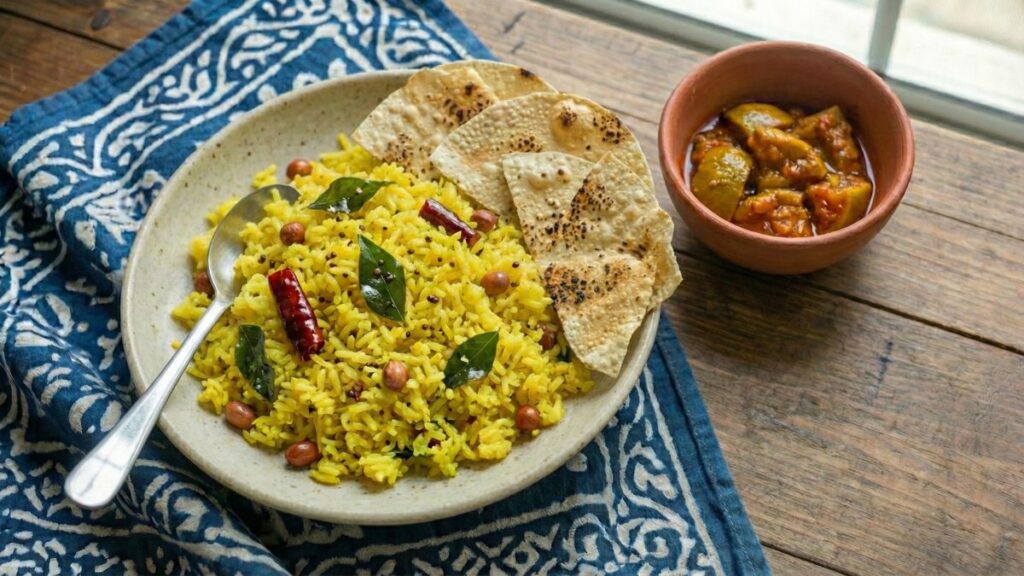
What is Lemon Rice?
Lemon rice, also called chitranna in Karnataka or nimmakaya pulihora in Andhra Pradesh, is a popular South Indian rice dish where cooked rice is tossed with a tempering of mustard seeds, curry leaves, peanuts, and tangy lemon juice. The result is a light, refreshing meal with a beautiful yellow color from turmeric and a perfect balance of tang, spice, and crunch.
It is typically served as a light lunch, packed in tiffin boxes, or offered during temple festivals and celebrations. Completely vegetarian and naturally gluten-free, this dish is beloved for being both simple and packed with flavor.
About my Authentic Recipe
This lemon rice recipe follows the traditional South Indian method my family has used for years. The key is tempering the spices properly so the mustard seeds pop and release their nutty aroma, while curry leaves add that unmistakable fragrance.
What sets this version apart is using day-old or cooled rice, which prevents the grains from turning mushy when mixed with the tempering. I also add a pinch of hing (asafoetida) and roasted peanuts for extra depth and crunch. The technique of mixing lemon juice at the end keeps the rice light and prevents it from becoming sticky or overly wet.
Why You’ll Love This Recipe
This lemon rice comes together in under 20 minutes if you have cooked rice ready. The tangy-spicy flavor profile is incredibly satisfying and works as a complete meal or side dish. It travels well, making it perfect for lunch boxes and picnics. Plus, it uses everyday pantry staples you likely already have in your Indian kitchen.
Ingredients & Substitutes
Rice: Use leftover or day-old cooked rice for best results. Basmati or any long-grain rice works beautifully. Freshly cooked rice should be cooled and fluffed before using to avoid clumping.
Lemon juice: Fresh lemon juice is essential for authentic flavor. Bottled lemon juice lacks the brightness and can taste artificial.
Mustard seeds and curry leaves: These are the backbone of South Indian tempering. Curry leaves can sometimes be found frozen if fresh are unavailable, but avoid dried ones as they lose flavor.
Peanuts: Roasted peanuts add crunch and richness. You can substitute with cashews for a richer version.
Oil: Use any neutral oil like sunflower or rice bran oil. Coconut oil adds authentic South Indian flavor if you prefer.
Turmeric: Gives the signature golden color. Do not skip this.
Variations
Vegetable lemon rice: Add finely chopped carrots, beans, or peas to the tempering for added nutrition and color.
Coconut lemon rice: Mix in 2 tablespoons of fresh grated coconut or desiccated coconut for a richer, sweeter version.
Spicy version: Add 2-3 slit green chilies or red chili powder to increase the heat level.
Protein boost: Toss in boiled chickpeas or roasted cashews for extra protein and substance.
Vegan option: This recipe is already vegan. Just ensure your oil choice aligns with your preferences.
Expert Tips for Lemon Rice
Always use cooled rice that has been refrigerated or left at room temperature for at least 30 minutes. Hot rice absorbs too much moisture and turns mushy.
Temper the mustard seeds on medium heat until they splutter completely. This releases their nutty flavor and is crucial for authentic taste.
Add lemon juice only after turning off the heat. Adding it while cooking can make the rice taste bitter and lose its fresh tang.
Adjust salt carefully since lemon juice is acidic and can make dishes taste saltier than they are. Start with less and add more if needed.
Roast the peanuts separately until golden before adding to the tempering. This gives better crunch and prevents them from burning.
Fresh curry leaves make all the difference. If using frozen, add a few extra as they have less potency.
Let the rice rest for 5 minutes after mixing so the flavors meld together beautifully before serving.
Mix gently with a fork rather than a spoon to avoid breaking the rice grains and creating a sticky texture.
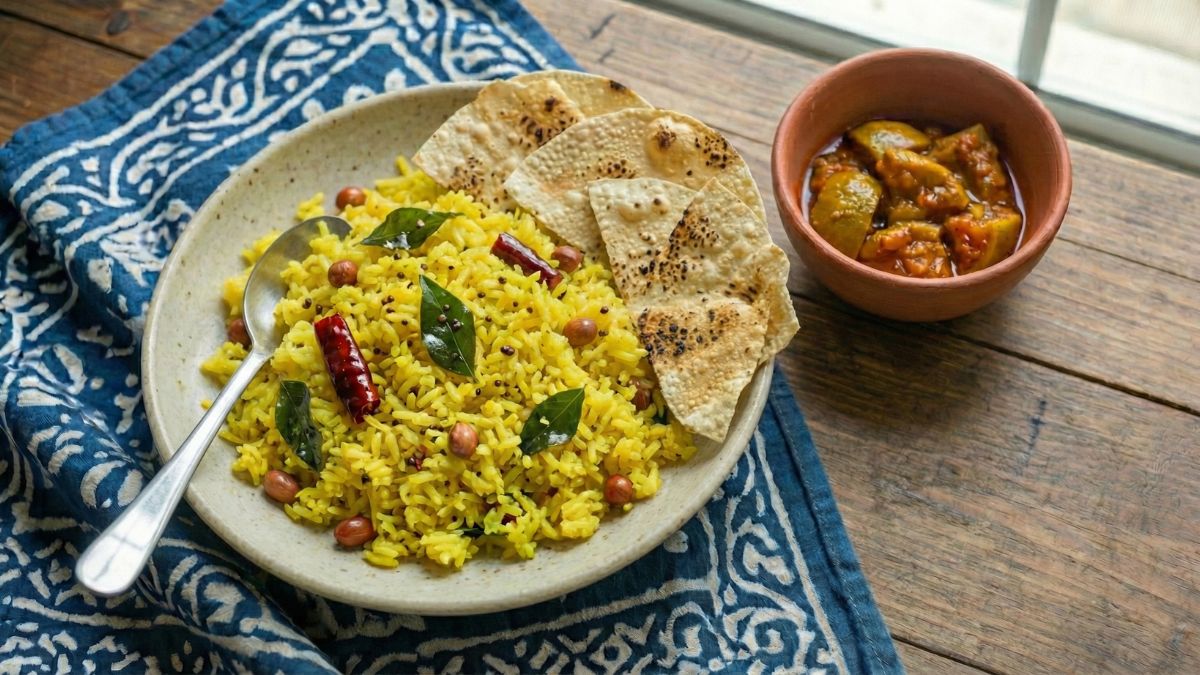
Easy South Indian Lemon Rice Recipe

Ingredients
- 3 cups cooked rice preferably day-old or cooled
- 3 tbsp oil sunflower, rice bran, or coconut oil
- 1 tsp mustard seeds
- 1 tsp urad dal split black gram
- 1 tsp chana dal split Bengal gram
- 2-3 dried red chilies broken
- 10-12 curry leaves fresh
- 2-3 green chilies slit lengthwise
- ¼ cup roasted peanuts
- ¼ tsp hing asafoetida
- ½ tsp turmeric powder
- 3 tbsp fresh lemon juice about 1.5 lemons
- 1 tbsp coriander leaves chopped, optional for garnish
- Salt to taste about 3/4 teaspoon
Instructions
- If using freshly cooked rice, spread it on a plate and let it cool completely. Fluff the rice gently with a fork to separate the grains.
- Heat oil in a wide kadhai or pan over medium heat. Add mustard seeds and let them splutter for 10-15 seconds.
- Add urad dal and chana dal. Fry until they turn golden brown, stirring continuously to prevent burning.
- Add dried red chilies, curry leaves, and green chilies. Saute for 30 seconds until the curry leaves turn crisp and fragrant.
- Add roasted peanuts and hing. Stir for another 20 seconds to release the aroma.
- Lower the heat and add turmeric powder. Mix quickly for 5 seconds to avoid burning the turmeric.
- Turn off the heat completely. Add the cooled rice to the pan and mix gently using a fork or your hands to coat the rice evenly with the tempering.
- Add salt and fresh lemon juice. Mix gently but thoroughly, ensuring the lemon juice is distributed evenly without breaking the rice grains.
- Let the lemon rice rest for 5 minutes, then garnish with fresh coriander leaves if using. Serve warm or at room temperature.
Notes
Common Issues & Solutions
Rice turns mushy or sticky: Use completely cooled rice and mix gently with a fork. Hot rice absorbs moisture and clumps together.
Tastes bland: Increase salt slightly and add an extra squeeze of lemon juice. The tanginess should be prominent but balanced.
Tempering burns or tastes bitter: Keep the heat on medium and add turmeric only after lowering the flame. Burnt spices ruin the entire dish.
Too tangy or sour: Reduce lemon juice to 2 tablespoons next time, or add a pinch of sugar to balance the acidity.
Lacks crunch: Ensure peanuts are well-roasted before adding. You can also add more peanuts or include roasted cashews.
Color is pale: Use fresh, good-quality turmeric powder and ensure it is mixed well throughout the rice.
Serving and Storage Suggestions
Lemon rice tastes delicious warm or at room temperature, making it incredibly versatile. Serve it as a light lunch with papad, pickle, and raita on the side. It also pairs beautifully with potato chips or banana chips for added crunch. For a complete meal, serve alongside curd (yogurt) and a simple vegetable curry or sabzi.
This dish is traditionally served during South Indian festivals, packed in tiffin boxes for office lunches, or taken on long train journeys since it stays fresh without refrigeration for several hours. It also works wonderfully for picnics and potlucks.
Storage: Store in an airtight container at room temperature for up to 6 hours or refrigerate for up to 2 days. The flavor actually improves after a few hours as the rice absorbs the tempering. Reheat gently in a microwave or on the stovetop with a sprinkle of water. Add a fresh squeeze of lemon juice before serving for renewed brightness.
FAQs
Q1. Can I use brown rice for lemon rice?
Ans: Yes, cooked and cooled brown rice works well. The texture will be slightly chewier, but the flavor remains delicious. Adjust lemon juice as brown rice can absorb more.
Q2. Can I make lemon rice without peanuts?
Ans: Absolutely. Substitute with roasted cashews, or skip nuts entirely if you have allergies. The dish will still taste great, just with less crunch.
Q3. How do I prevent lemon rice from turning bitter?
Ans: Always add lemon juice after turning off the heat. Cooking lemon juice makes it bitter and destroys its fresh flavor.
Q4. Can lemon rice be frozen?
Ans: Freezing is not recommended as the texture changes and the rice can become mushy. It is best enjoyed fresh or refrigerated for up to 2 days.
Q5. What can I do if I do not have curry leaves?
Ans: While curry leaves are traditional and highly recommended, you can proceed without them. The dish will lack some authentic aroma, but will still taste good. Frozen curry leaves are a better substitute than dried ones.