
You can follow recipes perfectly, but if you don’t understand basic cooking techniques, something always feels off. The dal burns at the bottom, the sabji turns mushy, or the roti puffs unevenly. These small frustrations happen because we skip learning the fundamentals.
Good cooking is not about fancy equipment or expensive ingredients. It’s about mastering simple techniques that work across dozens of recipes. Once you understand how heat, timing, and method affect your food, you stop guessing and start cooking with confidence.
This guide covers 15 essential cooking techniques that will improve everything you make in your kitchen, from everyday dal-chawal to special occasion meals.
Core Cooking Techniques You Need to Know
1. Tempering (Tadka)
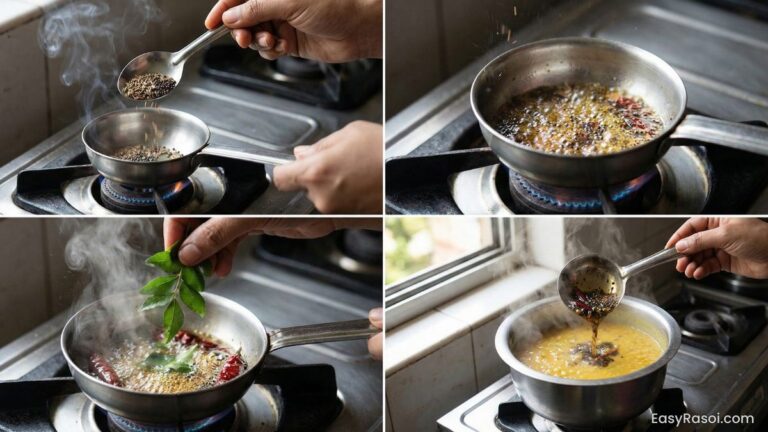
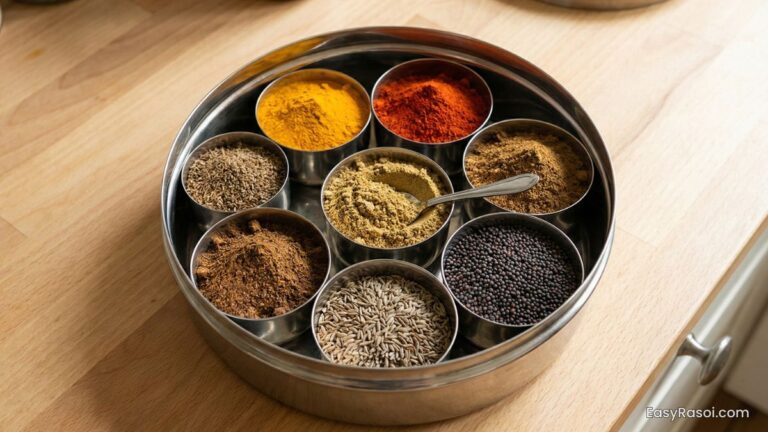
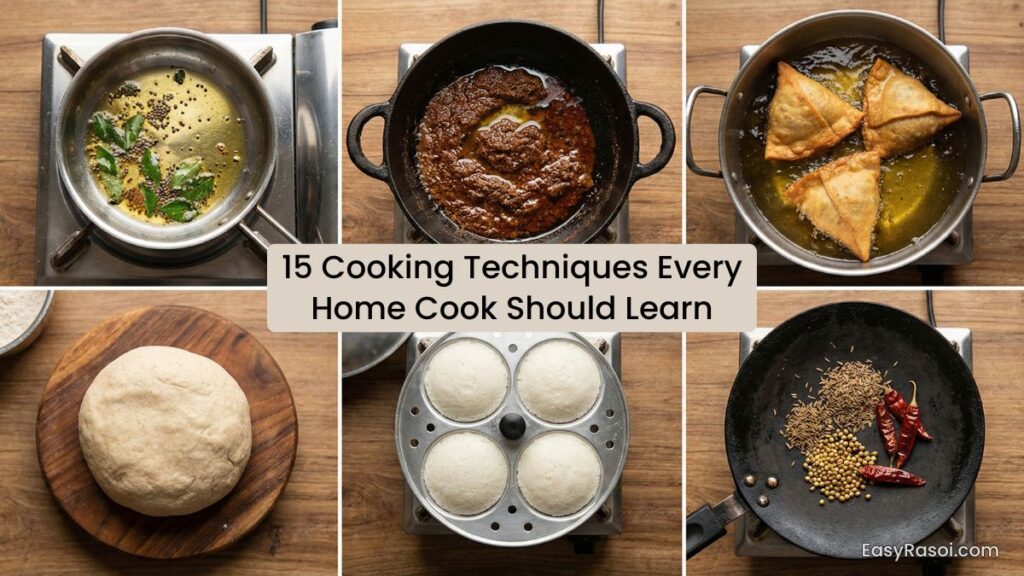
Tadka is the foundation of Indian cooking. You heat oil or ghee, add whole spices like cumin, mustard seeds, or curry leaves, and let them release their flavors before adding to your dish.
The trick is getting the oil hot enough so spices sizzle immediately but not so hot that they burn. If mustard seeds don’t pop within 2-3 seconds of hitting the oil, your tadka is not ready.
When to use it: Dal, sambar, kadhi, some rice dishes, and even yogurt-based preparations.
Common mistake: Adding spices to cold oil. This makes them absorb oil instead of releasing flavor.
2. Sautéing (Bhunao)
Bhunao means cooking ingredients in a small amount of oil over medium-high heat while stirring frequently. This technique develops deep flavors, especially in onion-tomato bases.
You know your masala is properly bhuna when oil starts separating from the sides. This takes patience, usually 8-10 minutes for onions and another 5-6 minutes after adding tomatoes.
When to use it: Curries, gravies, dry sabjis like bhindi or baingan.
Common mistake: Rushing this step. Undercooked masala tastes raw and bitter.
3. Shallow Frying
This uses just enough oil to cover half the food’s thickness. You flip once during cooking. It gives you a crispy exterior without deep frying’s heaviness.
Heat control matters here. Medium heat prevents burning while ensuring the inside cooks through. If your tawa is too hot, the outside browns before the inside is done.
When to use it: Aloo tikki, cutlets, fish fry, paneer slices.
Common mistake: Moving the food too early. Let it form a crust before flipping, or it will stick and break.
4. Deep Frying
The oil should be hot enough that a small piece of dough or bread dropped in rises immediately. Too cold, and food absorbs oil. Too hot, and it burns outside while staying raw inside.
I always test with a tiny piece first. If it takes more than 2 seconds to rise, the oil needs more heating.
When to use it: Pakoras, samosas, puris, vadas.
Common mistake: Overcrowding the kadhai. This drops the oil temperature and makes everything soggy.
5. Boiling and Simmering
Boiling means rapid bubbles breaking the surface. Simmering is gentler, with small bubbles occasionally rising. Most Indian cooking uses simmering after the initial boil.
For dal, you boil first to cook lentils, then simmer to let flavors blend. High heat throughout makes dal break down too much or burn at the bottom.
When to use it: Dal, rice, soups, boiling vegetables.
Common mistake: Keeping the flame too high after boiling starts. This wastes gas and can scorch your pot.
6. Steaming
Cooking with steam instead of direct heat keeps food moist and preserves nutrients. You need water in a lower vessel and your food in an upper container or plate that doesn’t touch the water.
Dhokla, idli, and momos all use this technique. The key is maintaining steady steam without letting water boil dry.
When to use it: Dhokla, idli, momos, patra, steamed vegetables.
Common mistake: Lifting the lid repeatedly to check. This releases steam and increases cooking time.
7. Roasting (Bhunna on Tawa)
Dry roasting on a hot tawa develops nutty flavors and removes raw taste. No oil is used. You stir constantly to prevent burning.
This works beautifully for spices before grinding them or for besan in preparations like besan ladoo.
When to use it: Roasting spices, besan, vermicelli, peanuts.
Common mistake: Using high heat. Medium heat gives you control and even roasting.
8. Grilling (Tandoor-style on Gas)
You can get tandoor-like results by cooking food directly over a gas flame using a wire rack or holding with tongs. This gives a smoky, charred flavor.
Roti lovers know this technique for finishing phulkas directly on flame. It also works for roasting eggplant for baingan bharta.
When to use it: Finishing rotis, roasting eggplant or peppers, making paneer tikka at home.
Common mistake: Placing food too close to the flame. Keep a small gap to avoid uneven charring.
9. Pressure Cooking
This reduces cooking time dramatically by trapping steam under pressure. The higher temperature inside cooks food faster.
Count whistles properly. Dal usually needs 3-4 whistles, rajma needs 5-6, and rice needs just 1. Let pressure release naturally for dal and legumes, but you can quick-release for vegetables.
When to use it: Dal, rajma, chole, rice, meat curries, pressure cooking vegetables for faster meals.
Common mistake: Opening the cooker before pressure fully releases. This is dangerous and also affects texture.
10. Kneading Dough
Proper kneading develops gluten in wheat flour, giving you soft, pliable rotis. You fold, press, and turn the dough repeatedly until it becomes smooth and elastic.
The dough should be soft but not sticky. If it cracks when you press it, add a little more water and knead again.
When to use it: Roti, paratha, puri, naan, kulcha dough.
Common mistake: Not resting the dough. At least 15-20 minutes of rest makes rolling much easier.
11. Blanching
You briefly boil vegetables, then immediately plunge them into ice-cold water. This stops the cooking process, keeps colors bright, and makes peeling easier for tomatoes.
I use this for tomatoes before making puree. The skin slips right off after blanching.
When to use it: Peeling tomatoes, preparing vegetables for salads, freezing vegetables.
Common mistake: Skipping the ice bath. Without it, vegetables continue cooking and turn mushy.
12. Marinating
Coating ingredients with spices, yogurt, or acidic liquids before cooking tenderizes and adds flavor. Acids like lemon juice or yogurt break down proteins in paneer or meat.
Time matters. Paneer needs just 30 minutes, but tougher proteins benefit from 2-4 hours or overnight marination.
When to use it: Paneer tikka, chicken preparations, kebabs, tandoori dishes.
Common mistake: Over-marinating with too much acid. This can make texture mushy instead of tender.
13. Reducing (Cooking Down)
This means simmering liquid until water evaporates and flavors concentrate. Your gravy becomes thicker and richer without adding any thickening agents.
Keep the flame medium-low and stir occasionally so nothing sticks. You will see the consistency change as you cook.
When to use it: Making gravies thicker, concentrating flavors in curries, making chutneys.
Common mistake: Using high heat to speed up. This burns the bottom before the top reduces properly.
14. Folding
Gently combining ingredients without stirring vigorously. This technique keeps air in batters or prevents delicate ingredients from breaking.
You use a spatula to lift from the bottom and fold over the top in a gentle motion. This is different from mixing or beating.
When to use it: Mixing fruit into cake batter, preparing dhokla batter after adding eno, folding paneer into gravies without breaking.
Common mistake: Stirring instead of folding. This deflates batters and breaks soft ingredients.
15. Deglazing
After frying or sautéing, browned bits stick to the pan bottom. Adding a small amount of liquid (water, stock, or wine) and scraping releases those bits, adding deep flavor to your dish.
This happens naturally when you add tomatoes or yogurt to a bhuna masala. Those stuck bits are pure flavor, not burnt food.
When to use it: Making curries after bhunao, preparing gravies, building flavor layers.
Common mistake: Adding too much liquid at once. A few tablespoons are enough to deglaze properly.
Why These Techniques Matter in Daily Cooking
Understanding techniques helps you think beyond recipes. You start recognizing patterns across different dishes and can adjust on the go.
If your curry is too thin, you know to reduce it. If sabji is bland, you recognize you rushed the bhunao. When rotis turn hard, you understand the dough needed more rest or kneading.
These techniques also save time and reduce waste. Proper heat control prevents burning. Good marination makes even basic ingredients taste special. Efficient use of pressure cooker cuts cooking time in half.
Once you practice these methods regularly, cooking becomes less stressful and more intuitive.
Common Confusions and Questions
Q. Do I need different techniques for different vegetables?
Ans: Yes, but the core methods stay the same. Leafy greens cook fast with just sautéing. Root vegetables like potato or carrot need boiling or pressure cooking first. Soft vegetables like tomatoes or capsicum need medium heat to avoid turning mushy.
Q. Can I use the same oil temperature for all frying?
Ans: No. Delicate items like pakoras need medium-hot oil (around 170-180°C). Puris need slightly hotter oil to puff properly. Deep frying paneer or chicken needs steady medium heat so they cook through without burning outside.
Q. How do I know if my masala is properly cooked?
Ans: Three signs tell you: the raw smell disappears, oil starts separating from the sides, and the color deepens to a rich brown-red. This usually takes 12-15 minutes total for a standard onion-tomato base.
Q. Is pressure cooking always faster and better?
Ans: Faster, yes. Better depends on the dish. Pressure cooking is excellent for dal, legumes, and tough vegetables. But some dishes taste better with slow cooking, like certain meat curries where you want the gravy to develop gradually.
Q. Why does restaurant food taste different even when I use the same technique?
Ans: Restaurants use very high heat, which home gas stoves cannot match. They also use more oil, butter, or cream. But proper technique at home still gives you delicious results, just with a different flavor profile that is often healthier.
Final Words
These 15 techniques form the backbone of everyday Indian cooking. You don’t need to master all of them overnight. Pick one or two each week and practice them in your regular cooking.
Start with tadka and bhunao since they appear in most recipes. Then move to frying techniques, pressure cooking, and the others. As each method becomes natural, you will notice your confidence growing.
Good technique makes average ingredients taste wonderful. It turns cooking from a stressful chore into something you can enjoy and control. The best part is that once learned, these skills stay with you forever, making every meal better than the last.